


Common Causes of Persistent Fatigue (When to Test)
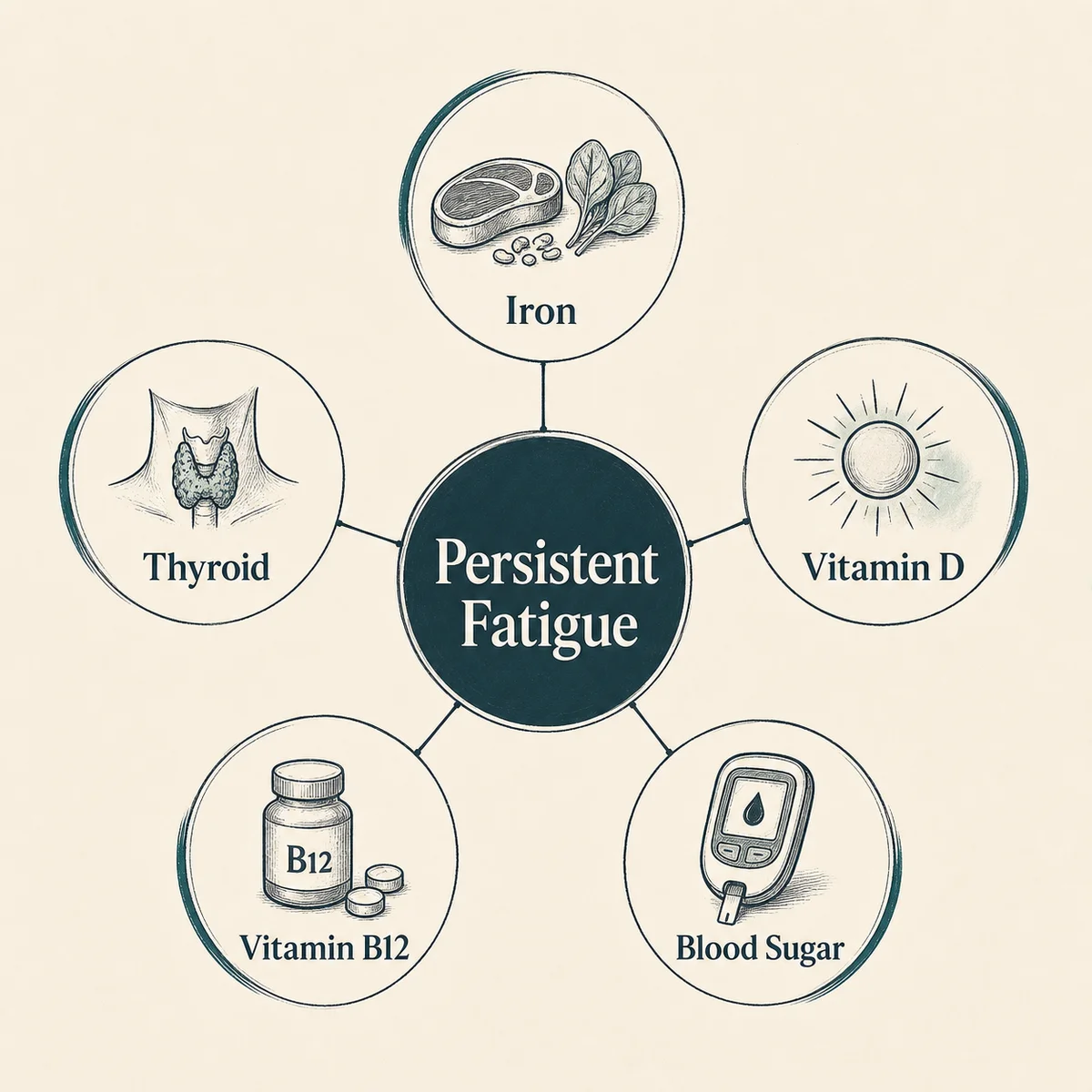
Waking up tired after eight hours of sleep, for the third week running, is not a willpower problem. Persistent fatigue, tiredness lasting more than two weeks that rest doesn't fix, usually has an identifiable cause: low iron, thyroid dysfunction, vitamin D or B12 deficiency, poor sleep, blood sugar imbalance, dehydration, or stress. Most of these show up on one blood panel a doctor reads. This guide names the common causes, the red flags that mean see a doctor now, and which test finds out.
Key Takeaways
- Fatigue lasting more than two weeks and not relieved by sleep usually has an identifiable medical cause.
- Iron, thyroid, vitamin D, vitamin B12 and blood sugar problems are the most common physical causes.
- Red flags, unexplained weight loss, breathlessness, chest pain, fever, mean see a doctor now, not later.
- BestDOC's Energy Booster panel (36 parameters, AED 410) screens iron, thyroid, vitamin D and B12 together, doctor-reviewed, results in 8-24 hours.
What Counts as Persistent Fatigue (and Red Flags)
Everyone has a bad week. Persistent fatigue is different: tiredness that lasts beyond two weeks and doesn't lift with a full night's sleep or a quiet weekend. That's the point Mayo Clinic and the CDC both flag as worth a clinical look rather than more coffee.
A short list of symptoms changes the urgency. See a doctor now, not after this article, if fatigue comes with unexplained weight loss, breathlessness at rest, chest pain, fever, or fainting. These aren't on the "wait and see" list.
Notice a red flag? Talk to a clinician about your case →
12 Common Causes of Persistent Fatigue
Most persistent fatigue traces back to one of these:
- Low iron / ferritin: affects roughly 25% of women of reproductive age, per WHO. Iron and ferritin test guide →
- Thyroid dysfunction (hypothyroidism): common, underdiagnosed, more frequent in women, per Mayo Clinic.
- Vitamin D deficiency: despite year-round Gulf sun, indoor AC routines keep levels low. Vitamin D test guide →
- Vitamin B12 deficiency: shows up even in non-vegetarians, more common with age, per NIH.
- Poor sleep or undiagnosed sleep apnoea: daytime fatigue independent of hours slept.
- Blood sugar imbalance or prediabetes: an often silent cause, per CDC.
- Chronic mild dehydration: Dubai heat and AC both drain fluid faster than it feels.
- Depression and anxiety: fatigue is among the most common presenting symptoms of both.
- Chronic stress or cortisol dysregulation: ongoing high alert wears down energy reserves.
- Sedentary lifestyle or deconditioning: less activity paradoxically means less energy.
- Medication side effects: some blood pressure, allergy and sleep medicines list fatigue.
- Underlying chronic illness: kidney, liver, cardiac or autoimmune disease shows up as fatigue first.
When Sarah, a 36-year-old teacher in Al Barsha, kept crashing by 4 p.m. despite nine hours of sleep, she assumed it was just her schedule. A home blood panel found her ferritin far below normal range. Six weeks into iron treatment, her afternoons stopped feeling borrowed.
Fatigue can also be a lifestyle problem, not a medical one. If caffeine, hydration or sleep habits are the likely culprit, the caffeine-free energy strategies guide → covers that ground.

Which Blood Test Actually Finds the Cause
One panel can screen most of the physical causes above at once.
| Suspected cause | Test | BestDOC price |
|---|---|---|
| Iron deficiency | Ferritin / Iron Panel | AED 60 / AED 75 |
| Thyroid | TSH / Thyroid Function Test | AED 50 / AED 70 |
| Vitamin D | 25-OH Vitamin D | AED 60 |
| Vitamin B12 | Vitamin B12 | AED 60 |
| Blood sugar | HbA1c / Fasting Glucose | AED 60 / AED 25 |
| All of the above, bundled | Energy Booster Blood Test (36 parameters) | AED 410 |
The Energy Booster panel bundles iron, ferritin, thyroid, vitamin D and B12 into one home draw, customized case by case. A doctor reviews every result as part of the AED 410 price, no separate consult needed, results back in 8 to 24 hours.
Ready to find out what's behind it? Book a home fatigue blood test →
A confirmed result goes to a doctor next, not a guess. A home GP visit reads the report and sets a plan; ongoing conditions move into chronic disease care from there. BestDOC's Energy Boost drip may support energy alongside a doctor-confirmed plan, never as a substitute for treatment.
Frequently Asked Questions
What deficiency causes extreme tiredness? Most often iron, vitamin D or B12, alongside thyroid dysfunction, all visible on one blood panel.
How long is too long before I should worry? More than two weeks of tiredness that sleep doesn't fix.
Can dehydration alone cause chronic fatigue? Rarely alone. It lowers alertness, but weeks of fatigue usually means something else.
Does BestDOC's home blood test cover fatigue causes? Yes. The Energy Booster panel covers iron, thyroid, vitamin D and B12 together, doctor-reviewed.
How fast do I get results? 8 to 24 hours for the Energy Booster panel.
The Short Version
Persistent fatigue past two weeks, unrelieved by rest, usually has a name: low iron, thyroid dysfunction, a vitamin D or B12 gap, poor sleep, blood sugar, or stress. One home panel screens for the common causes at once, and a BestDOC doctor reads the result into your file. Get a home blood test quote →
Reach BestDOC on the toll-free line +971 800 2378 362 or WhatsApp, around the clock, anywhere in Dubai. Clinicians are DHA-licensed and signed off by the medical director. Meet the team behind your file →
Educational. Not medical advice. Consult a licensed clinician about your own results. For medical emergencies in the UAE, call 998.