
Liquid IV in Ramadan: Fasting Fatigue and Home Drips
Does an IV drip break the Ramadan fast? Many scholars hold that a nutritional drip (one that nourishes, such as dextrose or amino acids) invalidates the fast, while a plain saline or medicinal drip is debated. Confirm the ruling with your own scholar. To sidestep the question, BestDOC schedules liquid IV hydration and vitamin drips after iftar, once the fast has ended.
This is a clinician's read on fasting fatigue in Ramadan, what a post-iftar hydration or vitamin drip actually does, the religious question many readers ask, who should not have a drip, and how we run a home IV safely in Dubai.
Key Takeaways
- Ramadan fatigue is mostly dehydration, electrolyte and blood-sugar dips, and a shifted sleep schedule, not weakness.
- Whether an IV breaks the fast is a religious question. The mainstream view is that a nutritional drip likely invalidates it; a non-nutritional saline drip is debated. Ask your own scholar.
- BestDOC schedules hydration and vitamin drips after iftar, so the question is moot for most clients.
- A drip is appropriate for confirmed dehydration or a documented deficiency, not as a routine energy boost.
- Pregnancy, kidney disease, and heart conditions need a doctor's clearance first.
Liquid IV in Ramadan: the short answer
People search "liquid iv ramadan" for two different reasons. The first is practical: a long fasting day in the UAE heat leaves you tired, headachy, and behind on fluids, and an IV drip is a fast way to catch up after iftar. The second is religious: people want to know whether receiving an infusion during fasting hours would break the fast.
The practical answer is straightforward. A clinician-set hydration or vitamin drip taken after sunset, alongside drinking water, can help a body that has run behind across a 14-hour fast. The religious answer is not ours to give, and we cover the scholarly discussion below, neutrally, so you can take it to your own scholar.

Why fasting causes fatigue
Fasting fatigue in Ramadan is rarely a single problem. Three things usually stack up across the day.
- Dehydration. No fluids from suhoor to iftar, in a hot climate, means total body water falls steadily through the afternoon. Even mild dehydration of one to two percent of body weight measurably reduces alertness and concentration and worsens headache (Ganio et al., effects of mild dehydration, NIH PMC).
- Electrolyte and blood-sugar dips. A long gap between meals lowers blood glucose, and salt and potassium losses are not replaced until iftar. The combination produces the familiar mid-afternoon flat, low-energy feeling.
- A shifted sleep schedule. Suhoor before dawn and late iftar gatherings fragment sleep and push the body clock. The result is daytime sleepiness that has nothing to do with the fast itself and everything to do with shortened, broken sleep (NIH National Heart, Lung, and Blood Institute, sleep deprivation).
None of this is dangerous for a healthy adult. It is the body adapting to a new intake pattern. But it explains why the late afternoon is hard, and why rehydration after iftar matters more than most people expect.
Does an IV drip break the fast?
This is the question the original version of this page ranked for, including from readers searching in Indonesian, apakah infus membatalkan puasa, which means "does an IV drip break the fast?". It is a religious question, not a medical one, so what follows is a neutral summary of the mainstream scholarly discussion, not a ruling. Confirm the answer with your own scholar or a recognised fatwa body before acting on it.
The discussion usually turns on whether the drip nourishes the body:
- Nutritional drips. Many scholars hold that an IV that provides nourishment, for example a drip containing dextrose (sugar), amino acids, or lipids, takes the same ruling as food and therefore invalidates the fast, because it does the work that eating would do.
- Non-nutritional drips. A plain saline drip or a purely medicinal infusion that does not nourish the body is debated. Some scholars treat it more leniently and consider it permissible during the fast, on the basis that it is not food; others take the cautious position and advise avoiding it during fasting hours.
Because there is genuine scholarly difference here, we do not issue a ruling, and you should not take one from a healthcare provider. Take the question to a scholar you trust or a recognised fatwa body, and tell them exactly what is in the drip.
In practice, the question is moot for most of our clients, because BestDOC schedules hydration and vitamin drips after iftar, once the fast has already ended. At that point the religious question does not arise, and rehydrating in the evening is the better choice physiologically as well.

What a post-iftar hydration or vitamin drip does
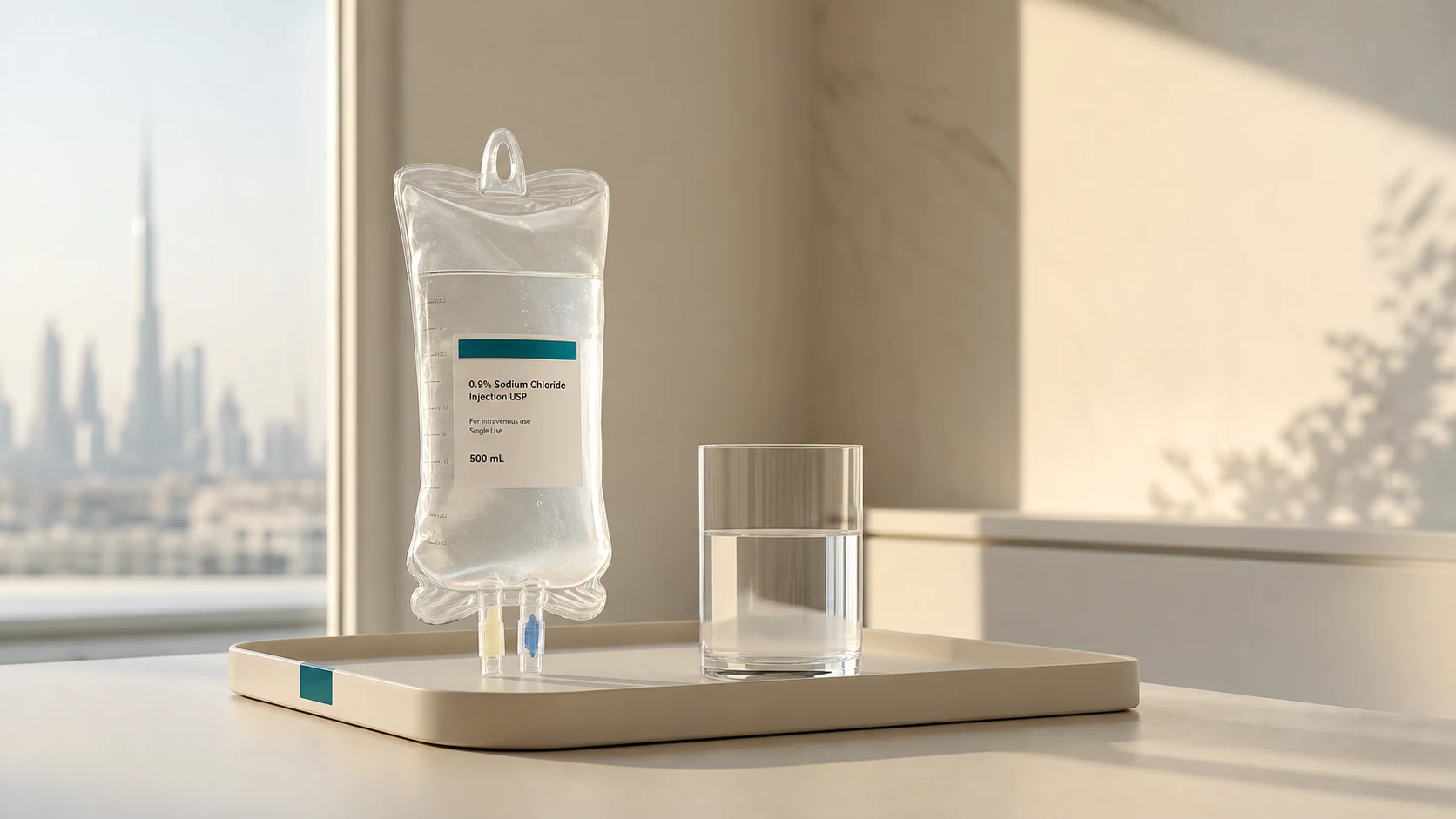
After a long fast, the simplest and most useful thing an IV drip does is restore fluid volume quickly. A buffered saline base replaces the water and salt lost across the day faster than sipping can when you are well behind. For most healthy people, drinking steadily between iftar and suhoor will get you there on its own. A drip earns its place when oral intake has fallen well behind, for example after a stomach illness during Ramadan, or for someone who simply cannot drink enough in the short eating window.
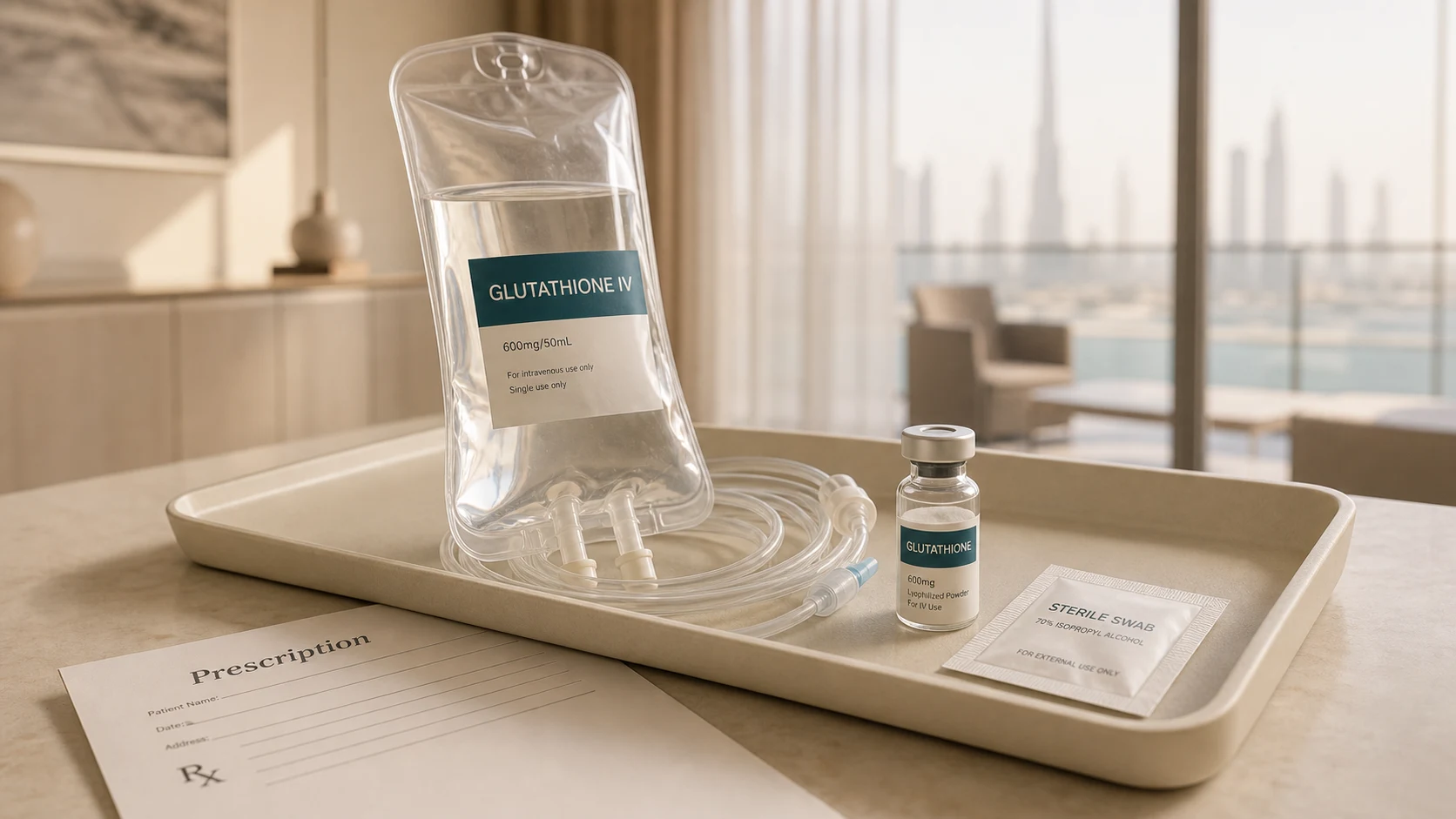
Where a drip adds vitamins, the indication should come from bloodwork, not a menu. A clinician may add a specific vitamin when there is a documented deficiency, such as a low vitamin D, a low B12, or iron-deficiency anaemia. Water-soluble vitamins given by the IV route reach the bloodstream directly and bypass the rate-limited absorption of the gut (NIH Office of Dietary Supplements, vitamin C). That is a real pharmacological difference, but it only matters when there is something to correct.
What a Ramadan drip does not do is replace food, sleep, or sensible suhoor and iftar choices. We are clear about this on the phone. If your fatigue is ordinary fasting tiredness and your bloods are normal, a litre of water and a better sleep schedule will do as much as a drip, for far less.
If you have a confirmed reason to book, see home IV drip options in Dubai for the full range, or read our companion piece on what is actually in an IV drip in Dubai and what it costs. If you are not sure whether you need a drip at all, a doctor-on-call visit at home can assess the fatigue properly first.

Who should not have a drip
An IV drip is a medical procedure, and some people should not have one without a doctor's clearance first. We will not give a drip to the following groups without specialist sign-off:
- Pregnant women. Any infusion decision in pregnancy belongs to your obstetrician, not to a drip menu. Fasting itself in pregnancy should also be discussed with your doctor.
- People with kidney disease. Reduced kidney function changes how the body handles fluid and electrolytes, and a standard drip can cause harm. A nephrologist or your treating doctor must decide.
- People with heart conditions, especially heart failure. A fluid load can overwhelm a heart that is already struggling, so these cases need cardiology input first.
- Anyone with a previous reaction to a drip ingredient, or an uncontrolled electrolyte disorder.
If you have a chronic condition and you are unsure whether fasting or a drip is safe for you, the right first step is a conversation with a doctor, not a booking. We are not an emergency service. For an emergency, call 998.
Safety: how BestDOC runs a home drip
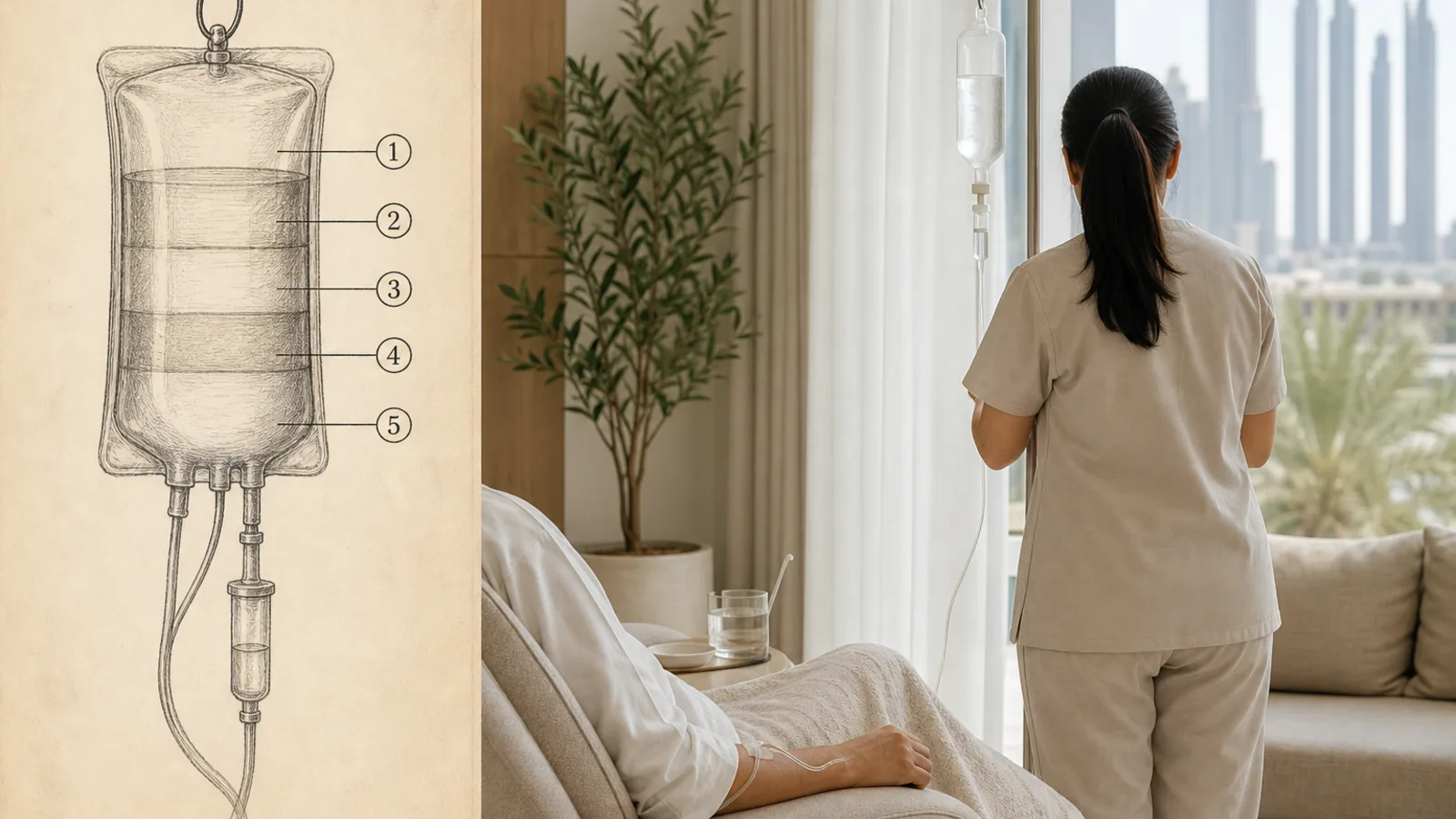
An IV drip is safe when three conditions are met: a licensed clinician sets the indication, the drip is prepared in a regulated compounding pharmacy, and a DHA-licensed nurse administers it after screening you for contraindications. We hold to all three.
Every drip starts with a short clinician consult by phone or video. The clinician reviews your symptoms, history, and any recent bloodwork, confirms the indication, agrees the formulation and dose, and flags any reason not to proceed. Only then is the drip prepared in a licensed pharmacy and dispatched with a DHA-licensed nurse, scheduled after iftar. Home IV therapy in Dubai is regulated under the Dubai Health Authority's home healthcare framework (Dubai Health Authority, Home Healthcare Services), and we work inside it.
The coordinator quotes the price upfront before any nurse is dispatched. Our IV therapy is self-pay, and we tell you the figure before you commit. You can reach the coordinator on the toll-free line +971 800 2378 362, 24/7, across Dubai. They confirm the visit and send you the nurse's name before arrival.

Care that remembers you means a service that says no when no is the honest answer. For ordinary fasting fatigue, that answer is often a glass of water and an earlier night.
FAQ
Does an IV drip break the Ramadan fast? This is a religious question, not a medical one, so confirm it with your own scholar or a recognised fatwa body. As a general summary of the mainstream scholarly discussion: many scholars hold that a nutritional IV, one that nourishes the body such as a dextrose or amino-acid drip, invalidates the fast, while a non-nutritional saline or purely medicinal drip is debated and treated more leniently by some. To avoid the question entirely, BestDOC schedules wellness and hydration drips after iftar, once the fast has ended, which is what most of our clients choose.
What is the best IV drip for fasting fatigue? There is no single best drip. For most people the dominant problem during Ramadan is mild dehydration and electrolyte loss across a long day, so a clinician-set hydration drip with a buffered saline base is the usual starting point. Where bloodwork shows a deficiency, for example low vitamin D, low B12, or iron-deficiency anaemia, a clinician may add the relevant vitamin. The formulation and dose should be set after a short consultation, not chosen from a menu.
When during Ramadan should I get a drip? After iftar. BestDOC schedules hydration and vitamin drips post-iftar, once the sun has set and the fast has ended. That removes the religious question for most clients, and it is also better physiologically because your body is no longer fluid-restricted and you can rehydrate orally alongside the drip. We do not encourage drips during fasting hours as a way to push through the day.
Educational. Not medical advice. Whether an IV drip breaks the fast is a religious question; confirm it with your own scholar or a recognised fatwa body. Consult a licensed clinician before starting any IV therapy. Indication, formulation, and dose are set by your treating physician on consultation.
BestDOC Healthcare LLC. DHA-licensed home healthcare. License details available on request. About us: /about-us.html.