
Antibiotic for Kids: Essential Tips for Parents in Dubai
Antibiotics for kids work on bacterial infections only. They do nothing for colds, flu, most coughs, or routine sore throats, and giving them anyway exposes your child to side effects and feeds antibiotic resistance. Use them when a pediatrician confirms a bacterial cause, give the exact prescribed dose, and finish the course your doctor sets.
Key Takeaways
- Most childhood fevers in the UAE are viral. Antibiotics will not shorten the illness.
- Common pediatric antibiotics in the region include amoxicillin, amoxiclav (Augmentin), azithromycin, and cephalexin. Each treats a different set of infections.
- Dose is weight-based (mg per kg). A measuring syringe is more accurate than a kitchen spoon.
- Stopping early raises the risk of relapse and resistance. Do not save leftover syrup for the next fever.
- Call a pediatrician if your child has not improved 72 hours after starting an antibiotic.
When kids actually need an antibiotic
Most fevers, runny noses, and coughs in UAE children are viral. The U.S. Centers for Disease Control and Prevention estimates that at least 28 percent of antibiotics prescribed in outpatient pediatric settings are unnecessary, with the bulk of those written for viral upper-respiratory infections (CDC, Antibiotic Use). The same picture holds across Gulf primary-care audits, where viral illness is the dominant driver of clinic visits in the first five years of life.
Your child probably does need an antibiotic when a pediatrician identifies one of the following:
- Strep throat confirmed by a rapid antigen test or throat culture.
- Acute otitis media (middle-ear infection) with documented fluid and pain, especially under 2 years of age.
- Bacterial pneumonia suspected on examination and supported by imaging or oxygen saturation.
- Urinary tract infection confirmed by urinalysis and culture.
- Skin infections such as impetigo, cellulitis, or an infected wound.
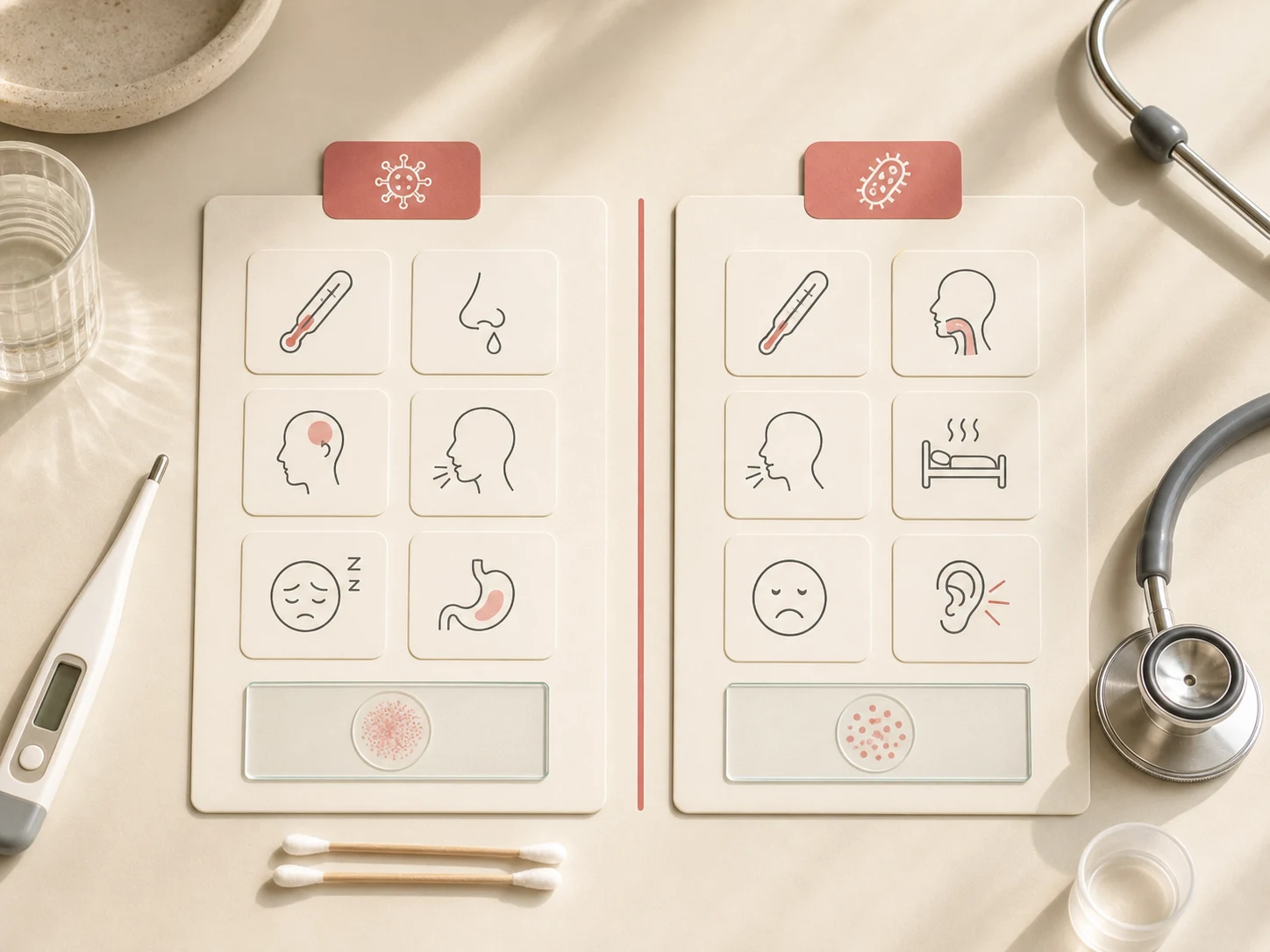
Your child probably does not need one when symptoms point to a common cold, viral pharyngitis, bronchiolitis, croup, hand-foot-mouth disease, or routine seasonal flu. The American Academy of Pediatrics has published clear treatment guidance for ear infections that supports a watchful-waiting period for many older children with mild symptoms (AAP, Diagnosis and Management of Acute Otitis Media).
What this looks like in practice
A parent we saw last winter brought in a 3-year-old with three days of high fever and a runny nose. The local pharmacy had already handed over a bottle of amoxicillin syrup over the counter, which is something UAE regulations have tightened against but which still happens. Examination showed a clear chest, normal ear drums, and a red but non-exudative throat. The illness was viral influenza confirmed on a rapid test. We stopped the antibiotic on day four. Her fever broke on day five on its own.
That sequence is the rule, not the exception. The antibiotic added nothing except a week of loose stools.
Common pediatric antibiotics you will see prescribed
Several agents do most of the work in pediatric outpatient care across Dubai and the wider UAE. None of them are interchangeable.
| Antibiotic | Common use | Typical form | Notes |
|---|---|---|---|
| Amoxicillin | Ear infections, strep throat, mild pneumonia | Syrup (125 / 250 mg per 5 ml) | First-line for most pediatric bacterial infections |
| Amoxiclav (Augmentin) | Sinusitis, recurrent ear infections, animal bites | Syrup, tablet | Stronger; more diarrhea and stomach upset |
| Azithromycin | Atypical pneumonia, whooping cough, penicillin allergy | Suspension, short course | Long half-life; usually 3 to 5 days |
| Cephalexin | Skin and soft-tissue infections | Syrup, capsule | Cross-reactivity with penicillin is uncommon but possible |
| Trimethoprim-sulfamethoxazole | Urinary tract infections, some skin infections | Suspension | Avoid in infants under 2 months |
UAE prescribing follows national antimicrobial stewardship policy issued by the Department of Health Abu Dhabi and the Dubai Health Authority. Antibiotics are prescription-only and a pediatrician sets both the choice of agent and the course length (DHA Health Regulation Sector).
For any of these, a home doctor visit can settle the question of whether your child needs the antibiotic at all, or whether the safer call is to watch and wait. BestDOC clinicians are DHA-licensed, work across all of Dubai, and most home visits arrive in about 45 minutes, examined at home, no clinic waiting room full of other sick children.
How to give the dose safely
Pediatric antibiotic dosing is weight-based. A 12-kilogram toddler and a 22-kilogram first-grader do not take the same volume of syrup, even if the bottle on the counter looks the same. Three rules cover most of the safety failures we see at home.
1. Measure with the right device
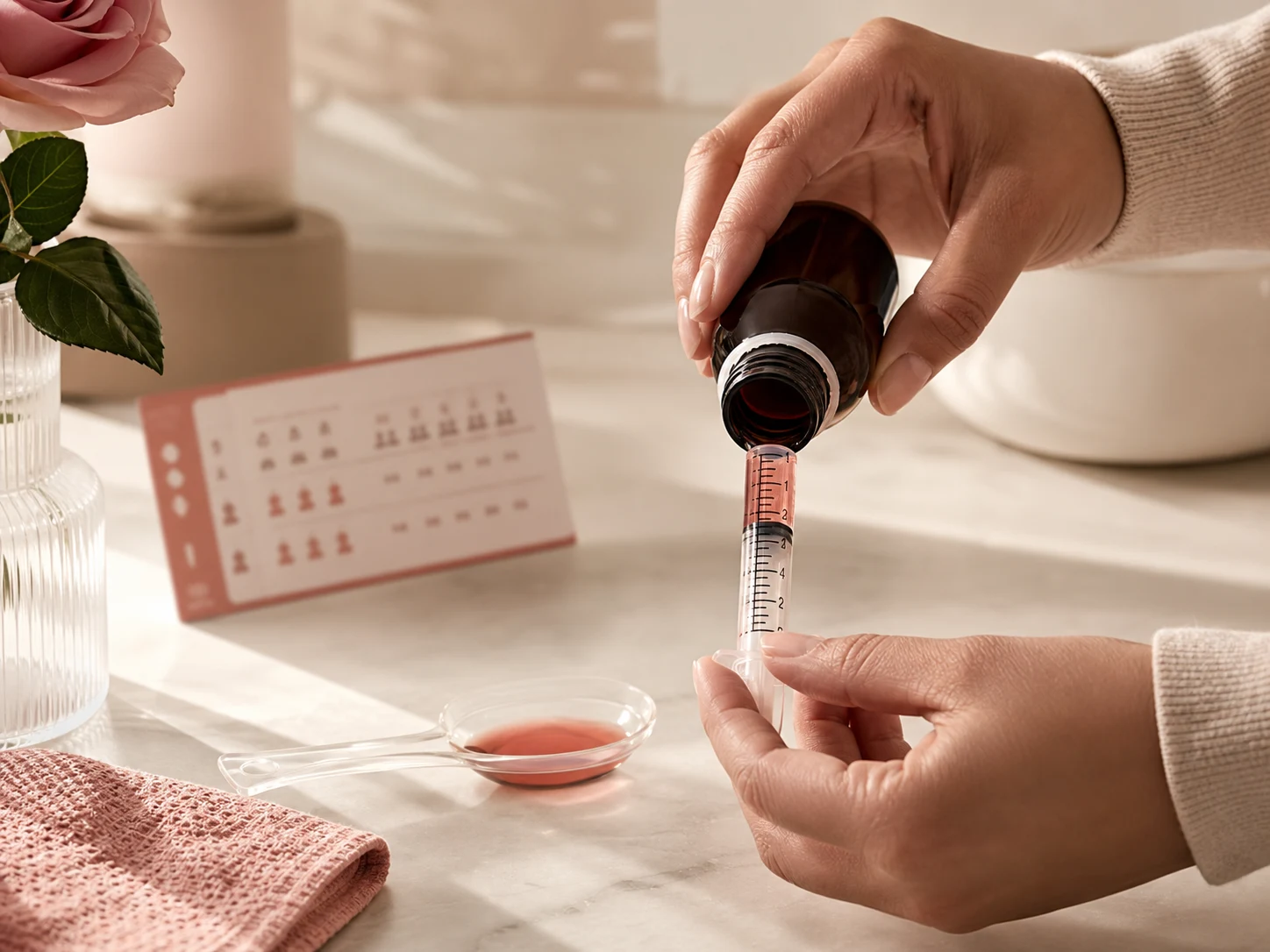
Use the oral syringe or dosing cup that comes with the bottle. A kitchen teaspoon ranges from 2 ml to 8 ml depending on which drawer it came from. NHS pediatric guidance is explicit on this point: a calibrated oral syringe is the standard (NHS, Giving Medicines to Children).
If your child's prescription does not include a measuring device, ask the pharmacy before you leave. If you are already home and stuck, a DHA-licensed home nurse can come and administer the dose safely the first time, which also gives you a chance to watch the technique. On an ongoing course, BestDOC keeps the same nurse on your household's file, so the person who taught you the technique on day one is the one who returns.
2. Time the doses to the prescription, not the clock
"Three times a day" usually means every 8 hours, not at breakfast, lunch, and dinner. Spacing the doses keeps the antibiotic above the level it needs to reach in your child's bloodstream. Bunching them at meal times leaves long gaps overnight where the drug level drops and bacteria can recover.
Set phone alarms. If you miss a dose by less than 4 hours, give it. If it is closer to the next dose, skip and continue. Never double up.
3. Refrigerate what the label tells you to refrigerate
Amoxicillin suspension and amoxiclav suspension must be refrigerated after the pharmacist reconstitutes them, and they expire 7 to 10 days after that. A bottle that has sat on the kitchen counter for three days is not safe to use, even if the syrup looks fine. Azithromycin suspension stores at room temperature.
A mid-course story
A father in Jumeirah called us last spring about his 5-year-old, who had been on amoxiclav for an ear infection. By day three the boy was clearly worse, not better. The dose on the prescription label was right, but the bottle had been left in the car after a beach afternoon. The suspension was no longer active. The pediatrician issued a fresh bottle, the temperature dropped within 36 hours, and the ear settled by day seven.
Talk to a clinician before the next dose. If you are unsure whether the prescription, the dose, or the timing is right, request a video consult through telemedicine. A pediatrician can read the bottle label with you and check the math on weight-based dosing in under fifteen minutes.
Side effects and when to call the pediatrician
Most pediatric antibiotic courses are uneventful. The two side effects you will see most often are mild diarrhea and a rash on day two or three.
Loose stools affect roughly one in five children on amoxicillin and a higher share on amoxiclav. Probiotic supplementation with specific strains has been shown to reduce antibiotic-associated diarrhea in children in randomized trials, and a Cochrane review summarized the evidence in pediatric populations (Cochrane Review on Probiotics for Antibiotic-Associated Diarrhea in Children).
A flat, non-itchy pink rash on day three of amoxicillin is often a benign drug exanthem rather than a true allergy, especially if the child is also fighting a viral infection. A true penicillin allergy looks different. The signs that require an immediate stop and a call for help are:
- Hives, swelling of the face or lips, wheezing, or trouble breathing.
- Blistering or peeling skin.
- Severe abdominal pain or blood in the stool.
- Fever that climbs or returns after 72 hours on the antibiotic.
Any of those signs is a reason to call your pediatrician now. If your child is in respiratory distress, go to the emergency department or call 998.
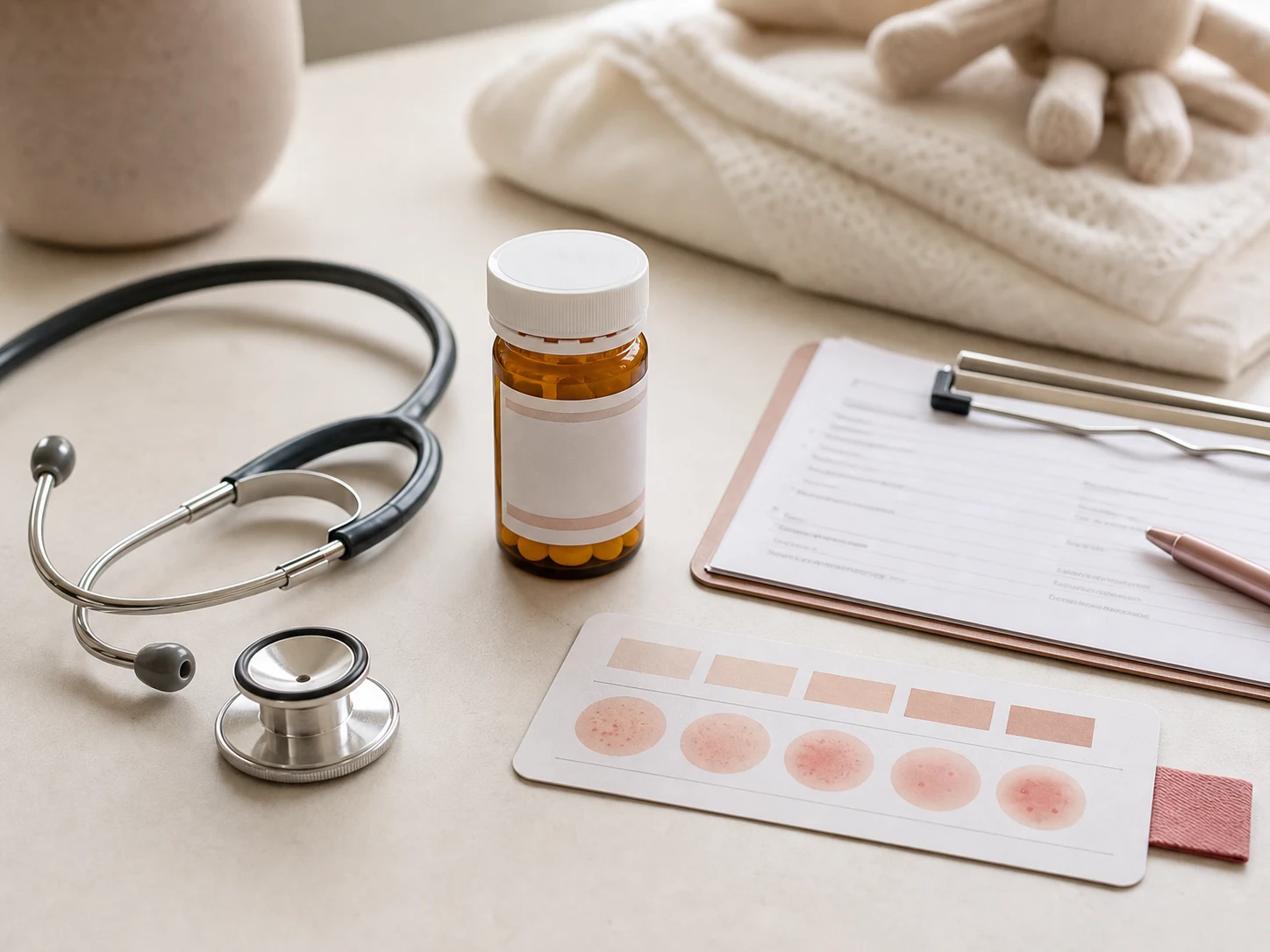
For the milder picture, an in-person review at home is often the right next step. Our home child-care service can have a pediatrician at the door the same day, listen to the chest, check the ears, and decide whether the antibiotic needs to be changed or stopped. One file per household means whoever comes already has your child's allergy list and previous course in front of them, not a blank intake form.
Antibiotic resistance is a UAE problem too
The World Health Organization classifies antimicrobial resistance as one of the top ten global public-health threats, and pediatric prescribing is one of the levers parents directly control (WHO, Antimicrobial Resistance).
Every unnecessary course of amoxicillin in a toddler selects for resistant bacteria in that child's nose and gut. Those bacteria can spread to siblings, classmates, and grandparents. UAE surveillance data published through the GCC antimicrobial-resistance monitoring program shows rising resistance rates in common community pathogens, which is why DHA and MOHAP have tightened over-the-counter access and added prescribing audits.
Three habits move the needle at the household level:
- Do not pressure your pediatrician for an antibiotic when she has said the illness is viral.
- Do not save leftover syrup. Antibiotics chosen for one child's ear infection are the wrong drug, dose, and duration for the next fever.
- Do not share antibiotics between siblings, ever.
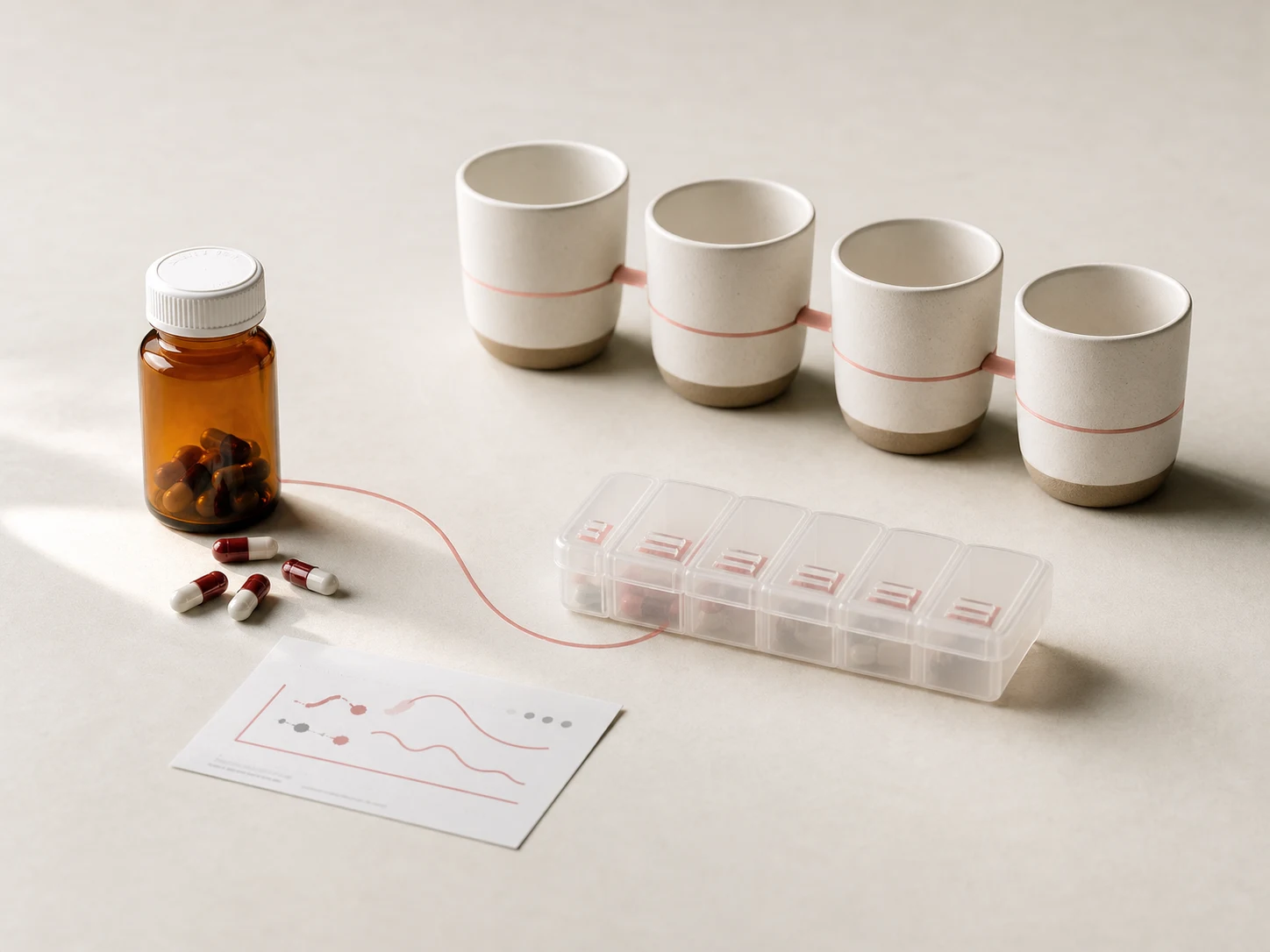
These are small acts. They protect your own family first.
When to call us instead of waiting it out
Most viral childhood illness in the UAE settles in 5 to 7 days. You do not need a clinician for every runny nose. You probably do for:
- A fever above 38°C in an infant under 3 months.
- A fever lasting more than 72 hours at any age.
- Ear pain that wakes a child at night.
- Painful urination, or a toddler who suddenly wets again after being dry.
- A rash that spreads quickly, looks like bruises, or comes with fever and stiff neck.
- Any sign that your gut tells you is wrong.
We are a DHA-licensed family-medicine team that carries the file. When you call, we have your child's record, the previous antibiotic, the allergy list, and the last vaccination dates already in front of us. That is the point of the BestDOC home-care service, your nurse, your doctor, your family, again.
We cover all of Dubai, door to door, every day. Toll-free +971 800 2378 362 or WhatsApp the same number, a coordinator answers 24/7 and routes a pediatrician to your home, usually within about 45 minutes. BestDOC is not an emergency service: if your child is in respiratory distress, go to the emergency department or call 998.
Talk to a BestDOC pediatrician. Same number, same team. We carry it.
Educational. Not medical advice. Consult a licensed clinician.