Physiotherapy at Home in Dubai: How It Works
Physiotherapy at home is one-to-one physical rehabilitation delivered by a licensed physiotherapist who visits your residence in Dubai. It covers post-surgical recovery, stroke rehabilitation, back and neck pain, geriatric mobility loss and paediatric needs, assessed and progressed without the patient ever leaving home.
The physiotherapist who walks through your door on the first visit is, where the case allows, the same physiotherapist who walks through on visit thirty. We carry the file.
Key takeaways
- A home physiotherapist brings clinic-grade assessment and treatment to your residence: goniometry, manual therapy, neuro-rehabilitation protocols and progressive resistance work.
- Continuity matters more than convenience. The same therapist tracks your range of motion, pain scores and adherence across the full plan.
- Home-based rehabilitation has comparable functional outcomes to outpatient clinic care for many conditions, including post-stroke recovery and lower-limb post-surgical rehab (WHO Rehabilitation factsheet; NIH-indexed systematic reviews).
- Every BestDOC physiotherapist is DHA-licensed. Home healthcare delivery is regulated by the Dubai Health Authority.
- BestDOC home physiotherapy is self-pay. The price is quoted upfront before the first visit, with no separate home-visit surcharge inside Dubai.
What "physiotherapy at home" actually means
A licensed physiotherapist arrives at your home with portable assessment tools and the treatment equipment your case requires. The first visit is an assessment: history, goniometric measurement, strength testing, gait analysis where relevant, and a written plan.
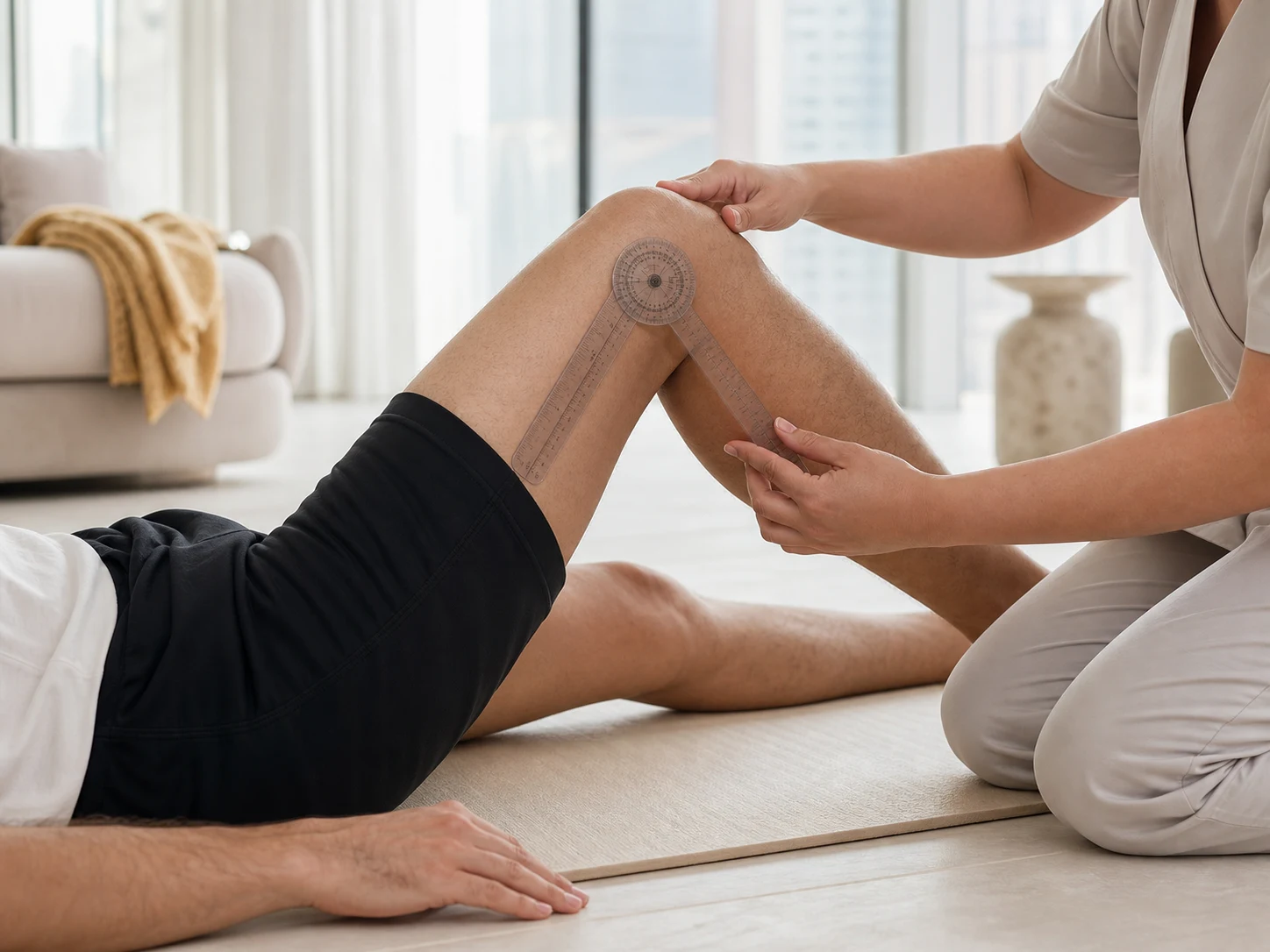
From visit two onward the sessions are treatment plus measured progression. You do not repeat your story to a new face. The file follows you.
This is not a wellness massage. It is the same clinical model that runs in a hospital physio department, ported to a living-room floor or, when a hospital bed is in the room, to the bedside. BestDOC works this way by design: home visits only, no clinic, one file per household, the same clinician kept on a case.
Conditions we treat at home
Post-surgical recovery
Total knee replacement, hip replacement, ACL reconstruction, rotator-cuff repair and spinal surgery all follow strict early-rehabilitation windows. Discharge from a Dubai hospital often happens within seventy-two hours of surgery. The patient cannot, and should not, drive to a clinic for the first two weeks. The physiotherapist comes to them.
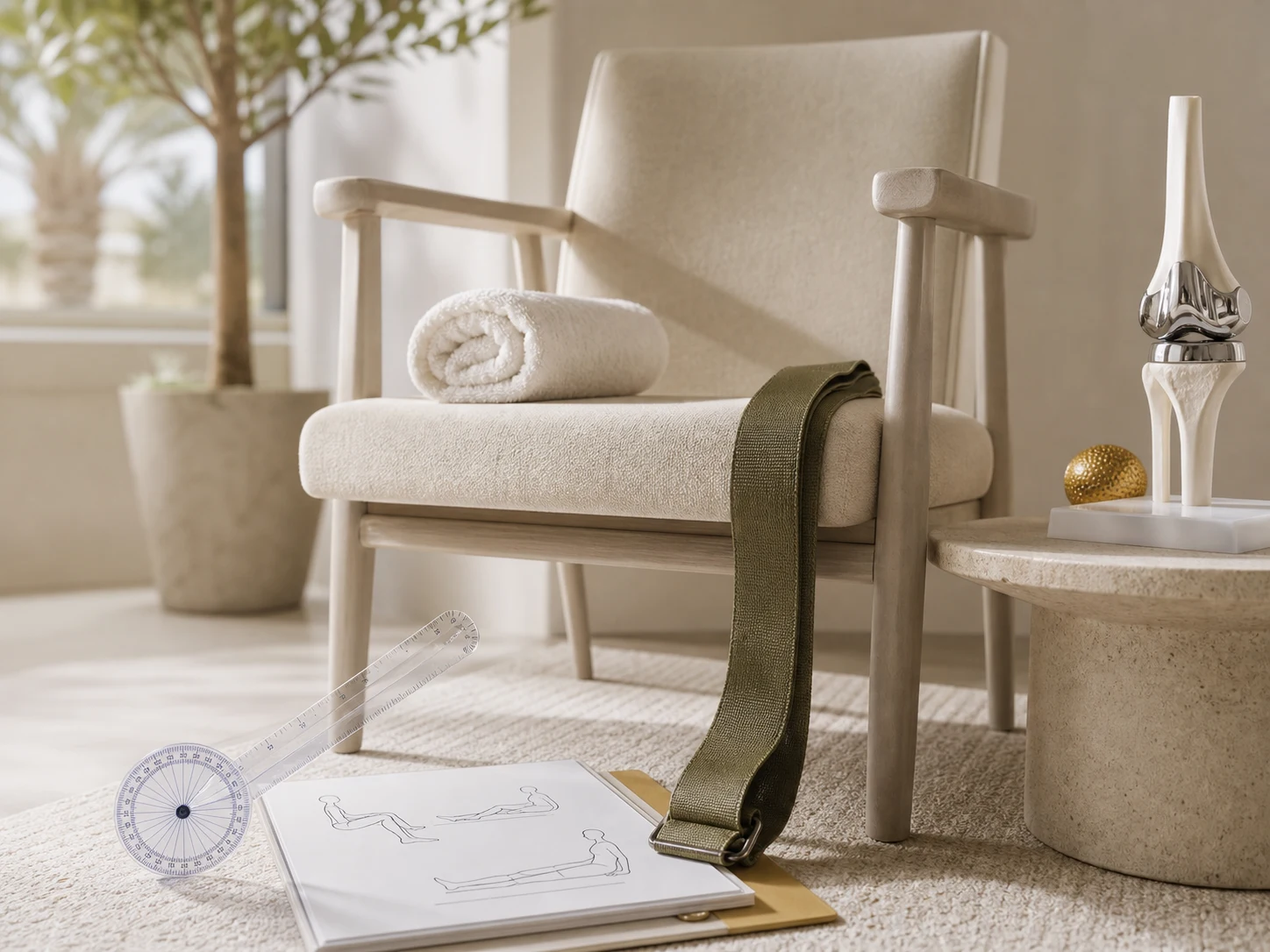
A typical post-knee plan runs three sessions a week for the first month, tapering to twice weekly, then weekly, across about twelve weeks. Staged surgical recovery is run as our post-surgical rehab service, sequenced with the operating surgeon.
Stroke and neurological rehabilitation
Time matters in stroke recovery, and the evidence on early mobilisation is well established (see the AVERT trial and subsequent NIH-indexed reviews). Home-based neuro-rehab works for post-stroke hemiparesis, Parkinson's disease, multiple sclerosis and post-traumatic brain injury, with the caveat that the home environment is itself part of the assessment.
When the underlying condition needs longitudinal medical oversight we link the case to our chronic disease care service.
Back, neck and orthopaedic pain
The largest non-surgical caseload. Mechanical low-back pain, cervical radiculopathy, frozen shoulder, plantar fasciitis, tennis and golfer's elbow. Manual therapy, exercise prescription, dry needling where indicated, and an honest education conversation. Most of the gain comes from what the patient does between visits.
Geriatric mobility, falls and balance
Falls are the second leading cause of unintentional injury death worldwide, with adults over sixty-five at highest risk (WHO Falls factsheet). Vestibular work, gait retraining, lower-limb strengthening and a home-environment review, rugs, lighting, bathroom transfers, are part of the same plan. The full geriatric service lives at our elderly care page.
Paediatric physiotherapy
Developmental delay, infant torticollis, post-orthopaedic recovery in children. Sessions run forty-five minutes and the parent is part of every session by design.
Features and benefits of home physiotherapy
Three things shift when the clinic comes to you.
The assessment is contextual. A clinic gait analysis on a flat hallway floor does not tell us how you manage the marble step into your kitchen. The therapist sees the actual obstacles. The plan is built around them.
Adherence rises. Rehabilitation research consistently finds that home-prescribed exercise adherence improves when the therapist has seen the space where the exercises will be done. The home becomes part of the prescription (NIA exercise and older adults).
Recovery time is not lost to transport. A post-operative patient in a Dubai summer, with a knee brace, navigating valet, lift, parking, clinic queue and then the actual session, loses a working morning. The home model removes that overhead. This is not a speed claim. The session itself takes the time it takes. We are talking about the total burden of being unwell.
Talk to a clinician about whether home physio fits your case. Request a home assessment →
What a session looks like
The first visit:
- Subjective history and goal-setting.
- Objective assessment, range of motion, strength, special tests, pain mapping.
- Initial treatment.
- Home exercise programme handed over in writing, with photos or short videos.
- Plan and next-visit booking.
Each follow-up visit:
- Brief re-check against last session's measurements.
- Treatment block.
- Progression of the exercise programme.
- Notes added to your file.
The notes follow you across services. If your case later involves a home nursing visit for wound care after the same surgery, the nursing team sees the physio progress and the physio team sees the nursing notes. One file, one team for the whole household.
Equipment the physiotherapist brings
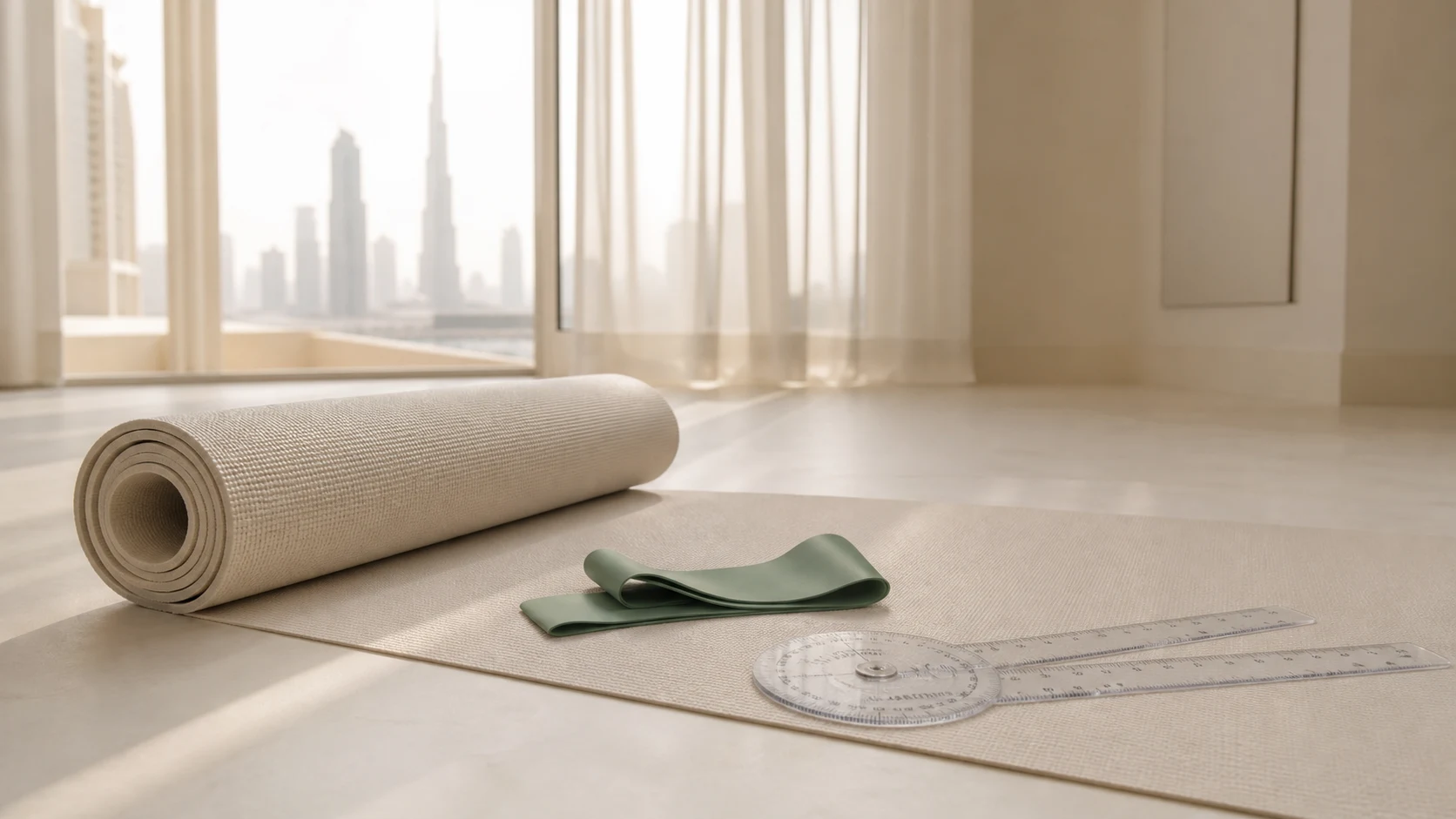
For most cases the therapist's own kit is enough: goniometer, resistance bands of graded tension, a portable plinth or mat, ankle and wrist weights, dry-needling kit where indicated, soft-tissue tools and a tablet for documentation.
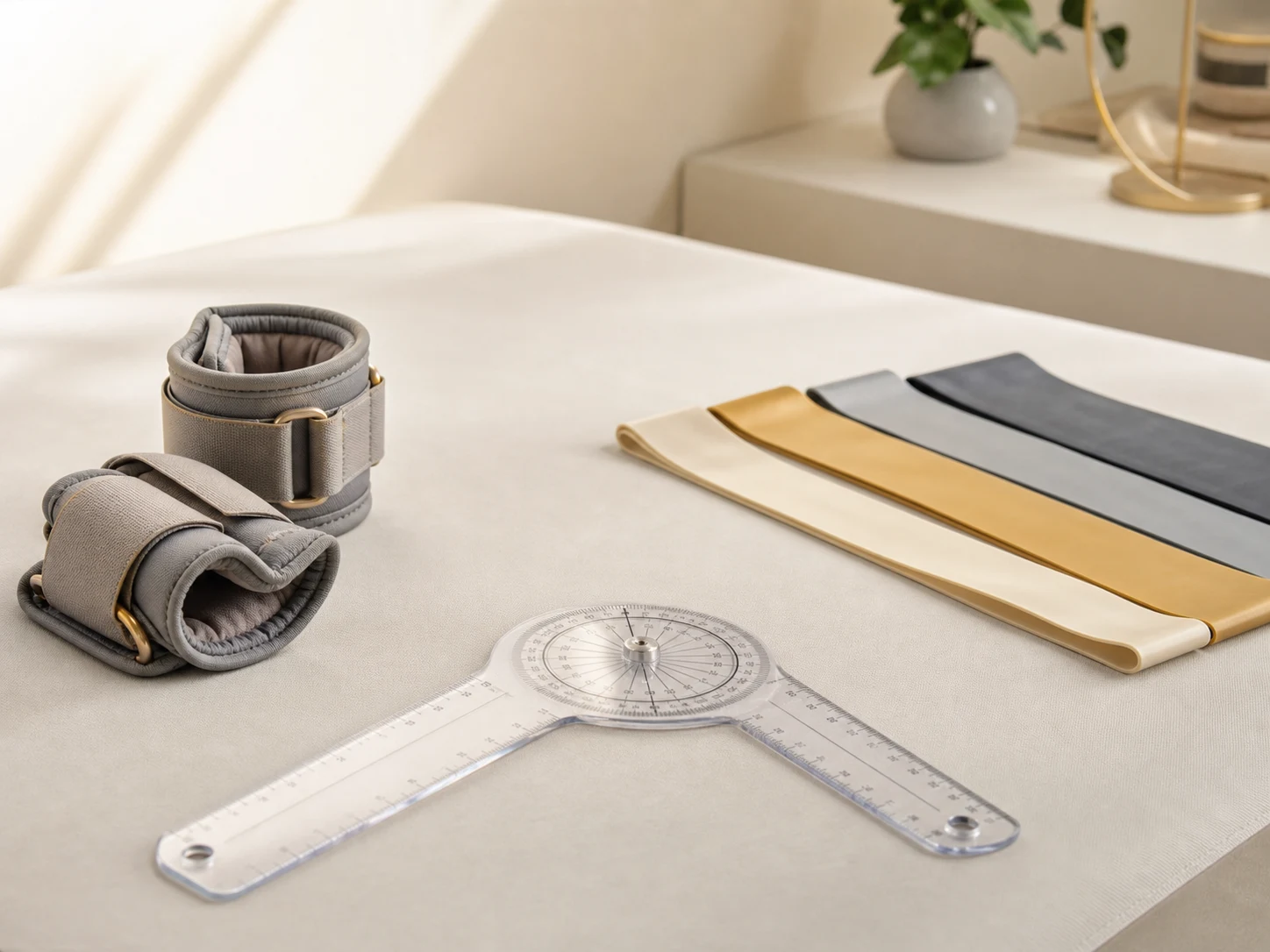
For neuro-rehab or post-surgical knees we sometimes bring a portable continuous passive motion (CPM) device, balance pads, or a parallel-bar substitute built from furniture already in the room. We will tell you in advance if your case needs a hospital bed or grab bar that you do not already have.
You do not need to set up a gym.
How we match a physiotherapist to your case
This is the part that determines whether a plan finishes.
BestDOC assigns the case to a physiotherapist whose specialism matches: neuro, ortho, paediatric, geriatric or sports. We then keep that same physiotherapist on the case across the full plan. Same physiotherapist. Same case. Same family. This is the model the practice has run for roughly eight years, across about 4,500 households in Dubai, with a clinical team of around thirty.
When a session has to move because of Eid scheduling, a Ramadan iftar conflict or a clinical reason, the rebooking happens at our end. You do not manage the calendar. We do. Visits run to the booked time under an "on time, or on us" promise.
If your physiotherapist is on leave, the cover physiotherapist is briefed on your file before the visit, not during it.
When home physiotherapy is not the right setting
Honesty saves time.
Cases that need hospital-grade hydrotherapy pools, isokinetic dynamometers, anti-gravity treadmills or high-end gait laboratories are referred to outpatient centres in Dubai that have that equipment. Acute red-flag presentations, sudden new neurological deficit, suspected cauda equina, unexplained weight loss with back pain, fever with a swollen joint, are sent for medical review, not physiotherapy. The first call in those cases is our doctor on call service, or the emergency department. BestDOC is not an emergency service; for emergencies call 998.
We will say so.
Cost, sessions and what is included
BestDOC home physiotherapy is self-pay, with no insurance billing. The coordinator quotes the price before the first visit, so there is no surprise on the invoice. Home physiotherapy starts from AED 300 for a 60-minute session with a DHA-licensed physiotherapist.
That price covers the licensed physiotherapist, all standard equipment, travel within Dubai zones, your written plan and the post-session note added to your file. There is no separate home-visit surcharge inside Dubai. Staged post-surgical courses are quoted per case; ask the operations team for an itemised quote before the first visit.
For background on what physical therapy is and what it treats, the US National Library of Medicine maintains a plain-language patient resource at MedlinePlus.
A short case from this year
A retired teacher, age sixty-eight, in Mirdif, was discharged after a left total knee replacement on a Saturday afternoon in March. By Monday morning the physiotherapist had assessed her at home, fitted the cold-therapy unit and started day-one quadriceps activation. Twelve weeks later she was walking unassisted on the Mirdif Park loop. The same physiotherapist ran every session. The family did no scheduling.
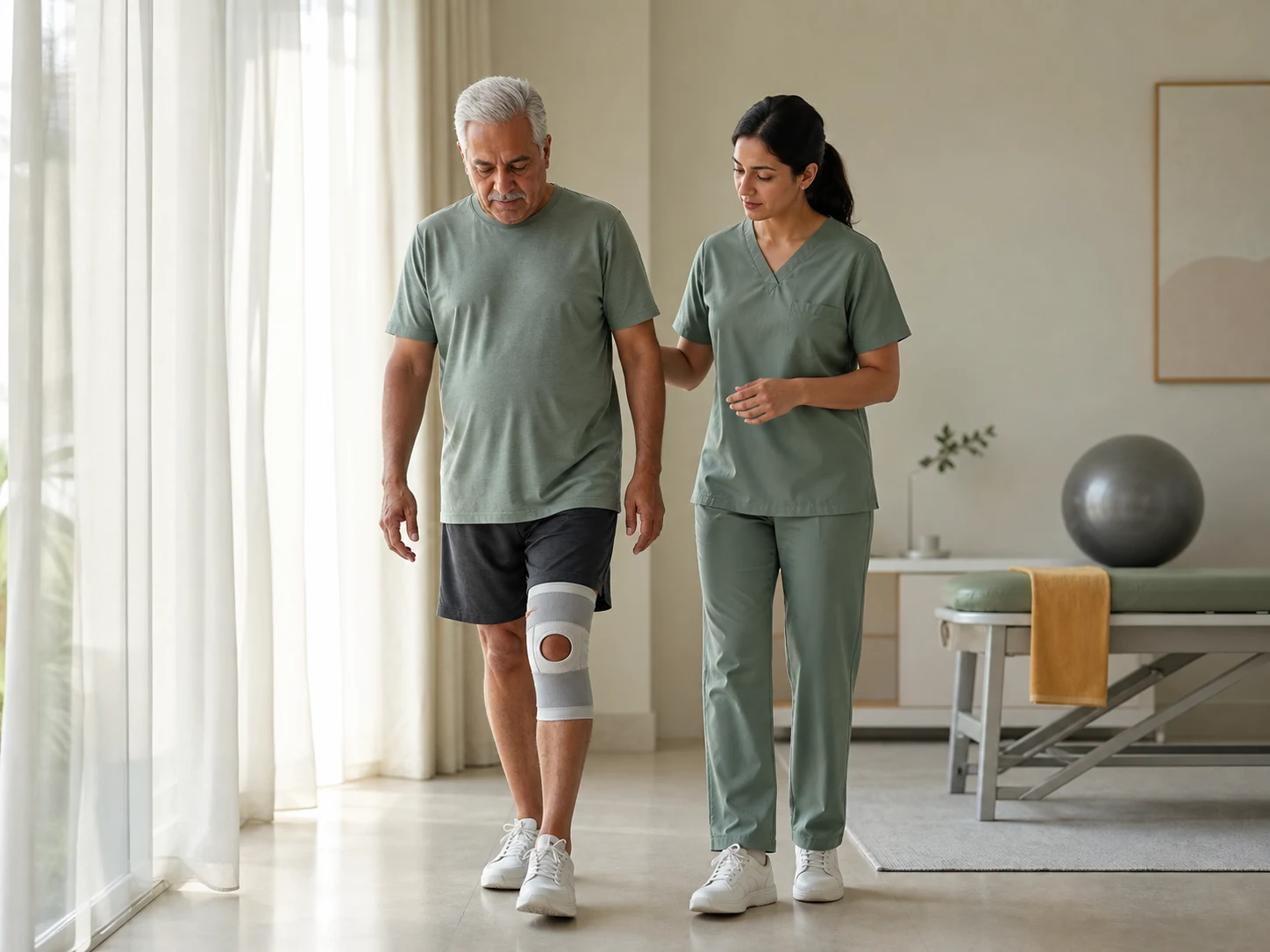
That is the design.
Talk to us
If you have a discharge letter, a new diagnosis, or a parent whose mobility is sliding, we can have a physiotherapist assess at home. The same physiotherapist stays on the case across the plan.
Call BestDOC toll-free on +971 800 2378 362 or message us on WhatsApp. The line is open 24/7, every day, and the team covers all of Dubai, door to door, with most home visits arriving within about 45 minutes.
Request a home physiotherapy assessment → · Home physiotherapy in Dubai · About the BestDOC clinical team
Educational. Not medical advice. Consult a licensed clinician.