


Do You Need to Fast Before a Lipid Profile Test in Dubai?
Yes, for a standard lipid profile test in Dubai, most labs, including BestDOC, still ask for a 9 to 12 hour fast. But that's no longer a strict rule for everyone. Major cardiology guidelines now accept a non-fasting sample for routine cholesterol screening, so the fast you've always assumed is non-negotiable might just be habit. Here's what fasting actually changes on your results, what current guidance says, and when skipping breakfast still genuinely matters.
Key Takeaways
- BestDOC's standard Lipid Profile draw (AED 90, results in 1 day) still defaults to a 9-12 hour fast, matching current lab protocol.
- Eating mainly raises triglycerides, about 26 mg/dL higher on average, which distorts the standard LDL calculation, not total cholesterol or HDL.
- ACC/AHA, NICE, and ESC/EAS guidelines now accept non-fasting samples as the default for routine cardiovascular screening.
- Fasting still matters if you have known high triglycerides, a pancreatitis history, or diabetes monitoring where triglycerides are tracked.
- Home draw slots start from 9 AM, making an overnight fast easier to plan around than a clinic queue.
What Fasting Actually Changes, and Why Labs Still Ask
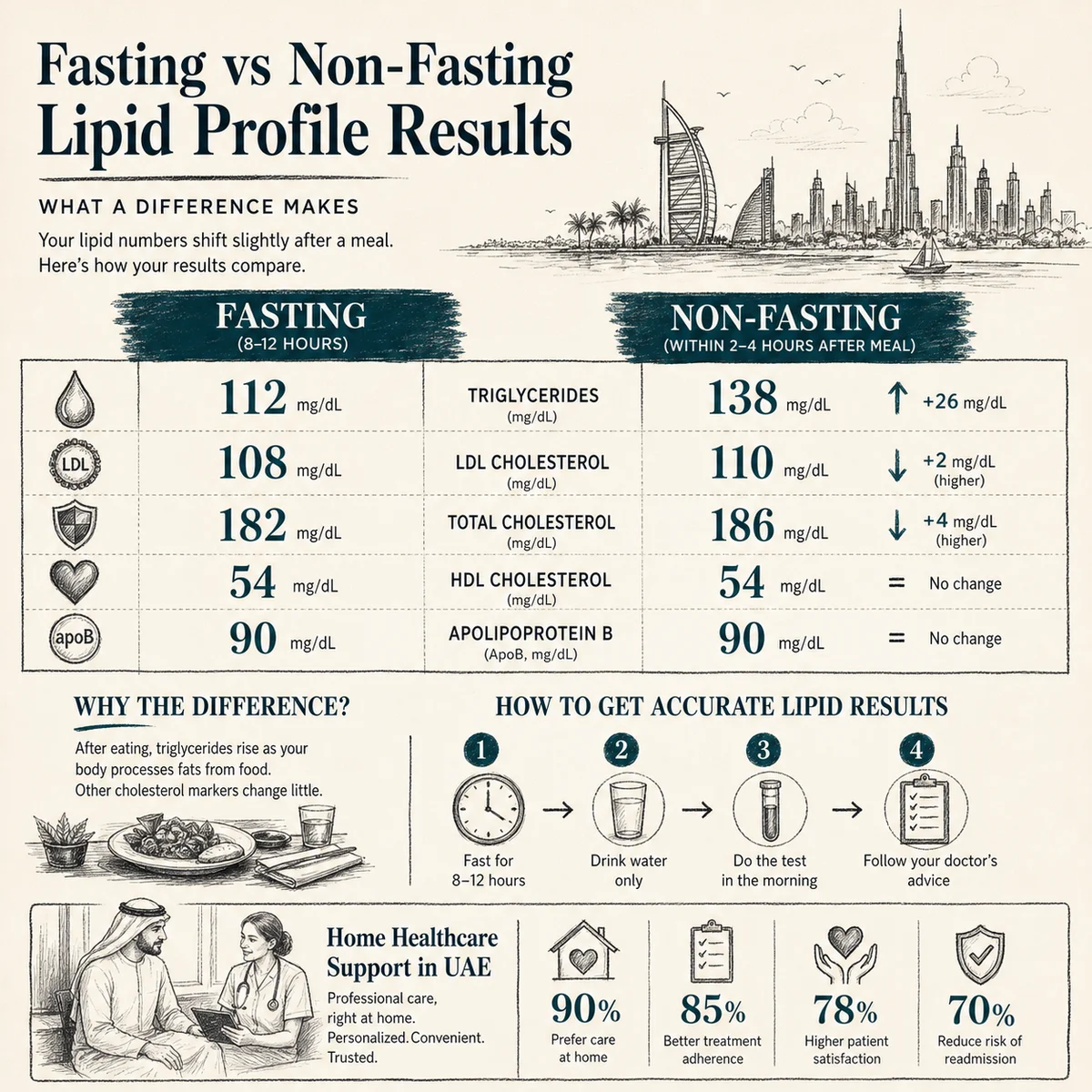
Eating before your draw raises triglycerides the most, by roughly 26 mg/dL on average, while total cholesterol and LDL shift down slightly and HDL barely moves, according to a pooled analysis of 244,665 participants.
That triglyceride swing matters because most labs, BestDOC included, calculate your LDL using the Friedewald equation: total cholesterol minus HDL minus triglycerides divided by five. Feed it an inflated triglyceride number and the LDL result comes out wrong too, even though nothing changed in your arteries overnight.
Fasting sidesteps that math problem. It's also why BestDOC's standard Lipid Profile test still defaults to a 9 to 12 hour fast: the DHA-licensed nurse who draws your sample follows the same protocol a hospital lab would, so the number your doctor reviews holds up.
What Current Guidelines Say, and When Fasting Still Matters
Cardiology guidance has moved on. Cardiologists writing in JACC now describe a non-fasting lipid panel as an acceptable default for routine cardiovascular risk screening, and the UK's NICE and Europe's ESC/EAS guidelines say the same. Non-fasting samples predict heart disease risk about as well as fasting ones for most people, without asking anyone to skip a meal.
That shift doesn't apply evenly, though. Fasting still genuinely matters if:
- You have known or suspected high triglycerides
- You or a family member has a history of pancreatitis
- You're on diabetes or chronic disease monitoring where triglycerides are a tracked number
- You're repeating a test to confirm an earlier abnormal fasting result
Outside those cases, the guideline shift applies to you, and a missed meal isn't going to change your doctor's read on your heart health.
Layla, a 34-year-old marketing manager in JLT, almost skipped her annual cholesterol check this year. Her calendar had no free morning for a clinic visit, and she assumed she'd need to be at a lab counter at 7 AM. When she found out BestDOC's home draw slots start from 9 AM, she booked one before her first meeting, fasted overnight as usual, and had her doctor's read on the result by the next day.
Want a fasting window that actually fits your schedule? See how BestDOC's home lab draws work before you book.
How to Prepare for a Fasting Lipid Profile Test at Home
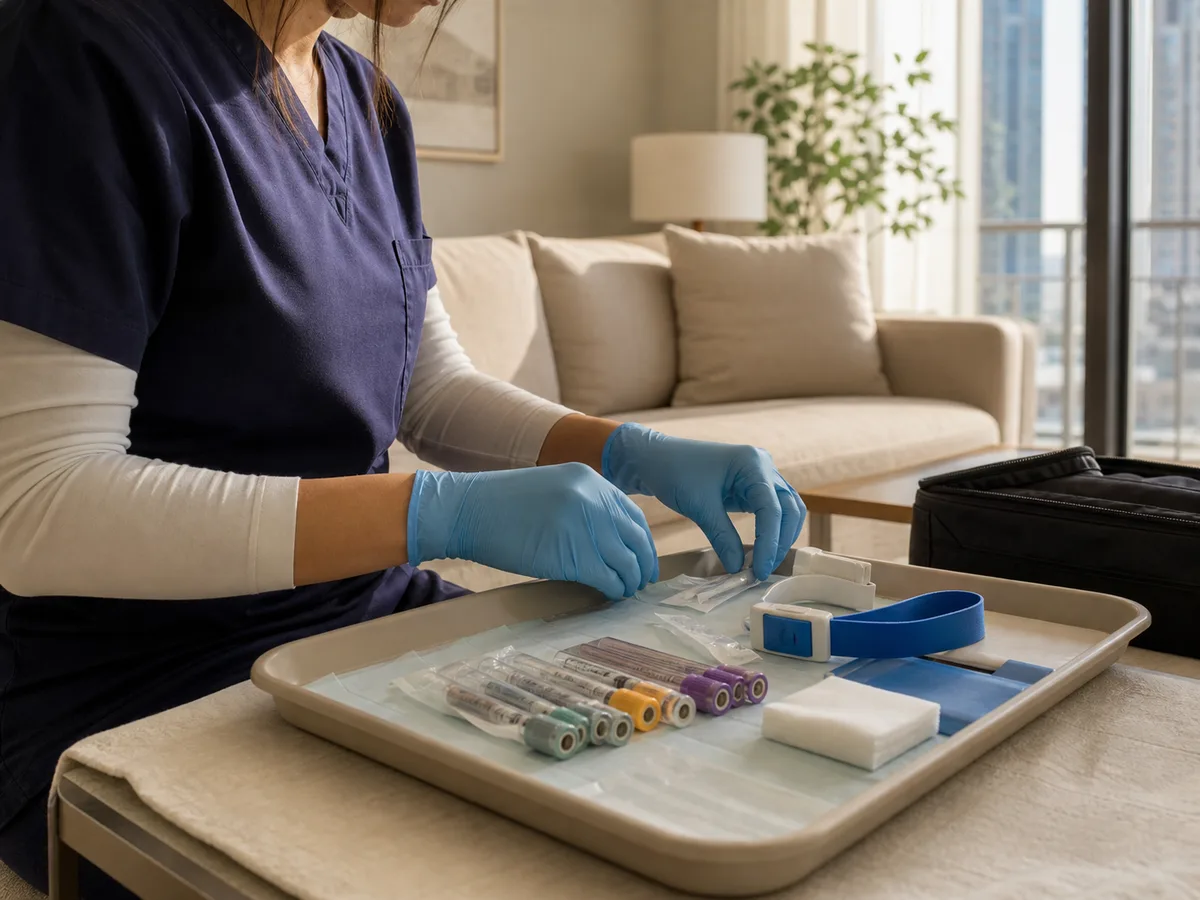
Preparing for a fasting draw is straightforward:
- Fast 9 to 12 hours before your appointment, water only, no coffee, tea, juice, or alcohol
- Take your routine medication as normal unless your doctor says otherwise
- Book an early home draw slot; BestDOC's morning slots start from 9 AM, so most of the fasting window falls overnight
- If you accidentally eat or drink something other than water, reschedule instead of pushing through it; give BestDOC at least one hour's notice so the visit can move to a day your fast actually holds
A DHA-licensed nurse takes the sample at your home, hotel, or office anywhere in Dubai, in about 20 minutes. The Lipid Profile test itself costs AED 90, with results back in a day and a doctor reading the report as part of that price, no separate consultation needed. If your numbers come back abnormal, ask about the Cardiac Blood Test panel (36 parameters, AED 430) for a fuller cardiovascular workup in one visit. For the full breakdown of LDL, HDL, and triglyceride ranges, see BestDOC's lipid profile cost and range guide.
Ready to test the difference a same-nurse home draw makes? Book a home lipid profile test with BestDOC, or read more about BestDOC's DHA-licensed clinical team before you confirm a slot.
Frequently Asked Questions
Do I need to fast before a lipid profile test in Dubai? For a standard lipid profile, yes, BestDOC's home draw defaults to a 9 to 12 hour fast. Current guidelines allow non-fasting samples for routine screening, but ask your doctor whether that applies to you.
How many hours should I fast before a cholesterol test? Plan on 9 to 12 hours, water only. Booking a morning slot makes most of that window overnight.
Can I drink water while fasting for a lipid profile test? Yes. Water doesn't break a fast. Coffee, tea, juice, and alcohol do, because they can shift your triglyceride reading.
What happens if I accidentally eat before my lipid profile test? Reschedule rather than go ahead with the draw. Give BestDOC at least one hour's notice and the visit moves to a day your fast actually holds.
Is a non-fasting lipid profile ever accurate enough? Yes, for routine cardiovascular screening. ACC/AHA, NICE, and ESC/EAS guidelines all accept non-fasting samples as the default for most adults.
What's the best time of day for a fasting lipid profile test at home? Morning works best. BestDOC's home draw slots start from 9 AM, so an overnight fast covers most of the wait.
How often should I repeat a lipid profile test? General guidance is every 5 years for average-risk adults, more often after 45 for men or 55 for women. See BestDOC's lipid profile cost and range guide for the full schedule.
A lipid profile test in Dubai still defaults to a 9 to 12 hour fast, and that's a reasonable default, not an outdated one; it's how BestDOC keeps your triglyceride and LDL numbers accurate for your doctor's read. Now you know when the rule doesn't apply to you, and how to make the fasting window painless: an early home draw from 9 AM, water only, normal medication. Book a home lipid profile test with BestDOC or message the team on WhatsApp (+971 800 2378 362, available 24/7 across Dubai), or get in touch with questions first.
Educational content only, not medical advice. Consult a licensed clinician about your own results.