
Is IV Drip Therapy Safe at Home? What Patients Should Know
The needle isn't the risky part of a home IV drip. The person holding it is. IV therapy at home is safe when a DHA-licensed nurse administers it under a doctor-reviewed plan, with a sterile single-use kit and a health screening before the line goes in.
You've probably seen drip menus, Hydration Express, Glutathione, a hangover fix, long before you've seen anyone explain the safety side. Here's what actually makes a home IV session safe, who should skip one, and what a real screening looks like before anyone touches your vein.
Key Takeaways
- IV therapy at home is safe when a DHA-licensed nurse follows a doctor-reviewed plan and uses a sterile, single-use kit.
- BestDOC requires a doctor to review and approve every drip request, including standard wellness drips, before a nurse administers it.
- Booking age is over 21; under 21 requires a parent's consent. Pregnancy is assessed case by case by the reviewing doctor.
- Mild bruising or lightheadedness is common and manageable; nurses are trained to handle an on-site reaction and stop the infusion if needed.
- Ask any home IV provider three things before booking: who administers it, whether a doctor reviews the request, and what's in the kit.
Is IV drip therapy safe at home?
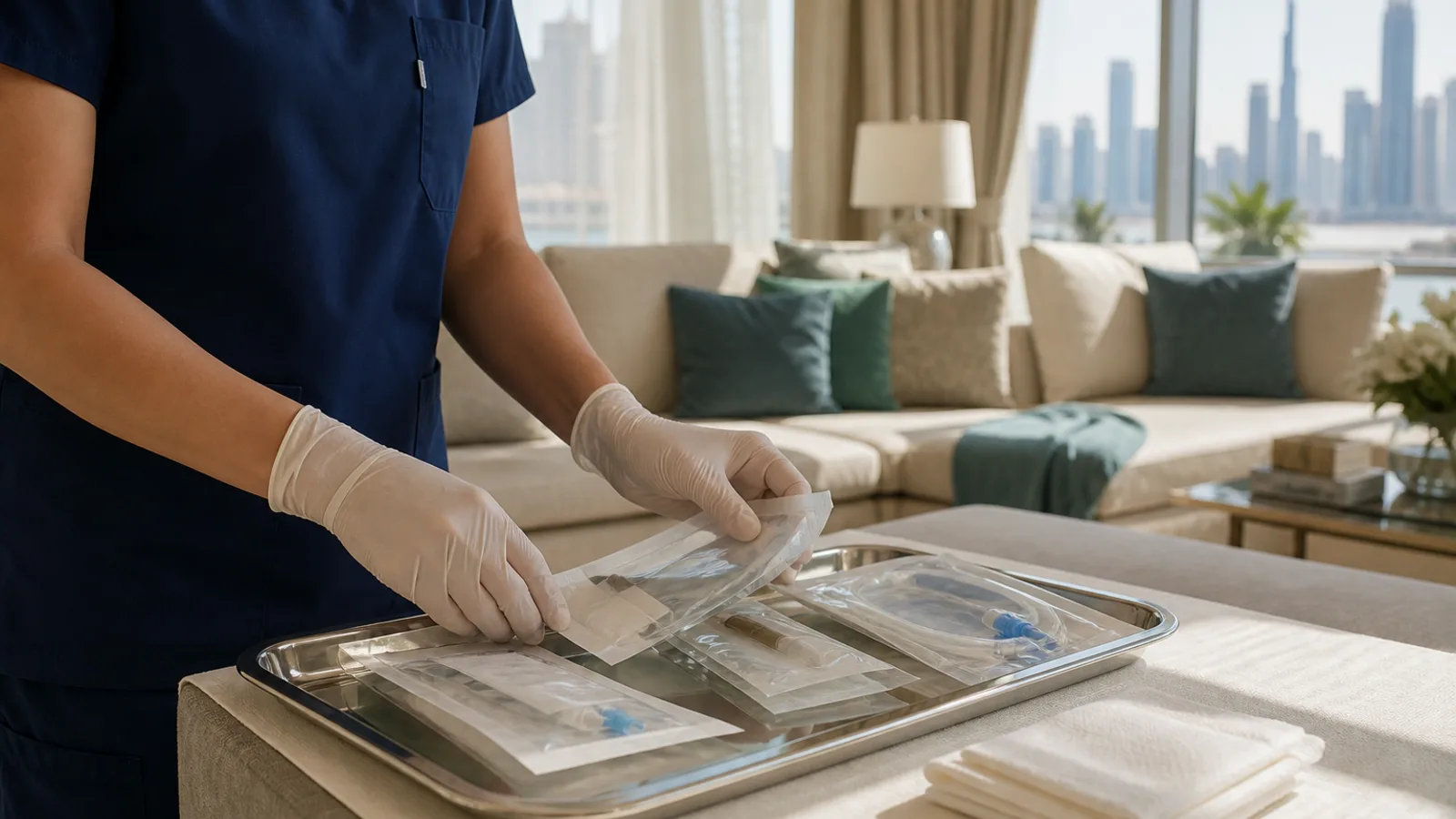
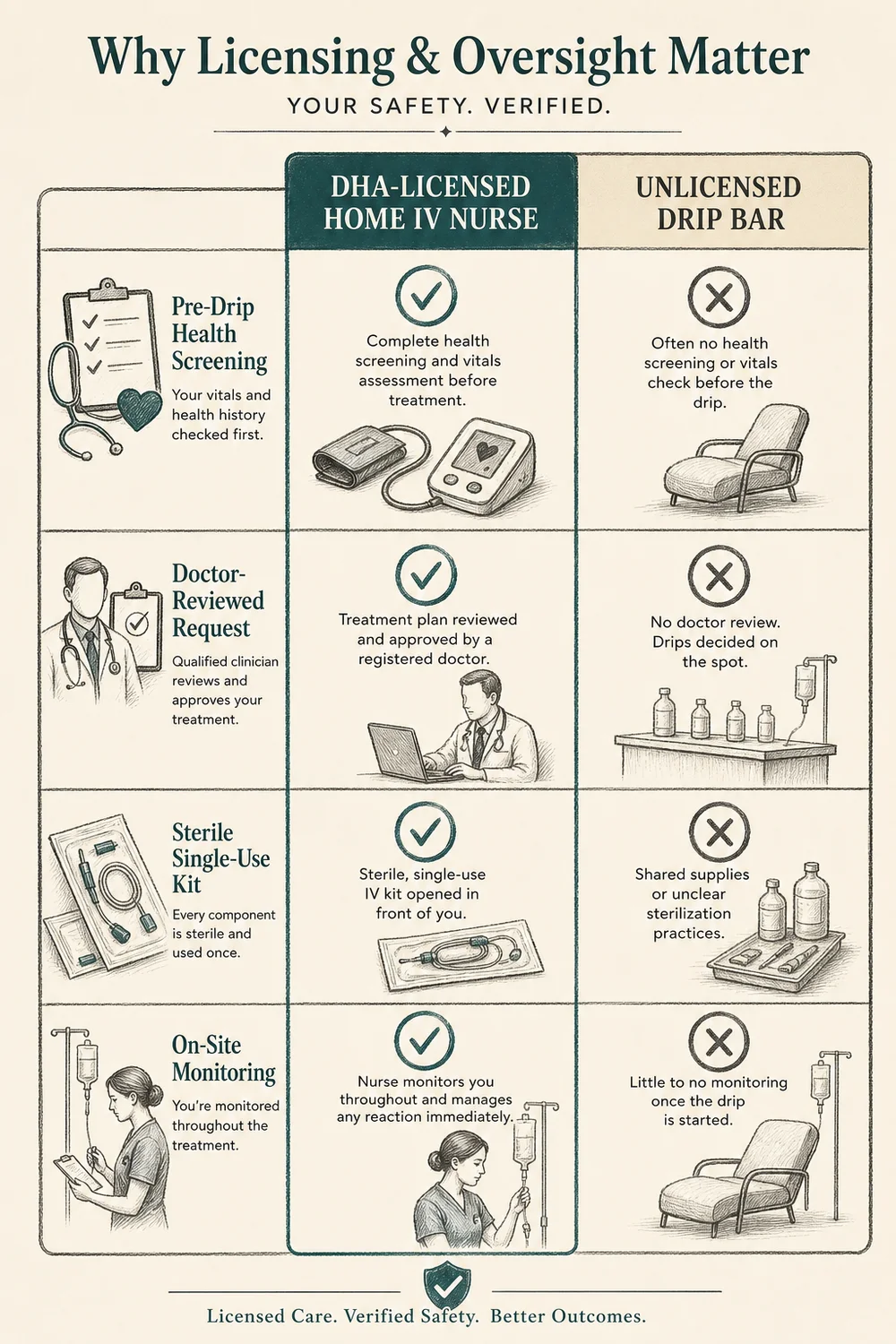
IV drip therapy at home is safe when three things line up: a DHA-licensed clinician, a doctor-reviewed indication, and a sterile, single-use kit opened in front of you. The Dubai Health Authority licenses every home healthcare practice operating in the emirate, and that licence is what separates a monitored medical procedure from a drip bar pop-up.
Placing an IV line breaks the skin barrier, so infection-control basics matter more than the vitamin mix inside the bag. The CDC's guidance on safe injection practices and the WHO's injection safety guidance both centre on the same points: single-use equipment, hand hygiene, and a trained person doing the insertion. That's the bar a licensed home nurse works to. An unlicensed provider skips the screening, the doctor review, or both, and that's where the real risk sits, not in the fluid itself.
BestDOC pairs a DHA-licensed nurse with a doctor-reviewed protocol on every visit. Want to see how that plays out for one specific drip? Explore BestDOC's IV therapy service →
Who should avoid IV drips
Not everyone is a fit for an elective wellness drip, and a proper intake process should tell you that before a session, not during one. At BestDOC, a few rules apply across the board:
- Age. You need to be over 21 to book. Under 21, a parent's written consent is required before anything is scheduled.
- Pregnancy. Assessed case by case. The reviewing doctor looks at the specific drip and your situation rather than issuing a blanket yes or no.
- Underlying conditions. For elective wellness drips, some conditions rule a booking out entirely; others just need doctor clearance first. That review happens before the nurse ever proceeds.
A medically necessary IV infusion ordered by a treating doctor is a different calculation. There, the risk and the benefit are weighed directly by the clinician managing your care, not by a standard wellness intake form. Mayo Clinic's patient guidance on IV vitamin therapy makes a similar point: elective infusions are convenience products layered on top of ordinary health, so the screening step is not a formality.
What to expect during a home IV session
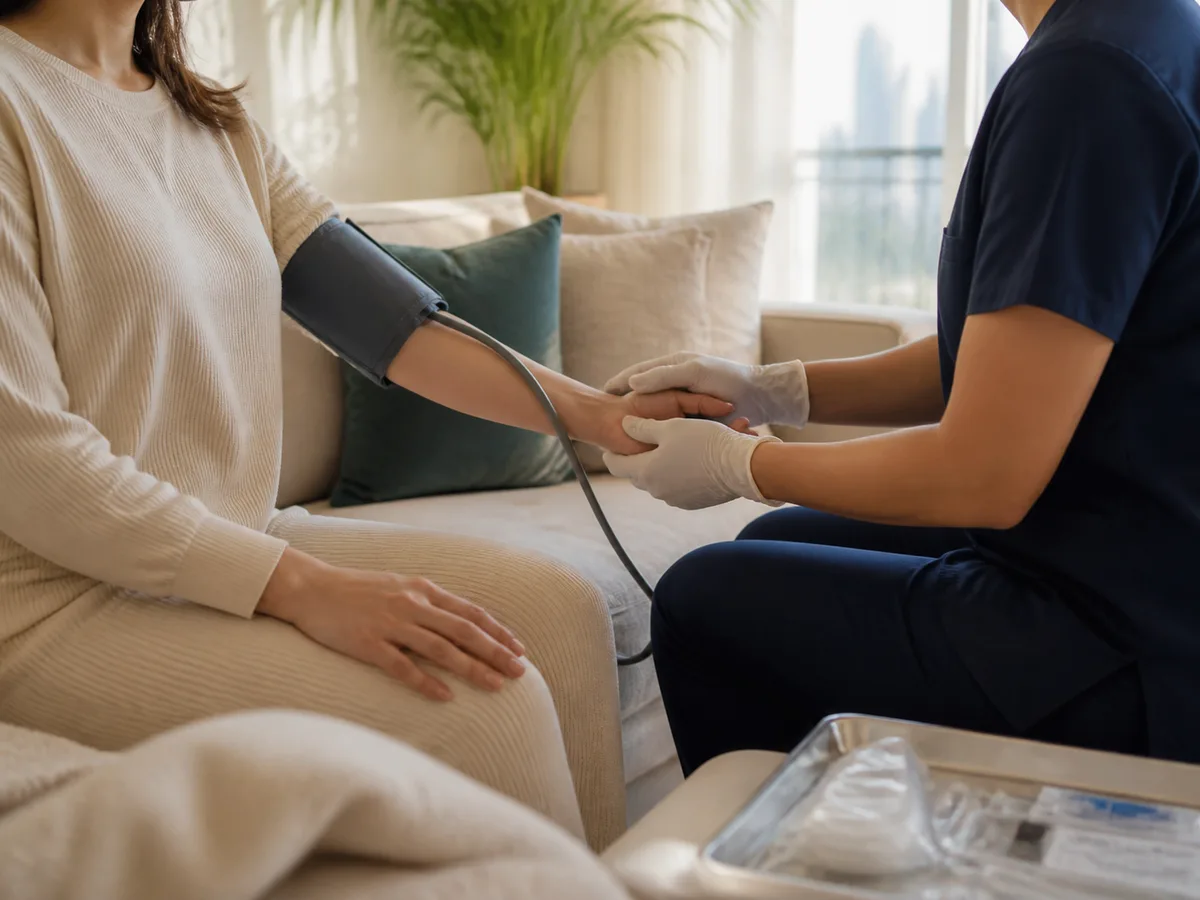
Every BestDOC session opens with a health screening before the nurse opens the kit. It's how the reviewing doctor and your nurse confirm the drip is the right fit for you that day. A doctor reviews and signs off on every drip request before it is administered, including standard wellness drips like Hydration Express, so your nurse isn't making that call alone in your home.
When Mariam in Al Barsha booked her first drip after a rough week of flights and late nights, she expected the nurse to just set up and start. Instead, the nurse worked through her health history and current medication before opening a single-use kit in front of her. Mariam later said that screening, not the drip, was what made her trust the service enough to book again.
During the infusion, your nurse stays with you and monitors you for the session. If anything unexpected happens, fainting, an allergic reaction, unusual pain at the site, BestDOC's home nurses are trained for on-site response and will stop the infusion and manage you directly. BestDOC is not an emergency service; for a genuine emergency, call 998. Once the line comes out, the nurse covers the site and gives you simple aftercare guidance before leaving.
Mild bruising at the site or brief lightheadedness are the most common things people notice, and research on peripheral IV placement backs that up: a study on peripheral catheter complications found infiltration and phlebitis among the most frequent issues with any peripheral line, hospital or home. They're normal, manageable, and a reason to tell your nurse, not a reason to panic.
Ready to book with a team that screens first? Talk to a BestDOC clinician about your case →
Questions to ask before you book a home IV provider
Drip menus are easy to find; safety information usually isn't. Before you book anywhere, ask:
- Who administers the drip? It should be a DHA-licensed nurse, not an unlicensed technician.
- Does a doctor review the request first? A wellness-drip menu is not the same as a doctor-reviewed indication.
- What's in the kit, and is it opened in front of you? Single-use, sterile, sealed until your session.
- What happens if something goes wrong? You want a clear answer, not a shrug.
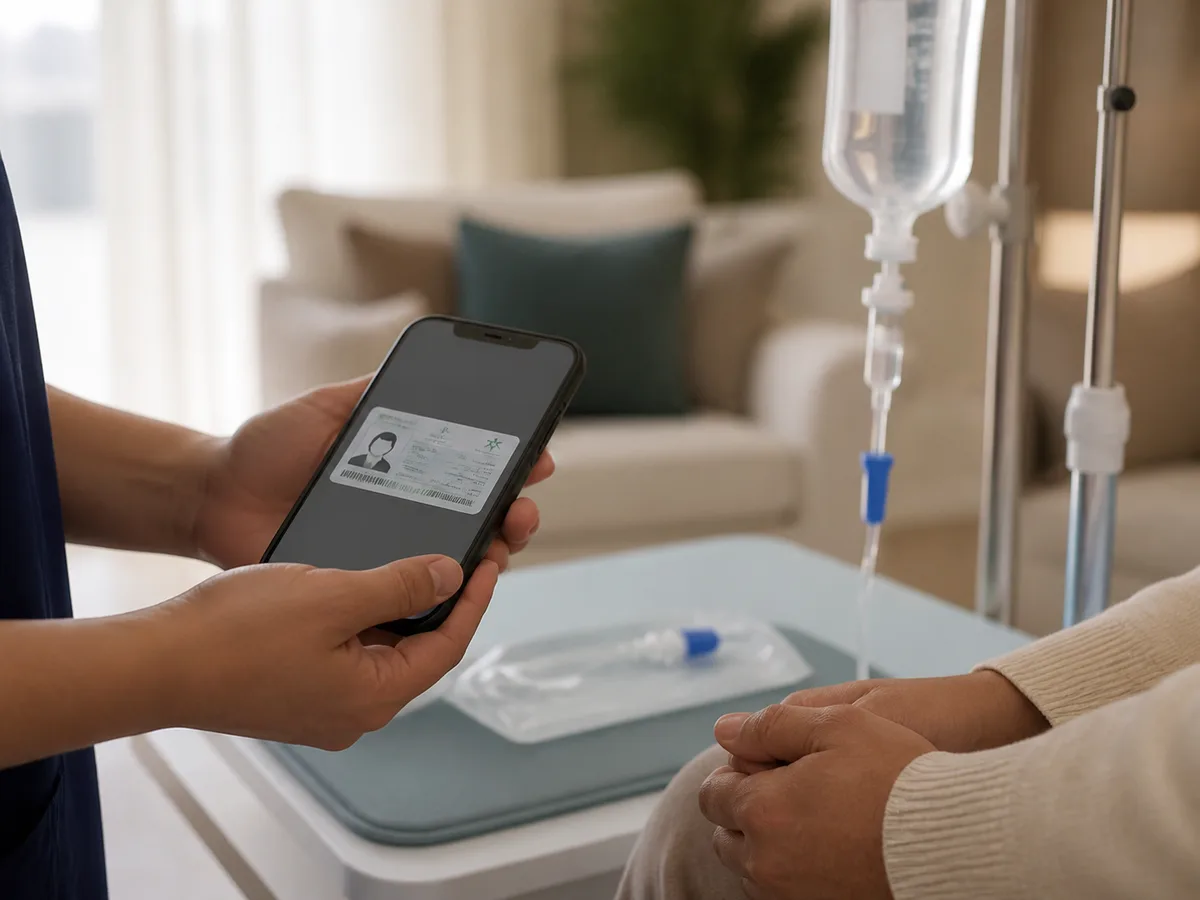
Any provider worth booking should answer all four without hesitating. Regulators have flagged this gap directly: the CDC has tracked dozens of hepatitis and bacterial-infection outbreaks tied to unsafe injection practices, almost always where basic infection-control steps were skipped, which is exactly the scenario a doctor-reviewed, DHA-licensed process is built to prevent. IV therapy at home is only ever "may support" your energy, recovery or hydration, not a cure for an underlying condition, and a doctor-reviewed plan is what keeps that claim honest.
The bottom line
IV drip therapy at home is safe when a DHA-licensed nurse follows a doctor-reviewed plan, screens you first, and opens a sterile kit in front of you. Know the boundaries, age, pregnancy, and underlying conditions, before you book, and ask any provider how they handle each one. The right provider makes that easy to check, not something you have to dig for.
BestDOC reviews every drip request with a doctor before a nurse administers it, anywhere in Dubai. See BestDOC's IV therapy options →, call the 24/7 toll-free line +971 800 2378 362, or message us on WhatsApp.
Educational. Not medical advice. Consult a licensed clinician. BestDOC Home Health Care L. L. C. is DHA-licensed; it is not an emergency service. For emergencies, call 998. Read more about our team on About Us.