


Indoor Air Quality and Your Health: Signs to Watch in Dubai Homes
Poor indoor air quality usually shows up as a headache, unexplained fatigue, or a scratchy throat, not as anything you can see. In Dubai, where homes run air conditioning for most of the year and stay sealed against heat and dust, the air inside can carry more of these irritants than the air outside.
The EPA has found that indoor air can be two to five times more polluted than outdoor air, and most people spend the bulk of their day indoors without ever suspecting it. If you've been blaming a string of headaches or a foggy afternoon on being busy, the cause might be sitting in your living room.
Key Takeaways
- Indoor air can be 2-5x more polluted than outdoor air, and Dubai's sealed, AC-heavy homes make this worse (EPA).
- Short-term symptoms include headache, fatigue, dizziness, and eye, nose or throat irritation (CPSC).
- Symptoms that ease once you leave the house point to the air, not a virus.
- Self-fixes that don't resolve symptoms within a few days mean it's time to see a doctor, especially for children, older adults, or anyone with asthma or COPD.
- A doctor-on-call visit and a lab-at-home panel can confirm the trigger without a clinic waiting room.
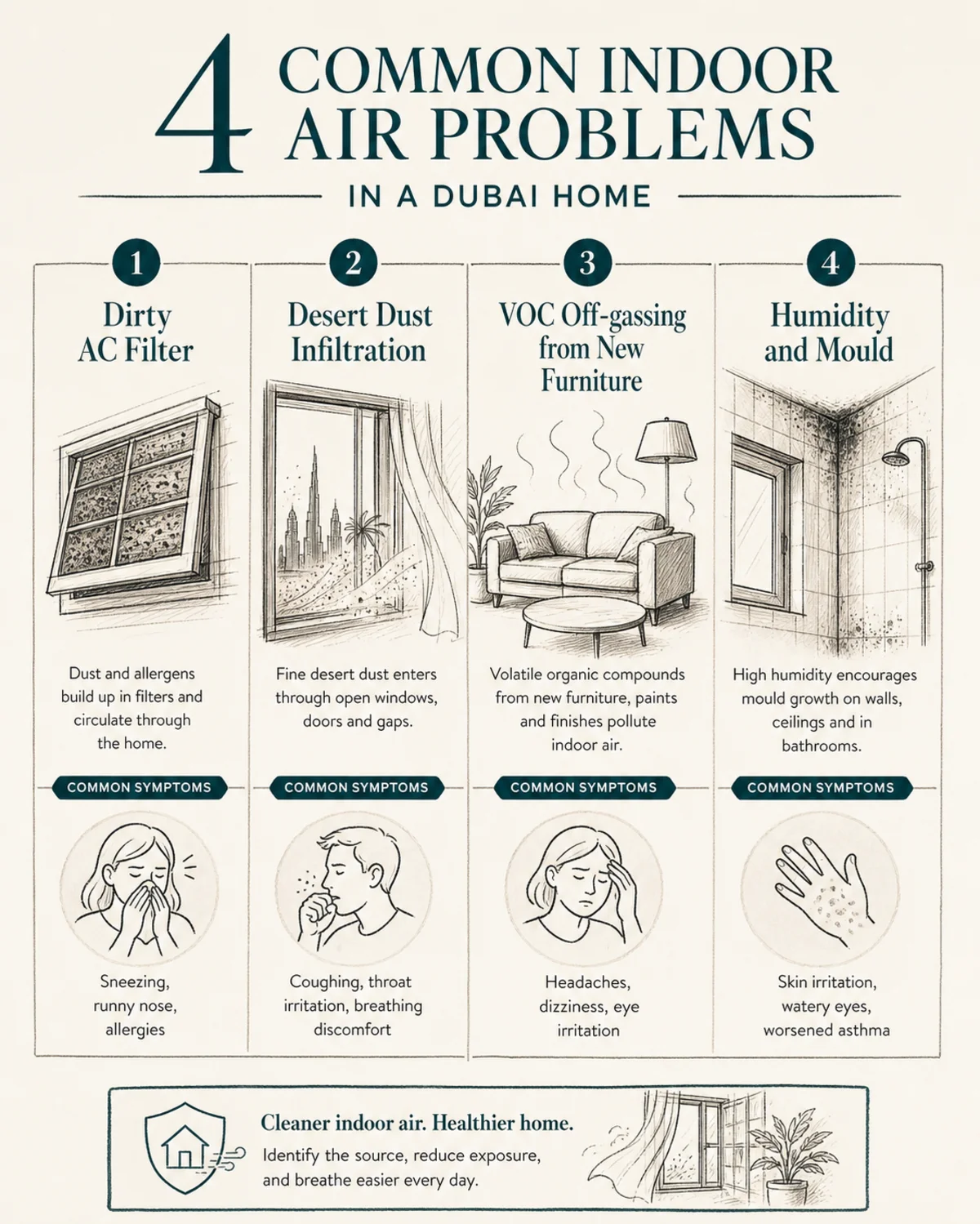
What's Really in the Air Inside a Dubai Home
Four things typically drive indoor air problems here, and most Dubai households have all four to some degree.
- AC systems and dirty filters recirculate the same air for months if filters aren't changed, concentrating dust and allergens instead of clearing them.
- Desert dust and sandstorms work their way in around doors, windows and vents, adding fine particulate matter that a standard filter doesn't always catch.
- VOCs off-gas from new furniture, paint, and many cleaning products, and build up faster in a sealed, air-conditioned home than in one with open windows.
- Humidity and mould take hold anywhere condensation collects, such as AC units, bathrooms, and window frames, especially during the humid summer months.
Numbers at a glance
| Factor | Health-relevant threshold | Why it matters |
|---|---|---|
| PM2.5 | WHO guideline: 5 µg/m³ annual average | Fine dust that reaches deep into the lungs |
| VOCs | No safe universal number; source control is the guidance | Off-gas from furniture, paint, cleaning sprays |
| CO2 | Above ~1,000 ppm signals poor ventilation | Builds up in a sealed, occupied room |
Health Effects of Poor Indoor Air Quality
Short-term effects show up quickly: headache, fatigue, dizziness, nausea, and irritation of the eyes, nose or throat are the most common, according to the CPSC. Some people notice symptoms only at home and feel better within hours of leaving.
Long-term exposure carries more weight. The NIEHS links sustained indoor air pollutant exposure to worsened respiratory disease, more frequent asthma flare-ups, and added cardiovascular risk over years, not days. OSHA also describes "sick building syndrome," a cluster of symptoms tied to a specific building that clears once the person leaves it, as a recognised, real pattern rather than something people imagine.
This is a different, wider issue than the sneezing and itchy eyes covered in our dust allergy guide; that post is worth a read if sneezing is your main complaint, but headache and fatigue point somewhere else.
Want a home doctor to check whether your symptoms fit this pattern? Request a doctor home visit and get assessed where you're already feeling it.
When to Fix It Yourself vs. When to Call a Doctor
Most mild cases respond to a few changes at home:
- Replace or clean AC filters on a regular schedule, especially after dust storms.
- Ventilate daily, opening windows briefly when the outdoor air quality allows it.
- Swap strong-scented cleaning products and check new furniture for off-gassing.
- Control humidity, and clean visible mould as soon as it appears.
When Fatima noticed her father, who has managed COPD for six years, was more breathless than usual after she'd redecorated his room in March 2026, she assumed it was the new paint smell fading with time. It didn't. A same-week doctor-on-call visit found his symptoms were tracking with the sealed, freshly painted room, and a short course of ventilation and a filter change settled things within days, once the paint fumes had properly cleared.
See a doctor if symptoms persist after these fixes, if there's breathing difficulty at any point, or if a child, an older adult, or someone managing asthma or COPD is affected. A BestDOC doctor can assess you at home, rather than asking someone who's already unwell to sit in a clinic.
Testing to Confirm What's Triggering Your Symptoms
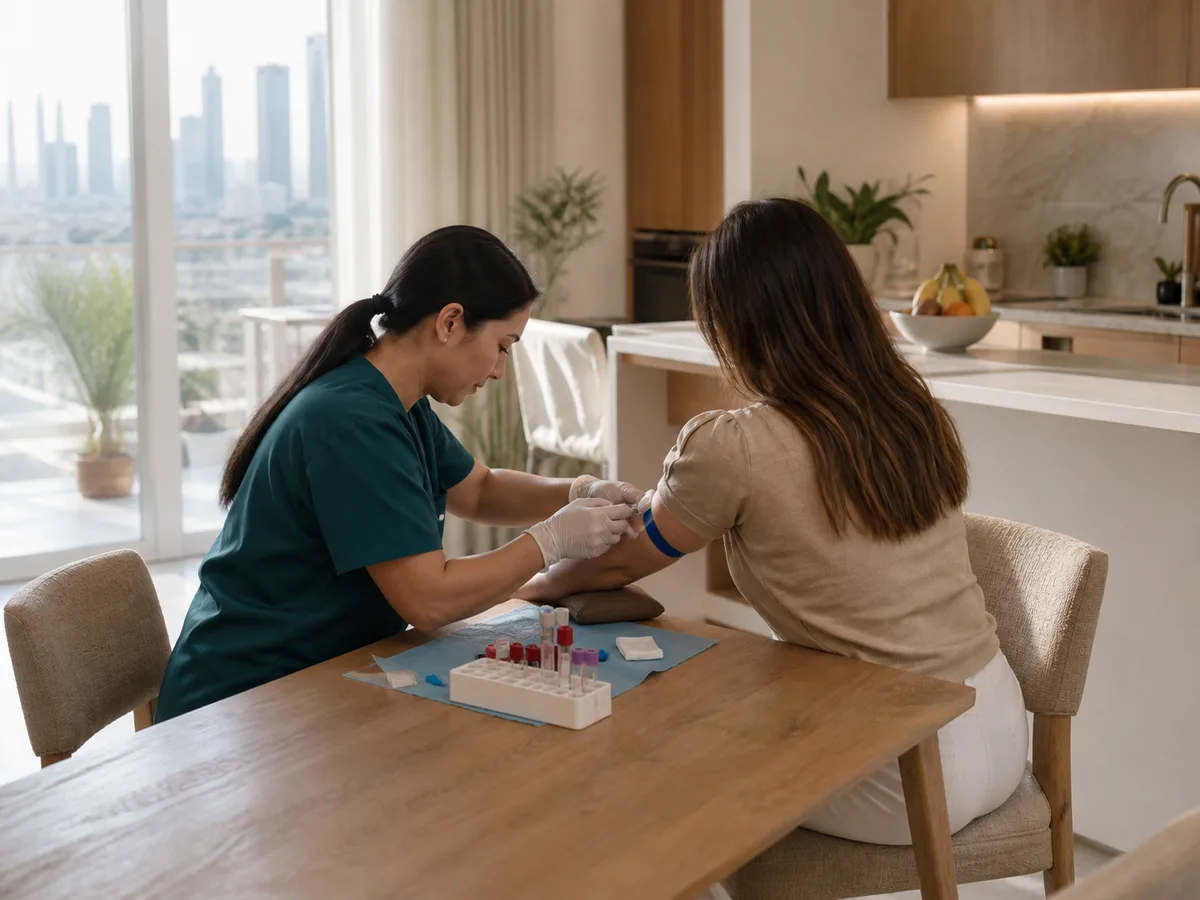
A doctor's assessment sometimes points to a specific trigger worth confirming with a test, rather than guesswork. An allergy or general respiratory panel through home blood testing can clarify whether dust, mould or another allergen is driving symptoms, and results feed straight back into your doctor's plan. For residents managing a chronic condition long-term, ongoing chronic disease care keeps flare-ups from indoor air triggers on a documented, doctor-signed plan instead of a one-off visit.
The EPA's short video on indoor air quality is a useful primer if you'd rather watch the basics than read them.
Poor indoor air quality is one of the more overlooked causes of everyday headaches, fatigue and worsened allergies in Dubai homes, and it responds well once you know what's driving it. Start with the fixes in your control: filters, ventilation, humidity, lower-VOC products. If symptoms hold on past that, especially for a child, an older parent, or someone managing a chronic condition, a doctor's assessment at home is worth more than another week of guessing. Read more about BestDOC's DHA-licensed clinicians on our about page.
Request a doctor home visit or get in touch and BestDOC will confirm what's next before anyone has to leave the house.
Educational. Not medical advice. Consult a licensed clinician.