


Heatstroke Symptoms in the UAE: Warning Signs and When to Get Help
Heat stroke symptoms in the UAE include a body temperature above 40°C, confusion or slurred speech, hot, dry skin, and a racing pulse, a true 998 emergency, not a home-visit case. Heat exhaustion looks different: heavy sweating, dizziness, cramps, and a person who stays alert throughout. The two sit on the same spectrum, and in UAE summer conditions one can turn into the other before anyone notices. Below: the symptom checklist for each stage, who's most at risk in Dubai's heat, and a straight answer on when a doctor at home is enough versus when to call 998.
Key Takeaways
- Heat stroke is a 998 emergency: confusion, hot dry skin, and a temperature above 40°C/104°F mean call for help now.
- Heat exhaustion looks different, heavy sweating, dizziness, cramps, and the person stays alert, and can often be managed at home if it improves with cooling.
- Untreated heat exhaustion can progress to heat stroke within 10-15 minutes in extreme heat, per CDC guidance.
- Elderly residents, young children, outdoor workers, and anyone on diuretics or beta-blockers carry the highest risk in Dubai's peak months.
- Once a clinician has cleared a mild case, a BestDOC doctor home visit (from AED 300) or Hydration Express drip (AED 189) may support recovery, never as a stand-in for 998.
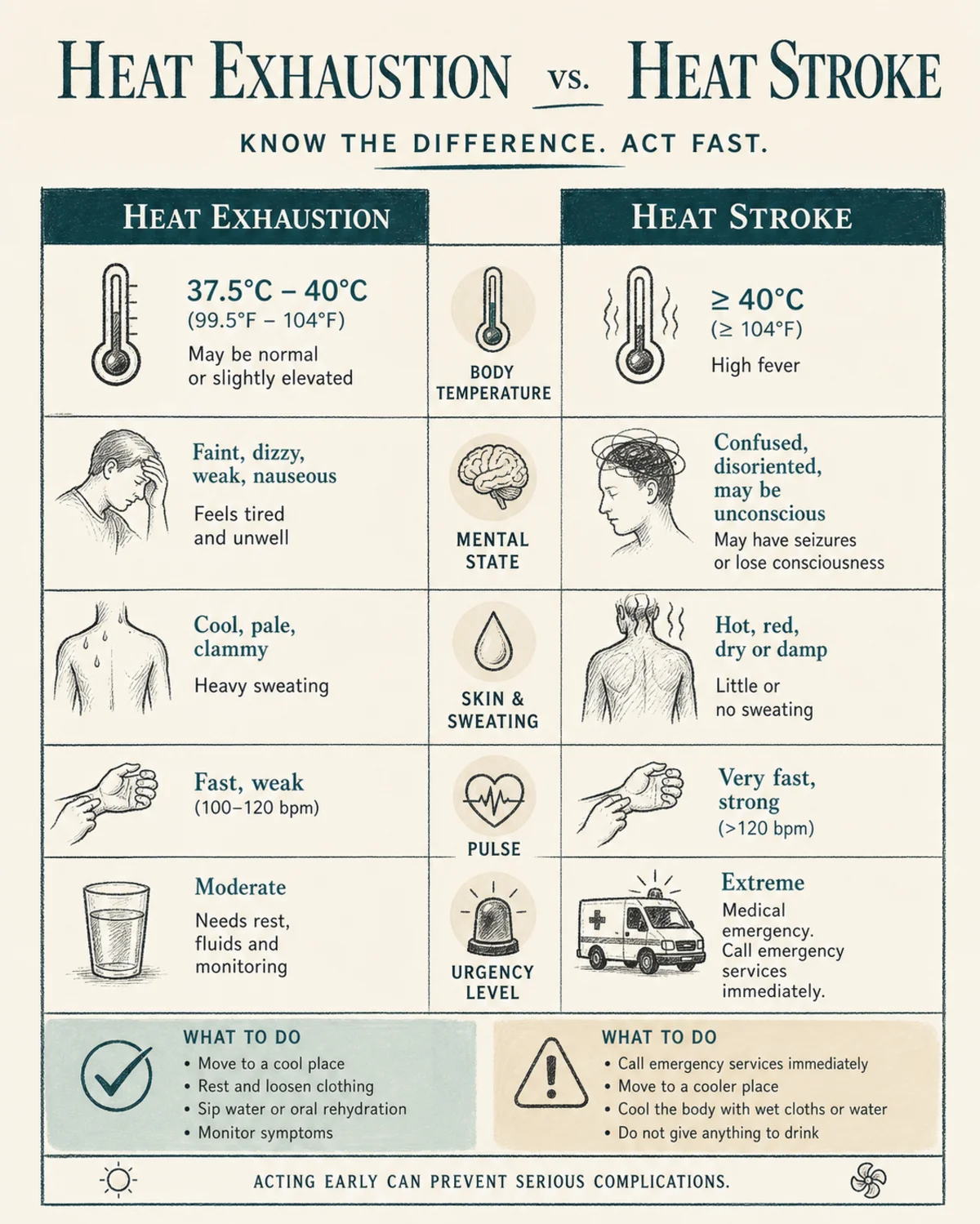
Heat Exhaustion vs. Heat Stroke: The Symptoms to Know
Heat exhaustion and heat stroke sit on the same spectrum, but the line between them is a medical one. In heat exhaustion, the body is still sweating and trying to cool itself. In heat stroke, that cooling system has failed, and it's a life-threatening emergency.
| Sign | Heat exhaustion | Heat stroke |
|---|---|---|
| Body temperature | Normal to slightly raised | 40°C/104°F or higher |
| Mental state | Alert | Confused, agitated, or slurred speech |
| Skin | Cool, moist, heavy sweating | Hot, dry, or sweating suddenly stops |
| Pulse | Fast, weak | Fast, strong, pounding |
| What to do | Cool down, rest, fluids | Call 998 now |
The single most reliable red flag is mental status. Confusion, agitation, or slurred speech in the heat means heat stroke until proven otherwise. Other warning signs include a throbbing headache, nausea, dizziness, and, in severe cases, loss of consciousness or seizure. According to CDC guidance, once the body's cooling mechanisms fail in extreme heat, temperature can climb to dangerous levels within 10 to 15 minutes, which is why early symptoms shouldn't be waited out. Heavy sweating that suddenly stops is a bad sign, not a good one, it means the body's cooling mechanism has given out.
Who's Most at Risk, and What to Do Right Now
Anyone can develop heat stroke in UAE summer heat, but some residents carry more risk: adults over 65, children under four, outdoor and manual workers, people fasting through summer months, and anyone on diuretics, beta-blockers, or managing a chronic condition.
Mike, a site supervisor in Al Quoz, felt a headache and heavy sweating around 1pm in July but kept working through his break, assuming it was ordinary summer fatigue. A colleague found him confused and stumbling not long after; his sweating had stopped, and his skin was hot to the touch. Paramedics later confirmed heat stroke, a stage a short break in the shade earlier that afternoon could likely have prevented.
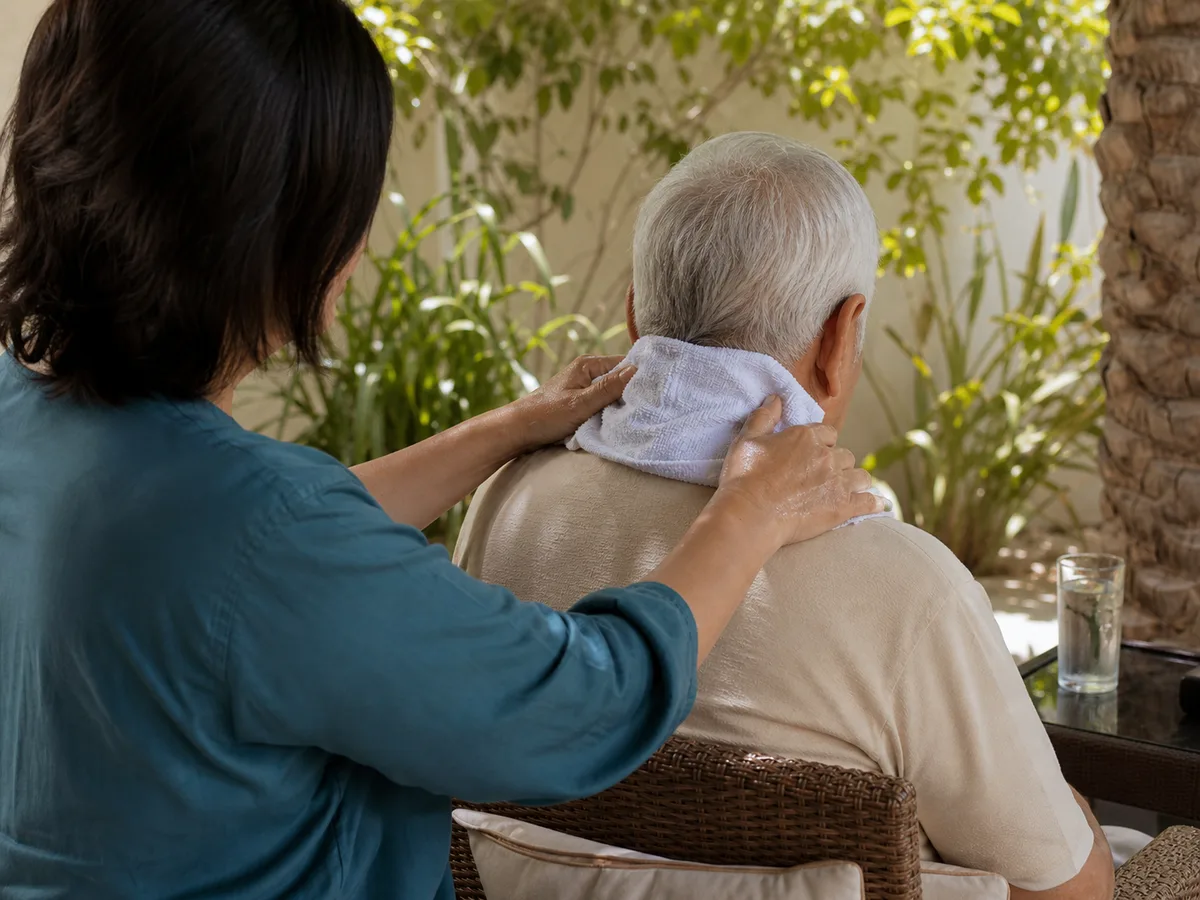
The moment mental status changes, hot dry skin appears, or someone collapses, call 998. While help is on the way: move the person into shade or air conditioning, remove excess clothing, and cool them with cold water or ice packs at the neck, armpits, and groin. Do not give fluids by mouth if the person is confused; choking risk is real. Not sure which stage someone's in? Talk to a clinician about your case before deciding.
When to Call a Doctor at Home vs. 998, and Recovering After
998, immediately: confusion, slurred speech, collapse, seizure, loss of consciousness, or skin that's gone hot and dry. This is not a home-visit case.
A BestDOC doctor home visit fits the other, far more common scenario: someone alert, sweating heavily, cramping, and not improving with shade, fluids, and rest. A telemedicine call (AED 100) works as a first triage step when it's unclear which stage someone's in; a same-day doctor home visit (from AED 300) covers an in-person check, prescription if needed, and a free 7-day follow-up.

Once a clinician has cleared a heat exhaustion case, recovery is about steady rehydration and 24-48 hours of monitoring, especially for an elderly household member. A doctor-reviewed Hydration Express IV drip (AED 189) may support rehydration at that stage, under clinician review, it is not a treatment for heat stroke itself and is never a substitute for the 998 call above.
Prevention matters more than any of this: 3-5 litres of water a day for anyone spending real time outdoors, avoiding the midday peak hours, and checking on elderly relatives, outdoor staff, and fasting family members through summer. Elderly care check-ins from BestDOC catch heat vulnerability early, before it becomes an emergency. Read more about our clinical team.
Watch this Mayo Clinic explainer on telling heat exhaustion and heat stroke apart:
Mayo Clinic Minute: Heat exhaustion and heatstroke
Sources: CDC, Protect Yourself From the Dangers of Extreme Heat, CDC, Heat-related Illnesses, and Mayo Clinic, Heatstroke: First Aid informed the guidance above.
Frequently Asked Questions
What is the first sign of heat stroke? The earliest reliable sign is a change in mental status, confusion, agitation, or slurred speech, appearing alongside a very high body temperature. It's often preceded by heat exhaustion symptoms like heavy sweating and dizziness that were missed or ignored.
How do you tell heat exhaustion from heat stroke? The person's mental state is the clearest marker. In heat exhaustion they stay alert, sweat heavily, and have cool, moist skin. In heat stroke they become confused or unresponsive, and their skin often turns hot and dry as sweating stops.
How fast can heat exhaustion turn into heat stroke? Per CDC guidance, once the body's cooling mechanisms fail in extreme heat, body temperature can climb to dangerous levels within 10 to 15 minutes, which is why early symptoms shouldn't be waited out.
Should I give water to someone with suspected heat stroke? Not if they're confused, agitated, or not fully alert, choking risk is real. Move them to shade or air conditioning, cool them with cold water or ice packs, and call 998 instead of trying to get them to drink.
Who is most at risk of heat stroke in the UAE? Adults over 65, children under four, outdoor and manual workers, people fasting through summer months, and anyone on diuretics, beta-blockers, or managing a chronic condition carry the highest risk in UAE heat.
When should I call a doctor at home instead of 998? A doctor home visit or telemedicine call fits heat exhaustion that isn't improving, someone alert, sweating, and cramping. Any confusion, collapse, seizure, or hot dry skin is a 998 case, not a home visit.
The Bottom Line
Heat exhaustion and heat stroke look different once you know what to check: mental state, skin, and how the sweating behaves. Confusion, hot dry skin, or collapse means 998, no exceptions. Alert, sweating, cramping, and not improving means a doctor at home or a telemedicine call is the right next step. If you'd like a same-day check or rehydration support once someone's already been cleared, reach BestDOC toll-free at +971 800 2378 362 or on WhatsApp, 24/7 across Dubai.
Educational. Not medical advice. Consult a licensed clinician. BestDOC is not an emergency service, for any active emergency, call 998.