


Brain Fog Causes: What Helps, and When to See a Doctor
Brain fog, trouble concentrating, forgetfulness, mental fatigue, is usually caused by dehydration, poor sleep, stress, or a blood sugar dip, and most cases clear up with simple fixes, not a diagnosis to worry about. If you've felt foggy by mid-afternoon more days than not this summer, you're not imagining it: Dubai's heat and long air-conditioned indoor hours make dehydration-linked fog especially common here. This guide covers the real causes, what actually helps, and the specific signs that mean it's time to stop self-treating and see a doctor.
Key Takeaways
- Dehydration, poor sleep, stress, and blood sugar dips cause most everyday brain fog, not a serious underlying illness.
- Even mild dehydration is linked to reduced concentration and mood, according to Mayo Clinic.
- Sudden confusion with facial drooping, arm weakness, or slurred speech is a stroke warning sign; call 998, don't wait.
- BestDOC's home hydration drips (from AED 189) follow a doctor's teleconsultation first; the doctor decides which drip fits your case.
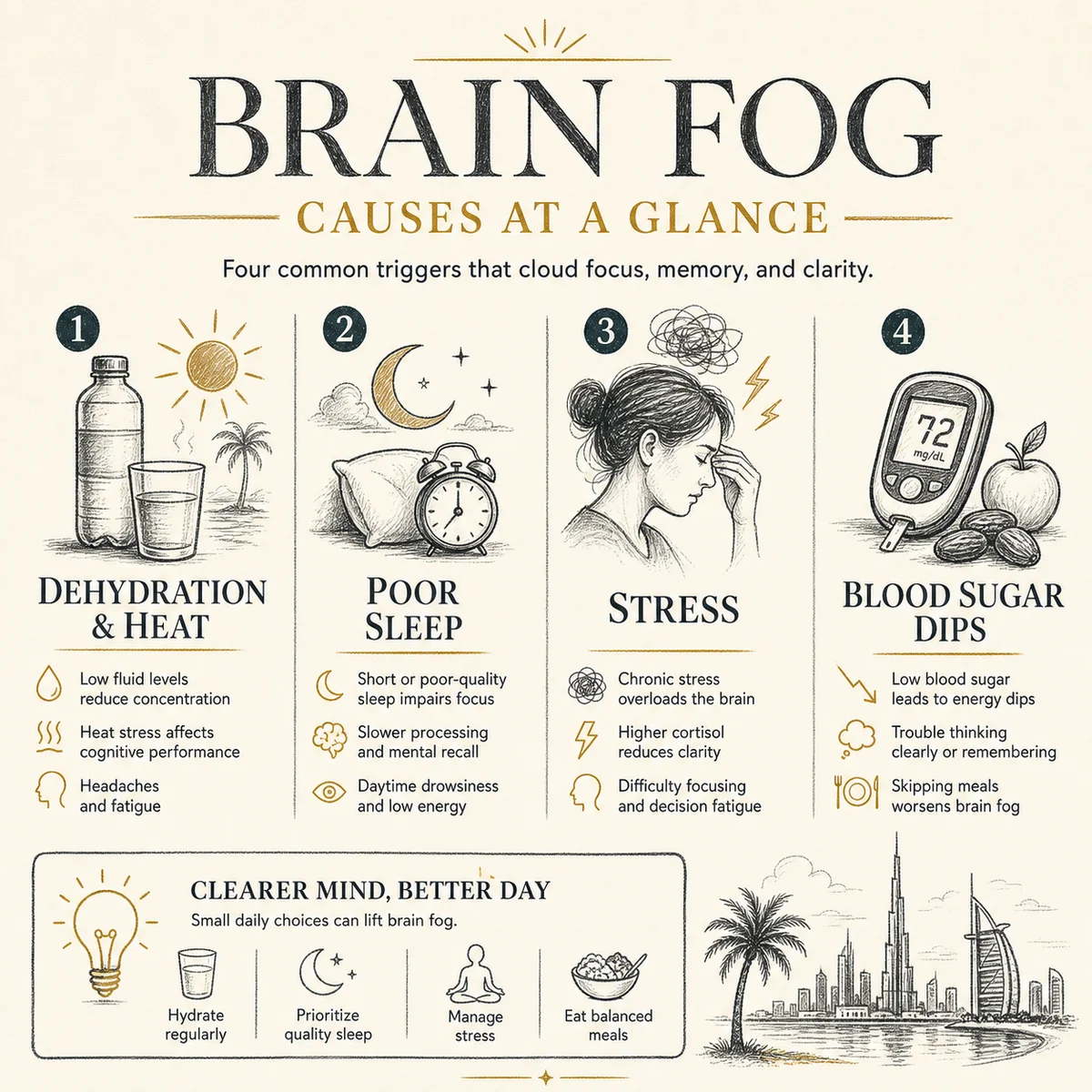
What causes brain fog
Brain fog isn't a diagnosis on its own, it's a cluster of symptoms: trouble focusing, slower recall, a mental fatigue that sleep doesn't quite fix. Cleveland Clinic lists it as a common, usually temporary, symptom rather than a condition in itself.
Dehydration and heat. In Dubai, moving between outdoor heat and air-conditioned interiors drives fluid loss most people underestimate. Mayo Clinic lists dizziness and difficulty concentrating among dehydration's early symptoms.
Poor sleep. Short or broken sleep is one of the most consistent brain fog triggers, tied to memory lapses and slower thinking.
Stress. Ongoing stress keeps cortisol elevated, which can blunt attention and working memory over time.
Blood sugar swings. A dip in blood sugar impairs concentration and reaction time; Mayo Clinic lists confusion and difficulty concentrating among hypoglycemia's core symptoms.
Underlying causes. Thyroid issues, low vitamin B12 or vitamin D, and some medications can all produce ongoing brain fog. If lifestyle fixes don't help, a home blood test rules these out before you guess further.
What actually helps
Rehydrating deliberately is the first, simplest fix: water through the day, plus electrolytes after heavy sweating or a day mostly spent outdoors. Pair that with a full night's sleep and a short walk or stretch break; the National Institute on Aging links consistent, adequate sleep to sharper memory and fewer lapses.
When Youssef, a 36-year-old consultant in Business Bay, kept losing focus by mid-afternoon through a Dubai summer, he traced it to skipping water during back-to-back meetings in cold offices after a hot commute. A teleconsultation confirmed dehydration as the likely cause; a same-day hydration drip and a stricter water routine cleared the fog within a day.
Same-visit option: home hydration IV. BestDOC's Hydration Express drip (AED 189) may support recovery from dehydration-linked fog, for adults, with contraindications assessed case by case. A request framed around brain fog goes through a doctor's teleconsultation first; the doctor reviews your case and decides which drip fits, rather than the drip being self-selected.

Want a doctor to look at your case first? Book a teleconsultation and get a same-visit plan if a drip fits.
When brain fog is a warning sign
Ordinary brain fog is not an emergency, but a small set of signs mean something else is happening. Following CDC's B.E. F.A.S.T. criteria: sudden facial drooping, arm weakness, slurred speech, vision changes, or loss of balance need a 998 call immediately, note the time symptoms started.
Fog that lasts weeks, keeps returning, or comes with unexplained weight change, tremor, or persistent low mood is also worth a proper look. Rather than repeating self-care that isn't working, a home doctor visit (from AED 300) or a video consult (AED 100) gets a DHA-licensed clinician looking at the whole picture, not just one symptom. Every BestDOC clinician on your case is DHA-licensed and signed off by the medical director.
Frequently asked questions
What causes brain fog? Most often dehydration, poor sleep, stress, or a blood sugar dip. Less often, an underlying condition a blood test can rule out.
Why does brain fog feel worse in Dubai's summer? Heat and time spent moving between outdoor heat and air-conditioned air both drive fluid loss, and even mild dehydration is linked to reduced concentration.
Can I book a hydration IV drip directly for brain fog? No. A request goes through a doctor's teleconsultation first; the doctor decides which drip, if any, fits your case.
Are BestDOC's hydration drips safe for everyone? They're for adults. Contraindications depend on your individual case, which is why a doctor reviews every request first.
When is brain fog a sign of something serious? Sudden facial drooping, arm weakness, slurred speech, or vision changes need a 998 call immediately. Fog lasting weeks is worth a doctor visit.
How long does ordinary brain fog usually last? Often clears within a day of fixing the cause. Beyond a few days despite rest and fluids, get it checked.
Can poor sleep alone cause brain fog? Yes, ongoing poor sleep is linked to memory problems and forgetfulness on its own.
The short version
Most brain fog is dehydration, poor sleep, stress, or a blood sugar dip, not something serious, and it usually clears with rehydration, rest, and movement. In Dubai's heat, a same-visit hydration drip is available after a doctor's teleconsultation confirms it fits your case. Sudden facial drooping, arm weakness, or slurred speech means 998, not a wait-and-see approach. See BestDOC's home IV drip options → or talk to a clinician about your case →
Reach BestDOC on the toll-free line +971 800 2378 362 or WhatsApp, around the clock, anywhere in Dubai.
Educational. Not medical advice. Consult a licensed clinician about your own symptoms. For medical emergencies in the UAE, call 998.