
Who Is Home Healthcare For? A Dubai Guide to Who Actually Benefits
Home healthcare is for anyone who needs clinical or personal care at home rather than in a clinic, with no "homebound" rule and no insurance certification to clear. In Dubai it covers six broad groups: older adults, people recovering from surgery, those managing a chronic condition, new mothers and newborns, people with limited mobility, and households needing routine care without a clinic trip.
If you have ever wondered whether home healthcare applies to your situation, you are not alone, and the answer is wider than most people assume. This guide shows exactly who benefits, how to tell home health care from home care, and which service fits which need in Dubai. Every section routes you to the right next step.
Key Takeaways
- Home healthcare in Dubai is for anyone needing clinical or personal care at home. There is no homebound requirement and no insurance certification.
- It serves six groups: older adults, post-surgery patients, chronic-condition patients, new mothers and newborns, people with limited mobility, and busy households needing routine care.
- Home health care is clinical (DHA-licensed nurse, doctor, or physiotherapist). Home care is personal daily-living support (a caregiver).
- You book directly. A coordinator quotes the price upfront and keeps the same DHA-licensed clinician on your case.
What does "home healthcare" actually mean?
Home healthcare means bringing licensed medical or personal care to where you live, instead of you travelling to a clinic. In Dubai, that care is delivered by DHA-licensed clinicians who come to your home, hotel, or office.
It is a regulated service category, not an informal arrangement. The World Health Organization treats home and community-based care as a core part of healthy ageing, and the Dubai Health Authority licenses every home-healthcare provider operating in the emirate. So when you book, you are getting the same clinical standard you would expect inside a clinic, with the convenience of your own four walls.
Home health care vs. home care: which do you need?
The two terms sound identical but mean different things, and knowing which you need saves time and money.
Home health care is clinical. A DHA-licensed nurse, doctor, or physiotherapist delivers medical care: wound dressing, intravenous drips, injections, post-surgery monitoring, or rehabilitation. Home care is personal. A trained caregiver supports daily living, such as bathing, meals, mobility, and companionship, without a medical scope.
| Home health care | Home care | |
|---|---|---|
| Who delivers it | DHA-licensed nurse, doctor, physio | Trained caregiver |
| What it covers | Wounds, drips, injections, vitals, rehab | Bathing, meals, mobility, company |
| Best for | Clinical needs, recovery, chronic care | Daily support, ageing in place |
Many households need both. If you are weighing one against the other, our guide on caregiver vs nurse in Dubai breaks down the line in detail. Not sure which you need? Talk to a coordinator about your case →
Who is home healthcare for?
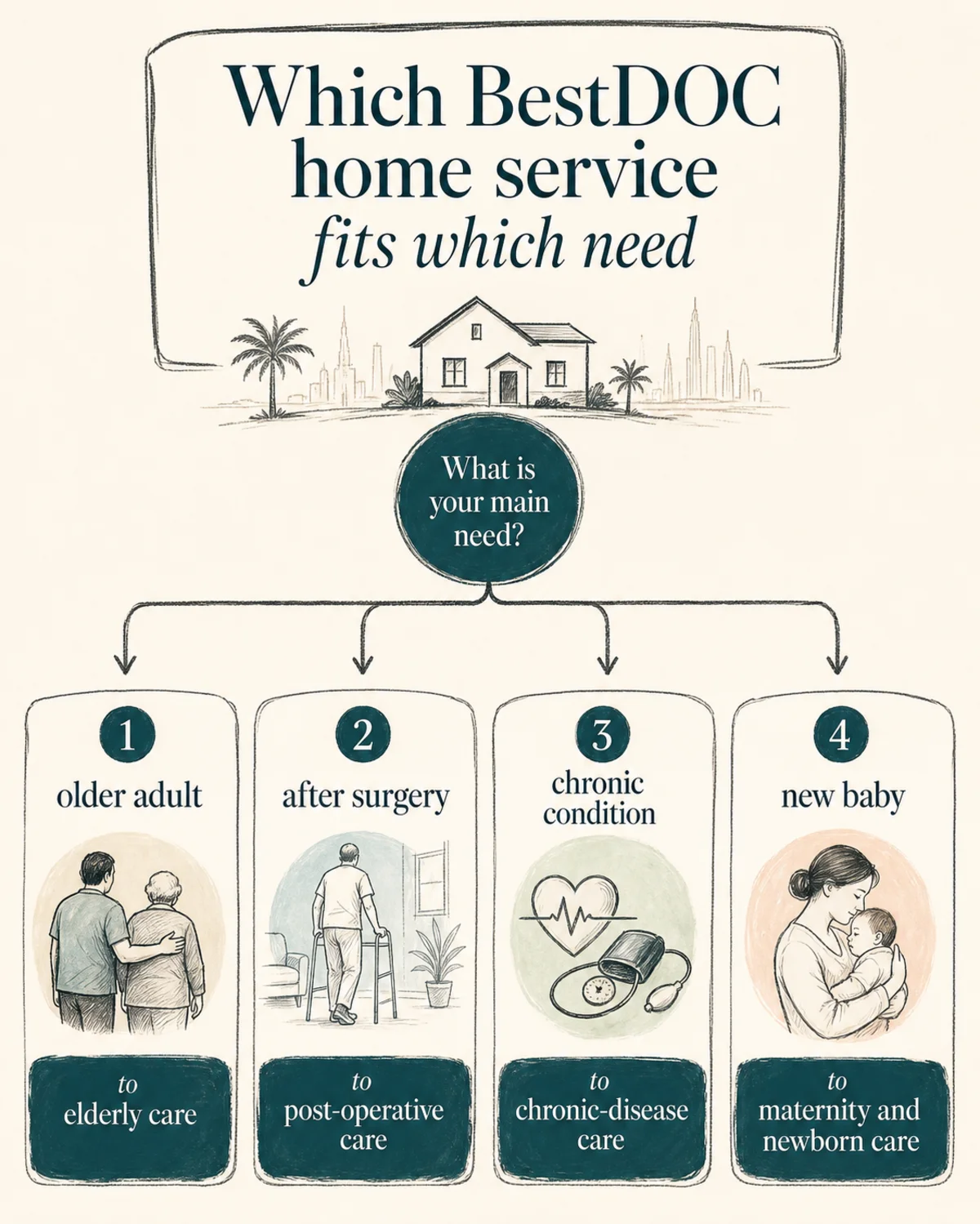
Home healthcare is for far more people than the "elderly and bedridden" stereotype suggests. Here are the six groups who benefit most, and the service that fits each.
Older adults and aging parents
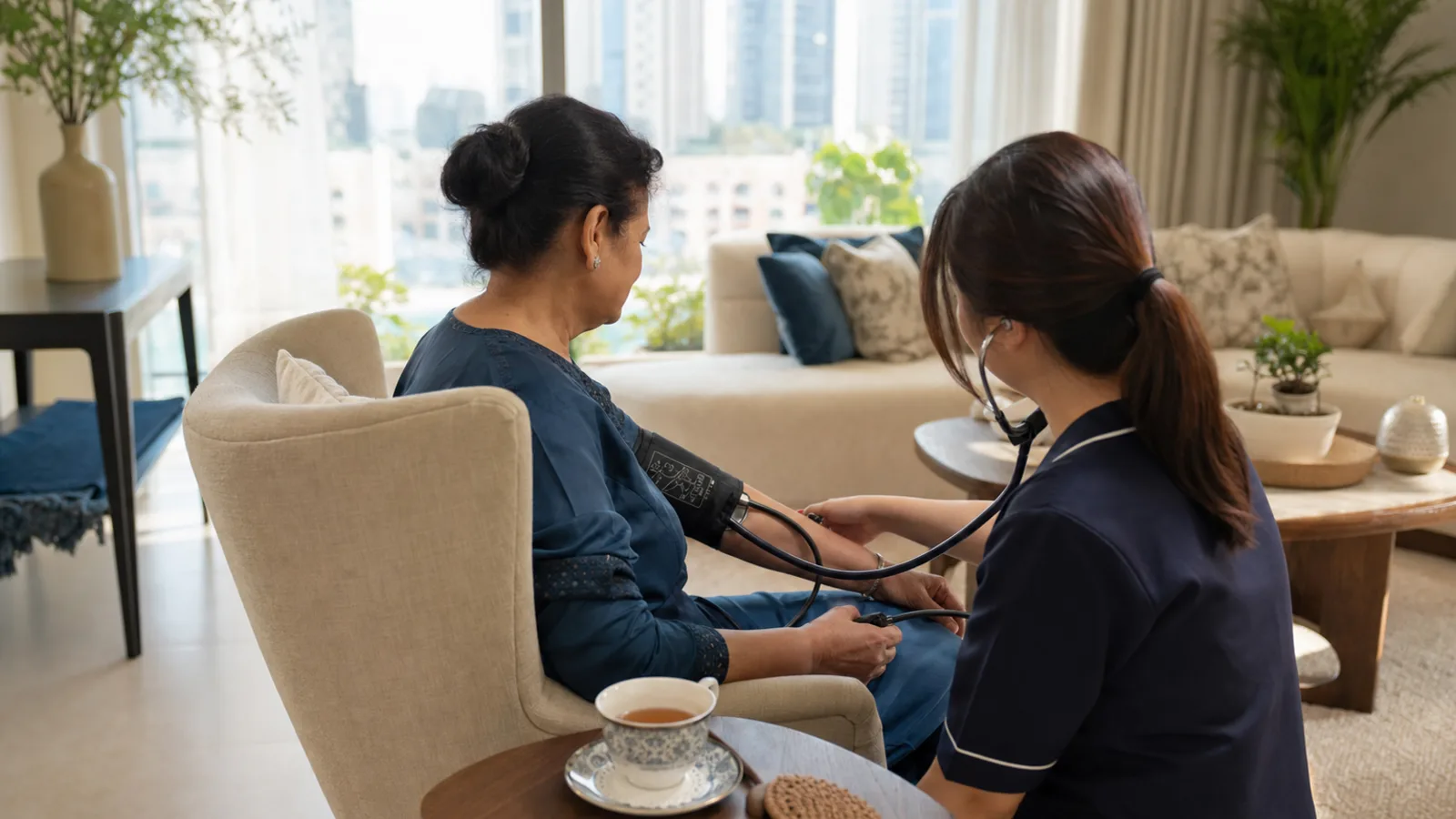
Repeated clinic trips get harder with age. The National Institute on Aging notes that most older adults prefer to age in place at home, and home visits make that realistic. Regular vitals, medication management, and fall-related care all happen in the armchair. This is the heart of home elderly care in Dubai.
People recovering from surgery
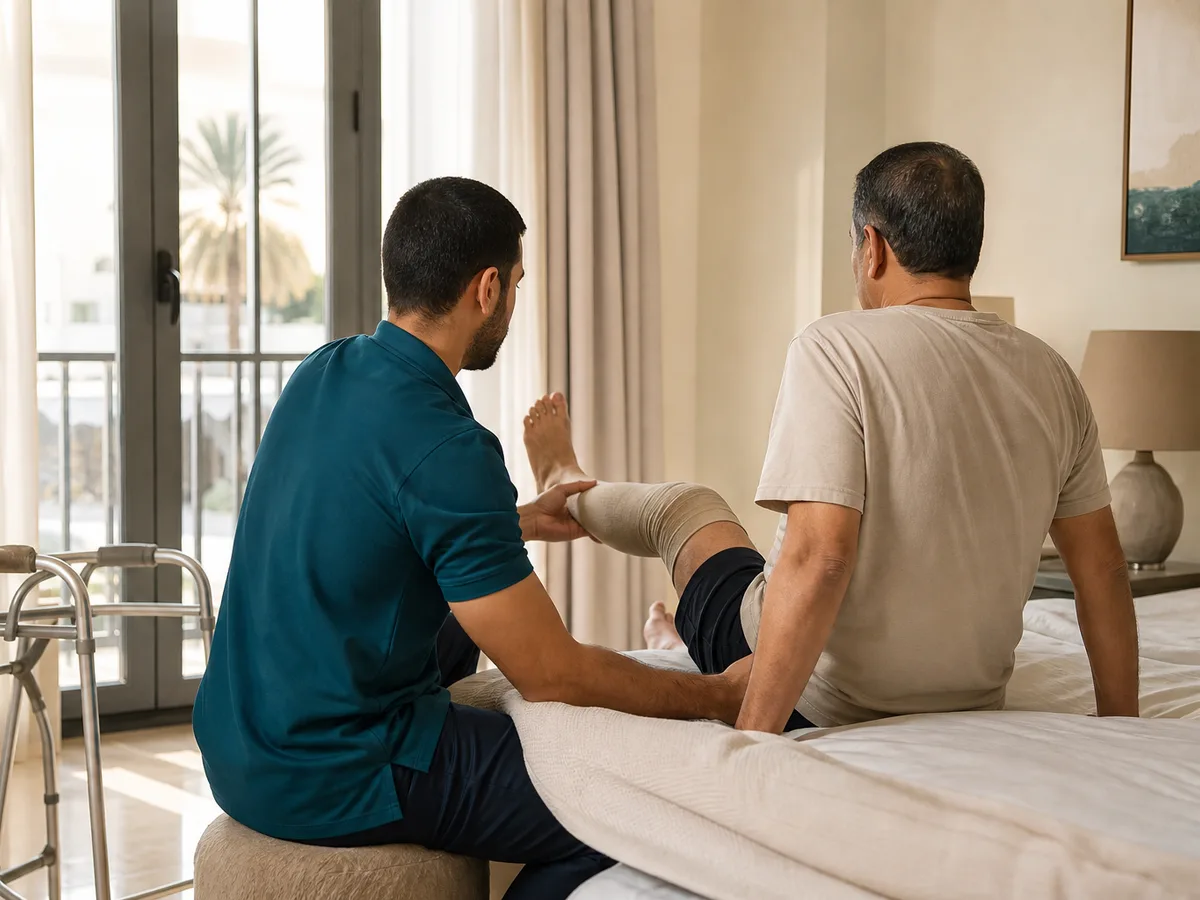
The days after a discharge are when things go wrong: dressings, drains, mobility, and pain control. A peer-reviewed hospital-at-home study found that home-based recovery can lower complications and readmissions. BestDOC coordinates post-operative care directly with your hospital so nothing falls through the cracks.
People managing a chronic condition
Diabetes, hypertension, and similar conditions need steady monitoring, not crisis visits. A doctor-signed plan, regular bloods, and the same clinician each time keep things stable. That continuity is the backbone of chronic disease care at home.
New mothers and newborns
A new mother does not want to pack a days-old baby into a car for a clinic queue. Home visits cover newborn checks, feeding support, and the mother's own recovery. This is where maternity care at home earns its place.
People with limited mobility
If reaching a clinic is the obstacle, the clinic should come to you. A doctor home visit handles examinations and prescriptions on the spot, while home physiotherapy in Dubai rebuilds strength without a single trip out.
Busy households needing routine care
Blood tests, drips, injections, and vitals do not always justify half a day off work. Booking a nurse for routine tasks is increasingly normal, and it is the everyday use of home nursing in Dubai.
How to know if it's time to consider home healthcare
Sometimes the need is obvious. Often it builds quietly. Watch for these signs:
- Clinic trips have become exhausting, repeated, or unsafe.
- A recent hospital discharge left care instructions no one is confident handling.
- Medications are being missed, doubled, or muddled.
- There has been a fall, or a real risk of one. Falls are the leading cause of injury among older adults.
- Recovery feels slower than it should, or wounds are not healing cleanly.
- A caregiver in the family is burning out.
When Layla noticed her 78-year-old father in Mirdif skipping clinic appointments because the drive tired him out, she booked a home nurse for his weekly blood-pressure checks and insulin review. Within a month his readings stabilised, and the same nurse, who now knew his routine, caught an early skin infection before it spread. The clinic trips that used to drain his whole day simply stopped.
If two or more of those signs sound familiar, it is worth a conversation. The team at BestDOC can tell you in one call whether home care fits, with no pressure to book.
Who is it NOT for? When to call emergency services instead
Honesty matters here. Home healthcare is for planned and routine care, not emergencies. It is not the right call for chest pain, stroke signs, severe breathing difficulty, heavy bleeding, or any life-threatening situation.
For those, every second counts: call 998 immediately for an ambulance in the UAE. A home visit, however well organised, is not a substitute for emergency response. Knowing this boundary is part of using home healthcare safely, a point echoed by guidance from Johns Hopkins Medicine on what home care can and cannot do.
How home healthcare works in Dubai
Here is the part that surprises people coming from other countries: in Dubai there is no "homebound" rule and no insurance certification to qualify. The market is self-pay, so you book directly.
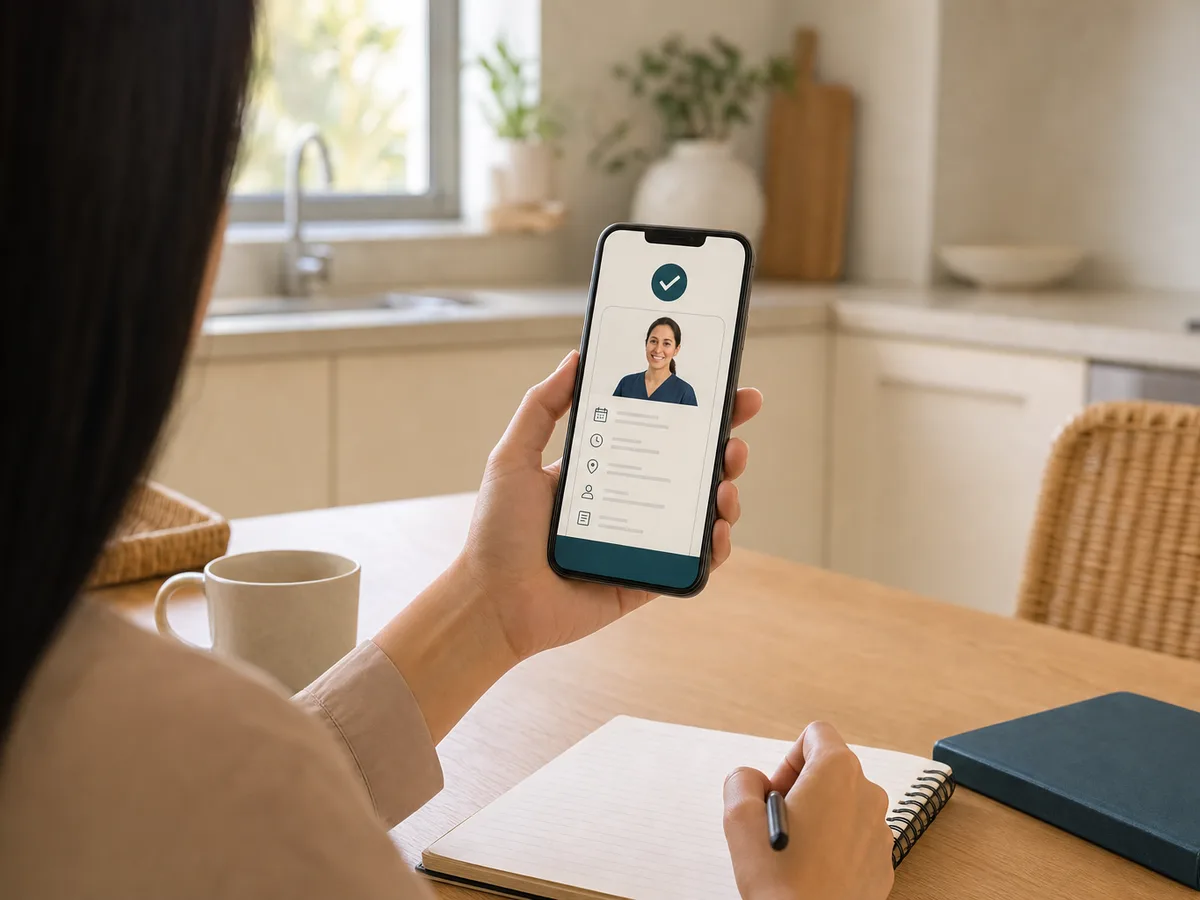
A coordinator confirms the visit, quotes the price before anyone leaves, and sends you the name and photo of your DHA-licensed clinician in advance. Care covers all of Dubai, door to door, and the service runs 24/7. The same nurse or clinician stays on your case, so you are not re-explaining your history every visit, and the "on time, or on us" promise keeps that schedule honest.
When cost comes up, the Mayo Clinic recommends matching the service to the actual need rather than over-buying. As a guide, a BestDOC in-home GP consultation starts from AED 350, a nurse on call is AED 250, scheduled home nursing is from AED 100 per hour, and home physiotherapy starts from AED 350. For anything else, a coordinator quotes you upfront.
Ready to find the right care? Start with home nursing in Dubai, or call the toll-free line +971 800 2378 362 any time to talk it through.
Frequently asked questions
Who is home healthcare for? Home healthcare is for anyone who needs clinical or personal care at home instead of in a clinic, including older adults, post-surgery patients, chronic-condition patients, new mothers and newborns, people with limited mobility, and households needing routine care.
Who qualifies for home health care in Dubai? There is no homebound rule and no insurance certification. You do not need a referral. You book a DHA-licensed clinician directly and a coordinator quotes the price before anyone arrives.
What is the difference between home health care and home care? Home health care is clinical, delivered by a DHA-licensed nurse, doctor, or physiotherapist. Home care is personal daily-living support from a trained caregiver.
Is home nursing right for my elderly parent? Often yes, especially with repeated clinic trips, medication management, fall recovery, or regular wound care. The same nurse stays on the case for continuity.
Is home healthcare an emergency service? No. For chest pain, stroke signs, severe breathing trouble, or any life-threatening situation, call 998 immediately.
The bottom line
Home healthcare in Dubai is for more people than you might think: older parents, those recovering from surgery, chronic-condition patients, new mothers, anyone whose mobility makes a clinic hard to reach, and households that simply want routine care at home. The trick is matching the need to the service, clinical care from a nurse or doctor, or personal support from a caregiver.
If your situation fits, the next step is a single conversation. Explore home nursing in Dubai or reach a coordinator on +971 800 2378 362 or WhatsApp, and keep the same trusted clinician on your case from the first visit.
Educational. Not medical advice. Consult a licensed clinician. Reviewed 2026-06-11 by Dr. Omar Khalil, MBBS, MD Internal Medicine, DHA-licensed, Medical Director at Best DOC Home Health Care L.L.C. BestDOC is a DHA-licensed home-healthcare practice serving all of Dubai. Toll-free +971 800 2378 362, 24/7. For emergencies, call 998.