

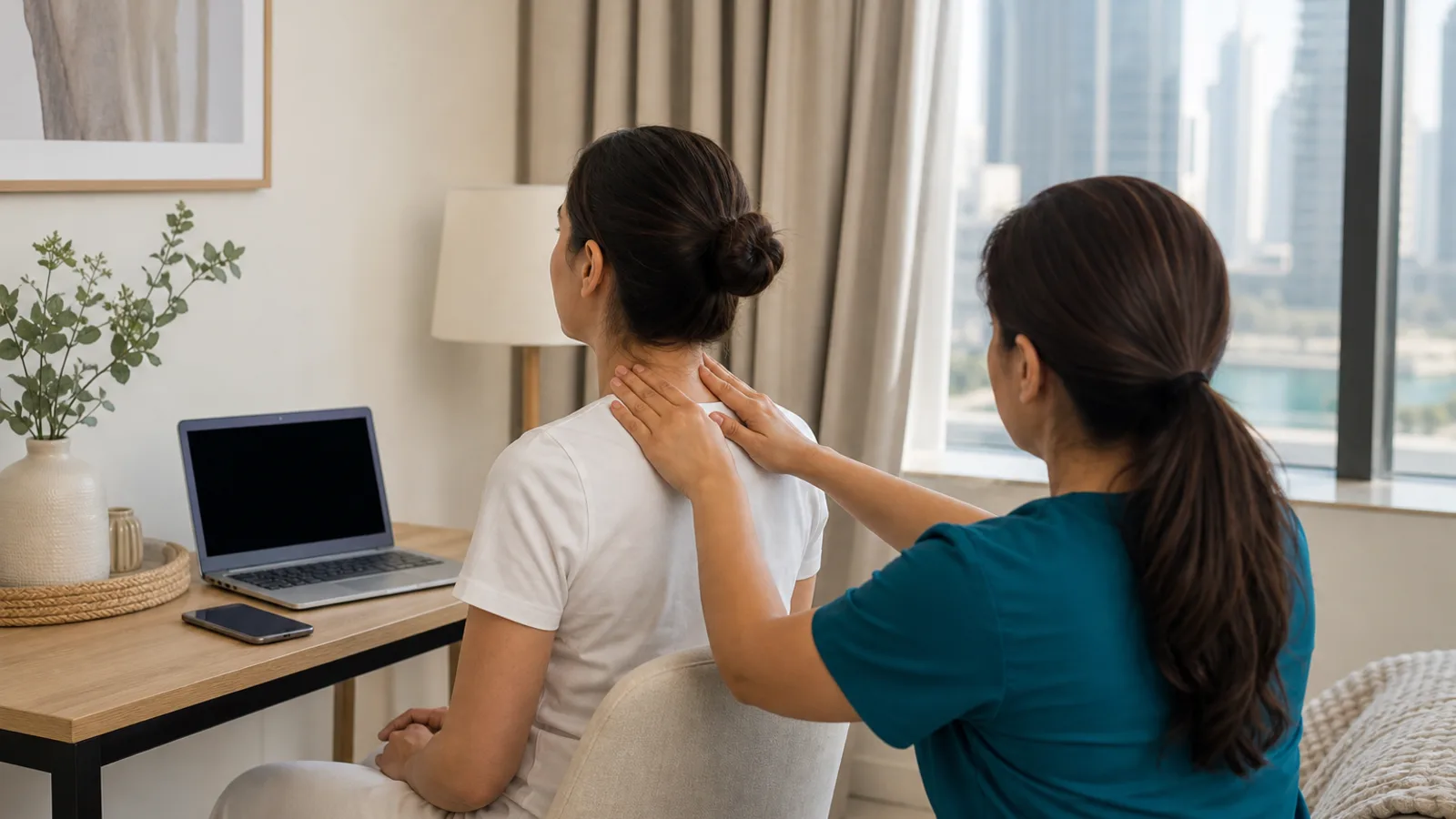
A stiff neck is almost always muscular and postural, and physiotherapy helps by easing the tight tissue, then correcting the desk, screen and sleep habits that caused it, so it stops coming back. In Dubai you can now have that stiff neck physiotherapy delivered at home, where a physio can assess the exact setup your neck got stiff in, something a clinic visit can never replicate.
You have probably already tried rolling your shoulders, a hot shower, and a day of careful movement, and the tightness is still there when you turn to reverse the car. This guide explains what actually causes a stubborn stiff neck, what a physiotherapist does that stretching alone does not, the exercises a physio may prescribe, and the red flags that mean you need a doctor before any exercise begins.
Key takeaways
- A stiff neck is usually mechanical, from muscles, joints and posture, not disease; physiotherapy treats the cause, not just the ache.
- A home physio assesses your real desk, monitor height and pillow, which a clinic cannot see.
- Most simple neck stiffness eases over a short course of sessions plus daily exercises.
- Red flags, such as numbness or weakness down an arm, fever, or neck pain after a fall, need a doctor first.
- BestDOC sends a DPT, MSc Speech Therapy, German-certified Lymphedema Physiotherapist, DHA & MOH licensed to your home in Dubai, the same physio every visit, from AED 300.
What causes a stiff neck?
Most of the time, a stiff neck is mechanical: the muscles and small joints of the neck are strained or held in one position too long, not diseased. The NHS notes that the large majority of neck pain is non-specific, meaning no serious underlying cause, and it settles with movement and time. It is also extremely common; the World Health Organization lists neck pain among the leading musculoskeletal contributors to disability worldwide.
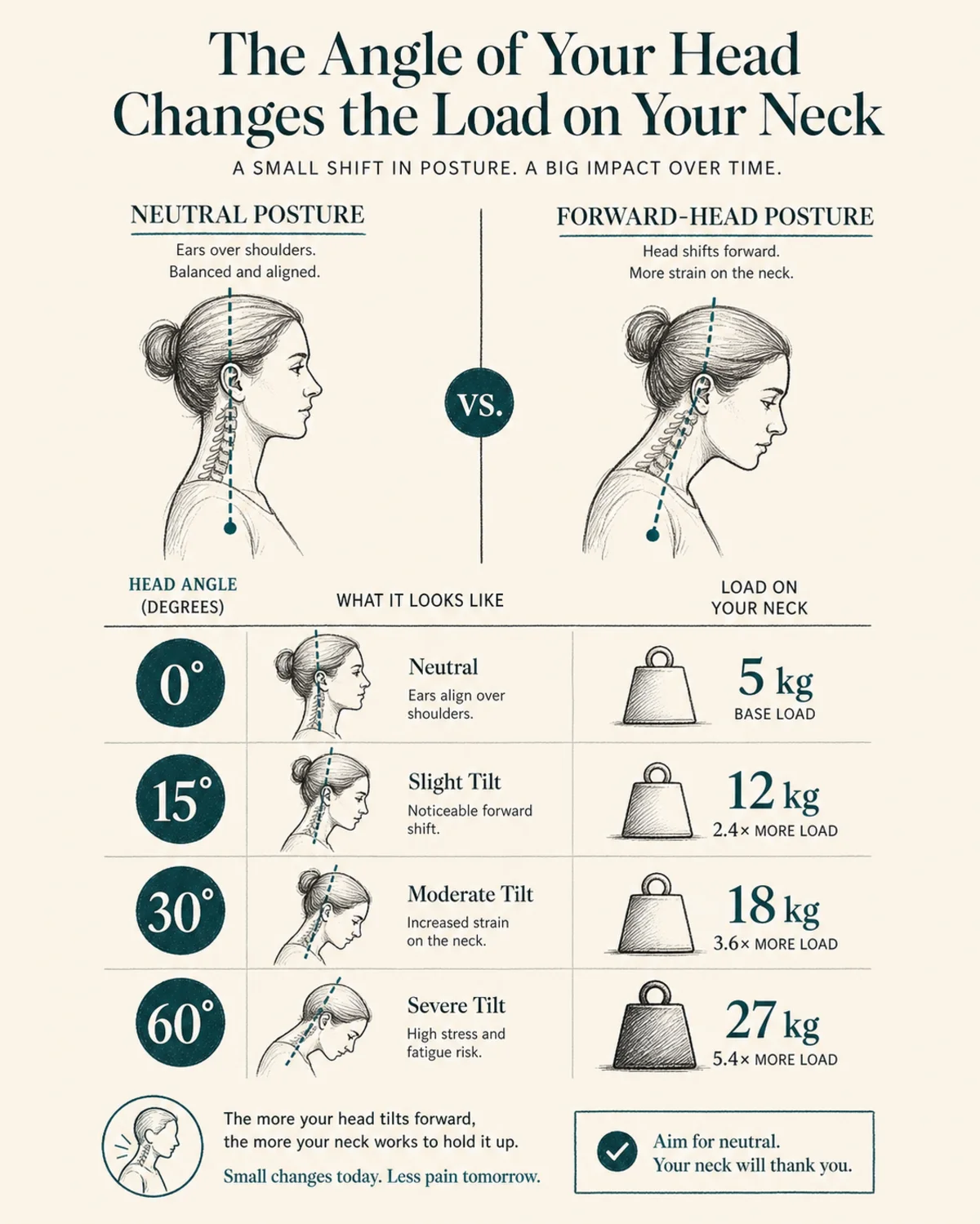
The usual drivers are familiar to anyone working in Dubai. Long hours at a desk, a monitor set too low, and hours looking down at a phone pull the head forward into what is often called tech neck. Modelling research suggests that as the head tilts forward, the effective load on the cervical spine rises sharply compared with a neutral, balanced position (Hansraj, 2014).
The other common causes are sleeping on an unsupportive or too-high pillow, a sudden muscle strain from an awkward movement, stress that keeps the shoulder and neck muscles clenched, and cold air from an air-conditioning vent blowing on one side of the neck overnight. Often it is two or three of these at once, which is why a single stretch rarely fixes it for good.
Can physiotherapy actually fix a stiff neck?
Yes, and the reason is that physiotherapy treats the cause, not just the symptom. Stretching alone loosens tissue for an hour; a physiotherapist finds why the tissue keeps tightening and changes it.
A physio does four things a self-guided stretch cannot. They assess your movement and posture to locate the real source. They use manual therapy, hands-on mobilisation of the stiff joints and soft tissue, to restore range. They prescribe targeted, progressive exercise to load the deep neck and upper-back muscles that hold your head up. And they correct the posture and habits feeding the problem. A Cochrane review of exercise for mechanical neck pain found that specific, supervised exercise reduces neck pain and improves function more than advice alone.
Put simply, the exercises you could find online are only the visible part of the work. Matching the right ones to your actual cause, and progressing them as you recover, is the part that makes the result last.
Want to know what is driving your stiff neck? Home physiotherapy in Dubai starts with a full assessment, not a guess.
What happens in a neck physiotherapy session
A first home session for neck pain follows a clear order, and most of it is assessment before any treatment begins:
- History. Your physio asks how the stiffness started, what makes it worse, your work setup, and how you sleep.
- Physical assessment. They check how far you can turn and tilt, test the muscles, and look for any nerve signs down the arms.
- Hands-on treatment. Manual therapy and soft-tissue work ease the immediate tightness and restore movement.
- Guided exercise. You are taught a small set of exercises and shown the correct form so they help rather than aggravate.
- Home programme. You leave with a short daily routine and clear limits on what to avoid.
- Review. The next visit checks progress and the plan is adjusted, rather than repeated unchanged.
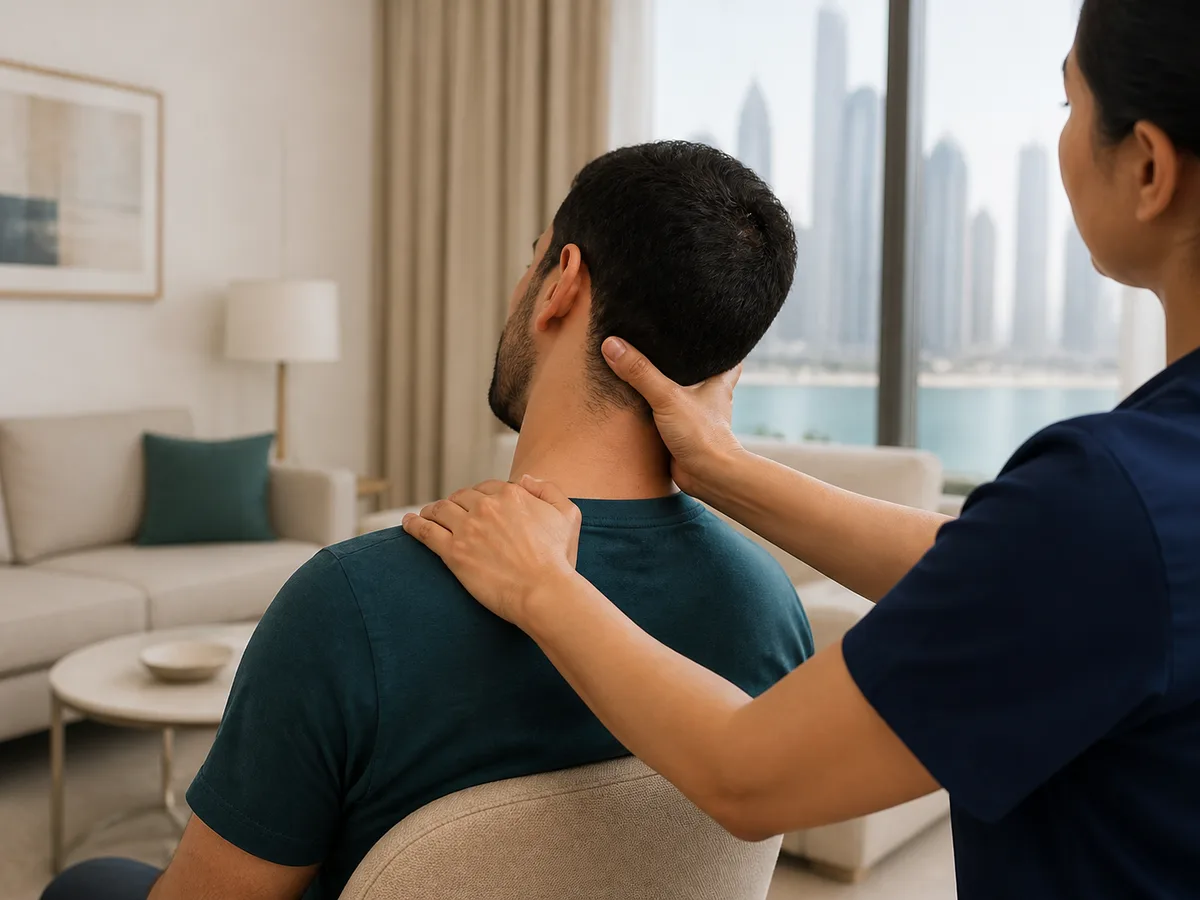
Because the same physiotherapist runs each visit, nothing about your case is re-explained to a new face. They remember what helped last time and build on it. That continuity is the difference between a course that progresses and a series of disconnected appointments.
Neck exercises a physiotherapist may prescribe
These are common examples a physio may include, not a substitute for assessment. Stop any movement that sends pain, numbness or pins and needles down an arm, and have a physiotherapist confirm what is right for you.
- Chin tucks. Gently draw the chin straight back, as if making a double chin, to retrain a neutral head position. Hold five seconds, repeat ten times.
- Neck rotations. Slowly turn to look over each shoulder, within a comfortable range, to restore turning movement.
- Side bends. Tilt one ear toward the shoulder until you feel a gentle stretch, then the other side.
- Isometric holds. Press the palm lightly against the side, front and back of the head while the neck resists, building support without movement.
- Scapular squeezes. Draw the shoulder blades down and together to switch on the upper-back muscles that hold your head up.
The NHS publishes a guided neck exercise routine, and the video below walks through a similar set. Used alongside a physio's plan, a few minutes daily often does more than one long session a week.
Why home physiotherapy works for neck pain
For a stiff neck, home physiotherapy has one advantage a clinic structurally cannot match: the physio sees the room your neck got stiff in. Neck pain is mostly environmental, so assessing the cause in situ matters more than for almost any other complaint.
In your home, the physiotherapist measures the real desk height, where your monitor sits, the chair you actually use, and the pillow you actually sleep on. They adjust the screen, suggest a pillow change, and reset your workstation on the spot. A clinic can only describe these changes in the abstract; at home they are made and tested while the physio watches.
The neck and upper back often travel together with the lower back in desk workers, so for ongoing postural cases your plan may also draw on our neck and back pain physiotherapy. Every clinician is a DPT, MSc Speech Therapy, German-certified Lymphedema Physiotherapist, DHA & MOH licensed registered with the Dubai Health Authority, working from a doctor-reviewed plan, the same physio each visit, anywhere in Dubai.
When Layla, a 34-year-old who works long days at a Business Bay design studio, woke with a neck she could barely turn for the third Monday running, she booked a home physio rather than another clinic drive. The physiotherapist found her monitor sat well below eye level and her pillow was too high. Four sessions over three weeks, a riser under the screen, and a flatter pillow later, the Monday stiffness was gone.
When a stiff neck needs a doctor, not just a physio
Most stiff necks are harmless, but a small set of signs means you should see a doctor before any physiotherapy. Seek medical assessment if your neck pain follows a fall, car accident or blow to the head; if it comes with fever, a severe headache and a neck too stiff to bend forward; or if you feel numbness, pins and needles, or weakness spreading down an arm or hand.
Mayo Clinic advises medical review when neck pain is severe, persists without improvement, or spreads into the arms or legs, as these can point to nerve involvement rather than simple muscle strain. A neck too stiff to touch the chin to the chest alongside fever needs urgent attention.
In these cases BestDOC can send a doctor at home to assess you first, confirm the cause, and prescribe if needed, then hand over to your physiotherapist once it is safe to start. BestDOC is a home healthcare practice, not an emergency service; for an emergency, call 998.
Self-care between sessions
What you do between visits decides how well the plan holds. The goal is to undo the forward-head load through the day, not just stretch once.
- Raise the screen. Set the top of your monitor at eye level so your head sits over your shoulders, not in front of them.
- Take micro-breaks. Every 30 to 40 minutes, look up, roll the shoulders, and turn the neck gently each way.
- Use heat. A warm compress for 10 to 15 minutes eases muscular tightness and helps you move more freely.
- Fix the pillow. A pillow that keeps the neck level with the spine, not propped too high, prevents the morning stiff neck.
- Lower the tension. Stress keeps the neck and shoulders clenched; brief, regular movement breaks the cycle better than sitting still.

These habits are also the best prevention. Once the course ends, keeping the screen high, the breaks frequent, and the pillow right is usually enough to keep a desk-driven stiff neck from returning.
The short version
A stiff neck is almost always mechanical, and physiotherapy resolves it for most people by easing the tight tissue, then correcting the desk, screen, pillow and posture that caused it. The lasting part of the work is matching the right exercises to your cause and fixing the environment, which is exactly what a home physio can see and a clinic cannot. Screen the red flags first, then treat the cause.
If your neck has been stiff for more than a few days, start with an assessment rather than another stretch. Book home physiotherapy in Dubai with BestDOC, the same DHA-licensed physio across your whole course, from AED 300 a session. To arrange a visit, message us on WhatsApp or call the toll-free line, +971 800 2378 362, with coordination available 24/7 across all of Dubai. Common questions are answered on our FAQ page and you can reach the team any time via contact.
Educational content, not medical advice. Neck pain can occasionally have serious causes; consult a licensed clinician about your symptoms. Reviewed by Dr. Omar Khalil, MBBS, MD Internal Medicine, DHA-licensed, Medical Director, Best DOC Home Health Care L.L.C.