

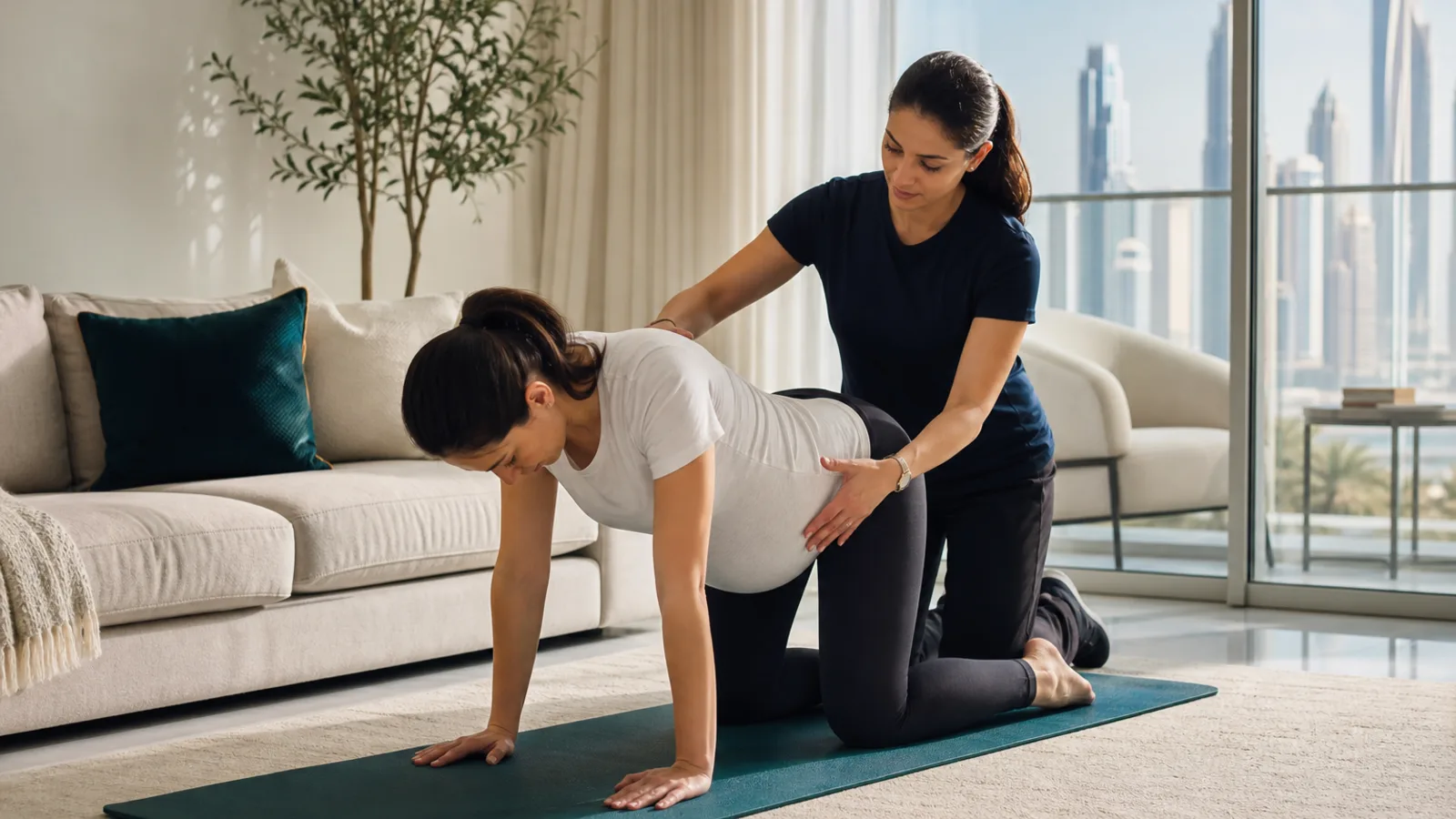
Prenatal Physiotherapy in Dubai: A Trimester-by-Trimester Guide
Prenatal physiotherapy is hands-on care from a DHA-licensed women's-health physiotherapist, built to keep your back, pelvis and pelvic floor working through pregnancy and to prepare your body for labour. Most uncomplicated pregnancies can start at any trimester; many women begin around weeks 20 to 24, when ligament changes show up as back or pelvic pain.
You hired a practice, not one calendar. We carry the schedule, the plan, and the handoff into postpartum.
Key Takeaways
- Prenatal physiotherapy is safe for uncomplicated pregnancies when delivered by a DHA-licensed women's-health physio who modifies by trimester.
- Around 50% of pregnant women report lumbo-pelvic pain; targeted physio is one of the few interventions with strong evidence behind it.
- Pelvic floor training during pregnancy reduces urinary incontinence risk by roughly 30%, per a 2020 Cochrane review.
- At-home sessions remove the third-trimester drive and keep modesty, positioning and pacing on your terms.
- Stop and call your obstetrician if you see bleeding, leaking fluid, severe headache, reduced fetal movement, or regular contractions before 37 weeks.
When to start, and what "pregnancy-safe" really means
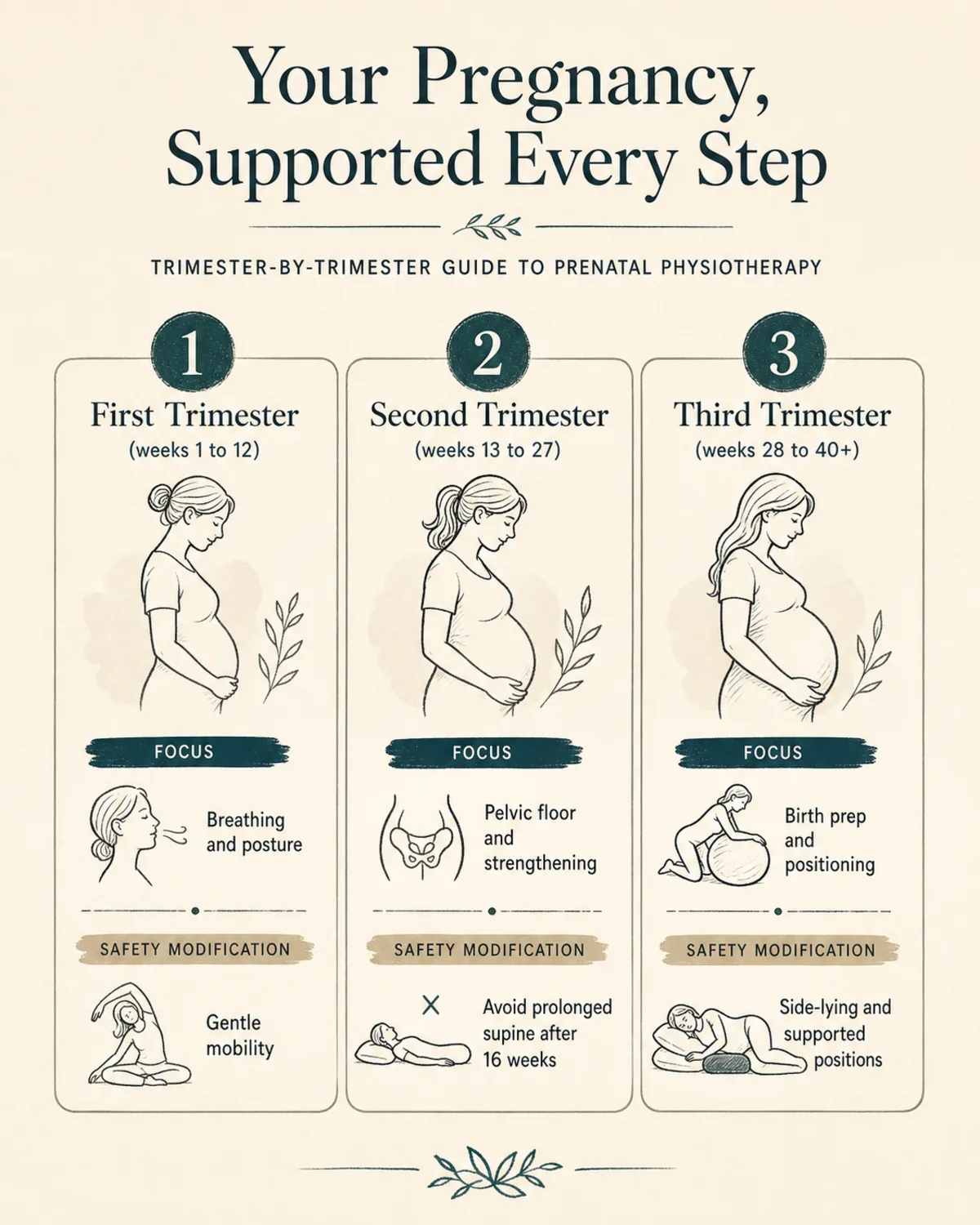
For an uncomplicated pregnancy, prenatal physiotherapy is safe from the first trimester. ACOG guidance on exercise in pregnancy supports moderate activity on most days, and physio sits inside that envelope when a clinician supervises load and position. After about 16 weeks, we stop using prolonged supine work to avoid supine hypotension, swap in side-lying and supported positions, and reduce abdominal loading as the linea alba stretches.
That last point matters. A 2016 study in the British Journal of Sports Medicine found diastasis recti was present in around 60% of women at 6 weeks postpartum, and antenatal core work, done correctly, reduces severity. A women's-health physio will teach you which abdominal patterns to keep and which to retire for now, not a generic core routine.
What we don't do: anything contraindicated by your obstetrician. Placenta previa, preterm labour signs, severe pre-eclampsia, cervical insufficiency, the medical decision sits with your OB, and the physio works inside that boundary.
What prenatal physiotherapy actually treats
Three groups come up most often in home cases.
Lumbo-pelvic pain. Around 50% of pregnant women report low back or pelvic pain during pregnancy, per a widely cited European Spine Journal review. Pelvic girdle pain, sciatica and round ligament pain respond to manual therapy, posture correction, sacroiliac belts where indicated, and targeted glute and deep-core work. This is the bread-and-butter caseload.
Pelvic floor function. A 2020 Cochrane review by Woodley et al. found pelvic floor muscle training during pregnancy reduces the risk of urinary incontinence by roughly 30%. Kegels done badly are common; a women's-health physio assesses whether you can actually contract and release the muscles, then builds the programme from there.
Birth preparation. From around 34 weeks, sessions move toward perineal preparation, breathing patterns and active labour positions. None of this replaces an antenatal class, but it gives you the body-side rehearsal most classes don't have time for. The WHO antenatal care guideline includes physical activity counselling for exactly this reason.
Hala, a first-time mother in Marina, started home sessions at 22 weeks for a dull right-sided pelvic ache. By week 30, the pain was a memory, and her last six sessions were birth-prep work, breathing, positions and perineal preparation, all done on her own living-room mat with the same physio she'd seen since the start.
A home session, and when to stop
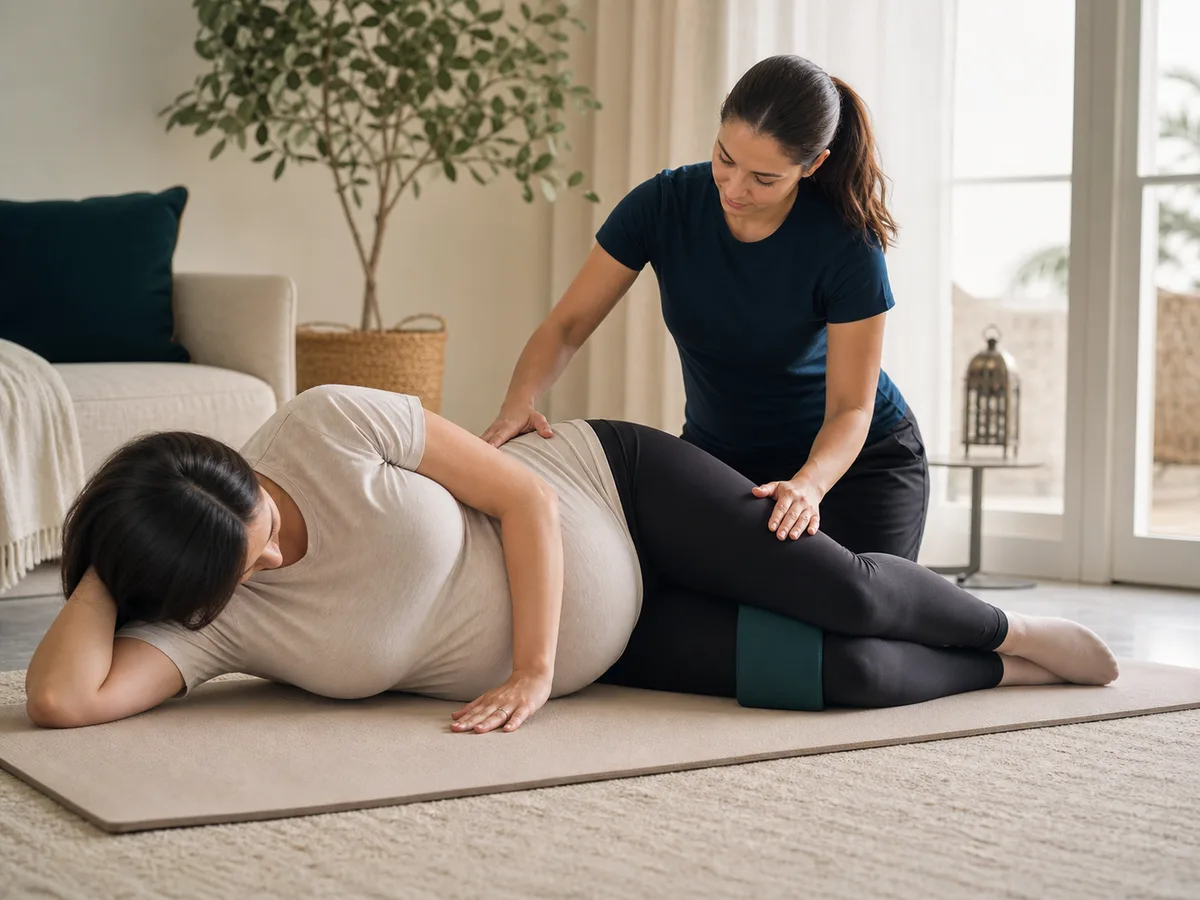
A first home visit runs around 60 minutes. The physio takes a full history including OB notes, screens posture, mobility, pelvic floor coordination and diastasis status, then writes a plan signed off by the medical director. Follow-ups are typically 45 to 60 minutes, weekly or fortnightly, and the same physio is kept on the case wherever the rota allows.
For Dubai households in late pregnancy, the home setting earns its keep. No drive, no waiting room, and the assessment happens in the actual environment you'll be moving through every day, your bed, your floor, your stairs. Across Dubai, our physios arrive at your address, and the home physiotherapy in Dubai team coordinates directly with DHA-licensed maternity care at home when a nurse or doctor is part of the picture. Book a home prenatal physio session →
Stop the session and call your obstetrician if you notice: bleeding, leaking fluid, severe or sudden headache, vision changes, reduced fetal movement, regular contractions before 37 weeks, or persistent dizziness. A doctor home visit can be arranged the same day if you want a clinical pair of eyes before deciding whether to escalate. After delivery, the same physio transitions into postnatal recovery, pelvic floor return, diastasis check, and the home nurse for postpartum recovery joins the file where needed. To start, talk to a clinician about your case, or read more about BestDOC's clinical team. Bookings on WhatsApp wa.me/9718002378362 or toll-free +971 800 2378 362, 24/7.
Disclaimer
Educational. Not medical advice. Consult a licensed clinician, and defer to your obstetrician on any medical decision in pregnancy. For emergencies in Dubai, call 998.