

Prediabetes Symptoms: The Silent Warning Sign
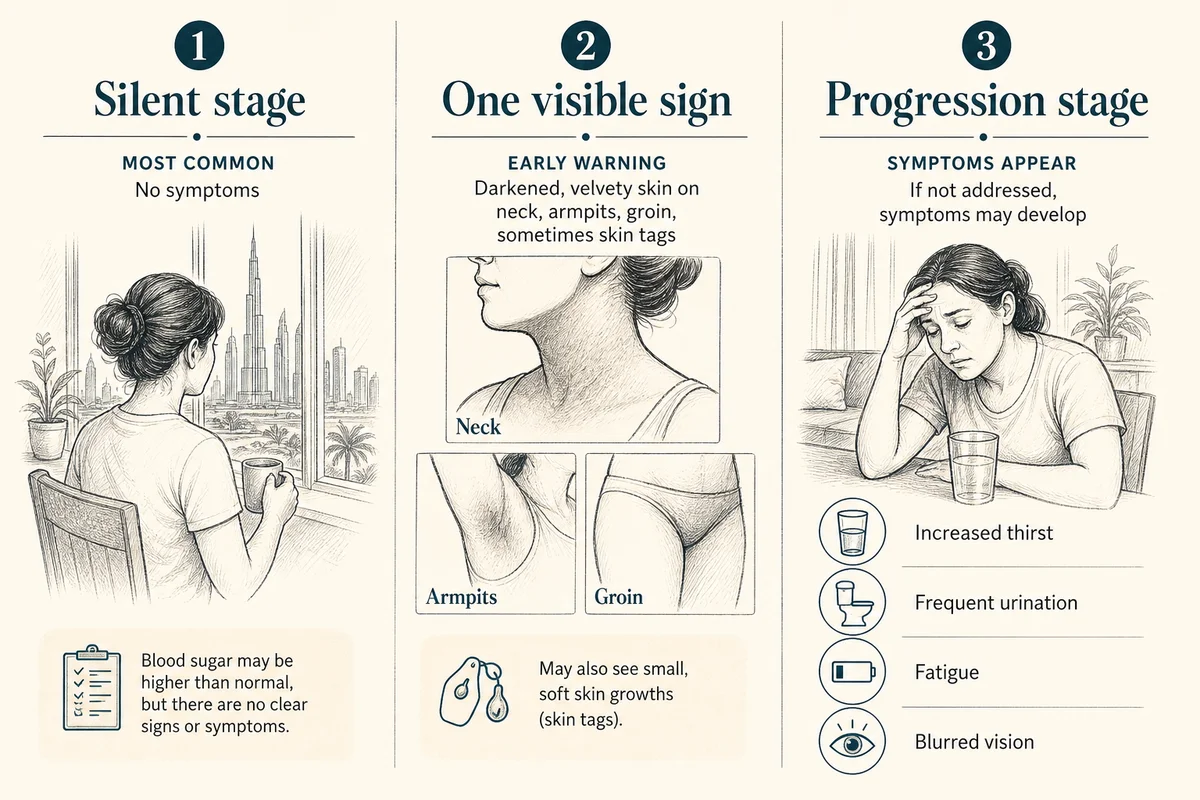
Prediabetes symptoms are rare to nonexistent, and that's exactly why prediabetes is dangerous. When a sign does show up, it's easy to miss: a patch of darkened skin, feeling a little more tired than usual, nothing dramatic enough to send most people to a doctor.
More than 2 in 5 adults in the United States now have prediabetes, and about 8 in 10 of them don't know it, per the CDC. You can't feel your blood sugar creeping up. But you can watch for the one visible sign, know your risk factors, and get the one test that actually settles it.
Key Takeaways
- Prediabetes rarely causes symptoms. More than 2 in 5 US adults have it, and roughly 8 in 10 don't know, per the CDC.
- The one visible sign is acanthosis nigricans: darkened, velvety skin on the neck, armpits, or groin, sometimes with skin tags.
- Thirst, frequent urination, fatigue, and blurred vision usually only appear once prediabetes has progressed toward type 2 diabetes.
- The Middle East and North Africa region has the highest diabetes prevalence of any world region, 18.1% of adults, per the International Diabetes Federation.
- A fasting glucose, HbA1c, or insulin resistance panel is the only reliable way to know your status, and prediabetes is genuinely reversible with early action.
Does Prediabetes Cause Symptoms?
No, not reliably. Mayo Clinic is direct about it: prediabetes doesn't usually have any signs or symptoms at all.
Here's why it stays quiet. Blood sugar climbs slowly, over years, not overnight. Your pancreas keeps pumping out more insulin to compensate, and your body adjusts just enough that nothing feels wrong, per the National Institute of Diabetes and Digestive and Kidney Diseases. There's no single moment where it tips into a crisis, the way an infection or an injury announces itself.
That's the trap. Most people find out through a routine blood panel, not because they felt unwell.
Wondering if it's worth checking your own numbers? See BestDOC's home lab testing options, a phlebotomist draws blood at your table, and a doctor reads what comes back.
The One Visible Sign, and What Comes Later
One sign is worth learning to spot: darkened, velvety skin, medically called acanthosis nigricans. It shows up on the neck, armpits, or groin, and often comes with small skin tags nearby, per Mayo Clinic.
Everything else on the classic symptom list, increased thirst, frequent urination, fatigue, blurred vision, tends to show up later, once prediabetes has already progressed toward type 2 diabetes. If you're noticing those, it's worth getting tested soon rather than waiting.
Who's Most at Risk
The same factors that raise type 2 diabetes risk also raise prediabetes risk, per Mayo Clinic and the CDC:
- Carrying extra weight, especially around the abdomen
- A waist over 40 inches (men) or 35 inches (women)
- Age 35 and older
- A parent or sibling with type 2 diabetes
- A history of gestational diabetes
- Polycystic ovary syndrome (PCOS)
- Certain ethnic backgrounds, including African American, Hispanic or Latino, American Indian, Asian American, and Pacific Islander people
- Low activity levels
If you live in the Gulf, that risk sits closer to home than the US figures suggest. The Middle East and North Africa region has the highest diabetes prevalence of any IDF region worldwide, 18.1% of adults, per the International Diabetes Federation.
Fatima, 38, booked a routine home health screening ahead of her annual work medical, nothing prompted it beyond habit. Her fasting glucose and HbA1c both came back in the prediabetes range. She'd had no symptoms at all.
How to Actually Find Out, and Is It Reversible?
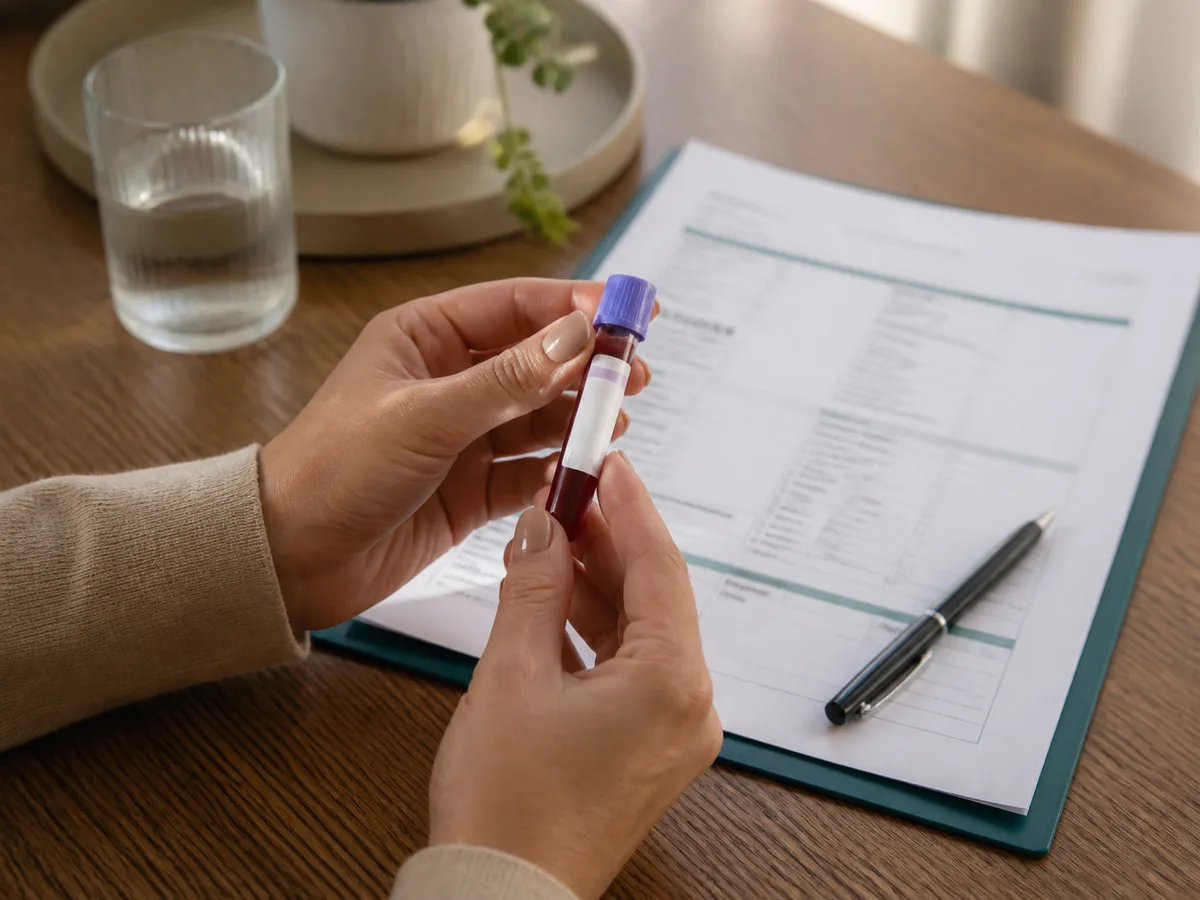
Guessing doesn't work here, testing does. Three numbers tell a doctor what's happening:
- Fasting glucose: a single blood draw after 8 to 12 hours without food
- HbA1c: your average blood sugar over roughly three months
- HOMA-IR (insulin resistance): measures how hard your pancreas is working to keep glucose normal
BestDOC's Prediabetes Reversal Program bundles 67 parameters, including these three, for AED 665. A phlebotomist draws blood at home, and a BestDOC doctor reads the results with you in a follow-up consultation, not just a printout sent over.
If you're not sure whether you're due for a check, ask your doctor how often you should be retested based on your own risk factors.
The good news: prediabetes responds well to early action. In the NIH-funded Diabetes Prevention Program, people at high risk who lost just 5% to 7% of their starting weight measurably cut their chance of developing type 2 diabetes, per NIDDK. Left unmanaged, prediabetes has a high chance of becoming type 2 diabetes within 5 to 10 years, per the same source.
Once a doctor confirms a diagnosis, BestDOC's chronic disease care team can build a doctor-signed plan to manage it going forward, not a one-off panel and a goodbye.
Ready to know where you stand? Book the Prediabetes Reversal Program and get a doctor's read on your results.
Frequently Asked Questions
Does prediabetes cause tiredness? It can, but usually only once it's progressed further toward type 2 diabetes. In the early, most common stage, most people feel completely normal.
Can you have prediabetes and feel completely fine? Yes, and that's the norm, not the exception. Most people with prediabetes have no symptoms at all, which is why testing matters more than watching for signs.
What does prediabetic skin look like? The main visible sign is acanthosis nigricans: patches of darkened, velvety skin, usually on the neck, armpits, or groin, sometimes alongside small skin tags.
How often should I get tested if I'm at risk? There's no single answer for everyone. Ask your doctor how often to retest based on your own risk factors, weight, family history, age, and any prior results.
Is prediabetes the same as insulin resistance? They're closely linked. Insulin resistance, cells responding poorly to insulin, is the underlying mechanism that pushes blood sugar into the prediabetes range.
Is prediabetes reversible? Often, yes, especially caught early. Modest weight loss, in the range of 5% to 7% of starting weight, has been shown to meaningfully cut the risk of progressing to type 2 diabetes.
Can BestDOC test for prediabetes at home in Dubai? Yes. The Prediabetes Reversal Program draws blood at home and includes a follow-up consultation with a BestDOC doctor to walk through your results.
Prediabetes rarely announces itself. The darkened skin patch, if it shows up at all, is often the only clue before thirst, fatigue, or blurred vision arrive later, once the condition has already progressed. Testing, not guessing, is what actually tells you where you stand, and caught early, prediabetes is genuinely reversible.
If any of the risk factors above sound like you, or it's simply been a while since your last check, book a home draw with BestDOC. Start with the Prediabetes Reversal Program, read more about BestDOC's DHA-licensed clinical team, or contact the team on WhatsApp or the toll-free line at +971 800 2378 362, 24/7 across Dubai.
Educational content only, not medical advice. Consult a licensed clinician about your own results.