

PCOS Symptoms: A Checklist for Recognizing the Signs
PCOS symptoms include irregular or missing periods, acne that will not clear, excess hair growth, hair thinning, and weight gain tied to insulin resistance. Most women have 2 or more of these together, not just one. Here is how to tell the difference between a bad month and a pattern worth checking.
Key Takeaways
- PCOS is defined by 2 of 3 features: irregular ovulation, excess androgens, or polycystic ovaries on scan, not by any single symptom.
- Lesser-known signs include dark velvety skin patches, skin tags, and persistent fatigue, and they get missed often.
- A Dubai hospital study found PCOS diagnoses more than doubled between 2020 and 2022, suggesting the condition is still underdiagnosed locally.
- Full diagnosis combines history, bloodwork, and sometimes ultrasound; BestDOC's home PCOS Blood Test panel (23 parameters, AED 449, fasting required) covers the bloodwork half at home.
- 2 or more core symptoms, especially alongside irregular periods, is reason enough to book a GP consult.
What Is PCOS?
Polycystic ovary syndrome (PCOS) is a hormonal condition that disrupts ovulation and raises androgen levels. It affects an estimated 8-13% of women of reproductive age worldwide, according to the World Health Organization, and a large share of cases go undiagnosed.
That gap exists because PCOS does not announce itself with one clear signal. It shows up as a cluster of smaller, easy-to-dismiss changes: a missed period here, a stubborn breakout there. Recognizing the pattern is the first step.
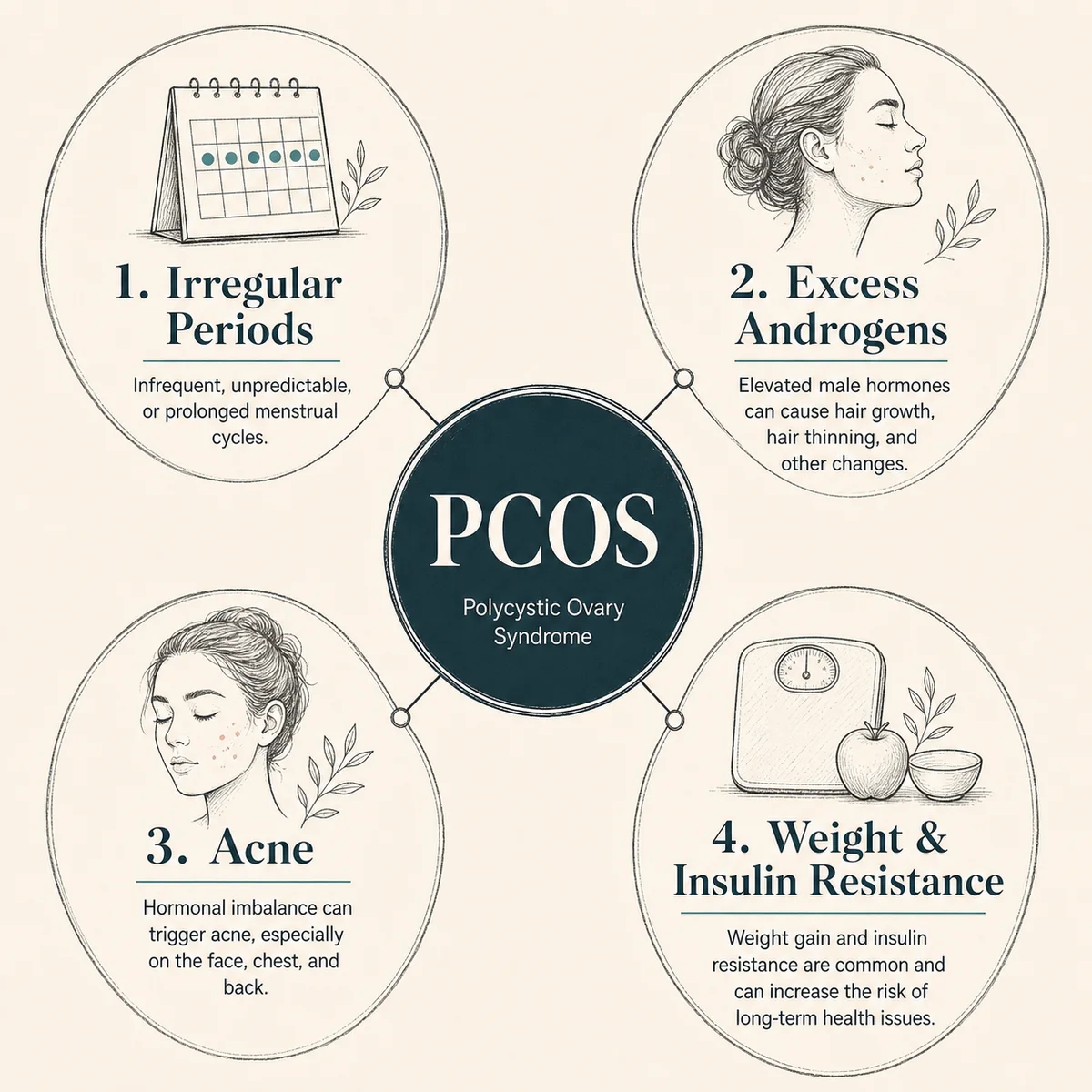
The 4 Core PCOS Symptoms
Clinicians diagnose PCOS using the Rotterdam criteria: 2 of 3 features (irregular ovulation, excess androgens, or polycystic ovaries on ultrasound) must be present. These symptoms map onto that framework.
Irregular or Missing Periods
Mayo Clinic defines irregular periods in PCOS as fewer than 8 cycles a year, or cycles spaced more than 35 days apart. Some women skip periods for months at a time.
Signs of Excess Androgens
Excess hair growth on the face, chest or back (hirsutism) is one of the most common androgen signs of PCOS. Hair thinning at the scalp, in a male-pattern distribution, is another.
Acne That Will Not Clear
PCOS-related acne clusters along the jawline and chin, flares with the cycle, and often resists standard topical treatment because the driver is hormonal, not just skin-deep.
Weight Gain and Insulin Resistance Signs
Many women with PCOS carry weight around the midsection and struggle to lose it despite consistent effort. This links to insulin resistance, which is common in PCOS and worth checking with bloodwork.
Priya, a 28-year-old marketing manager in Dubai, had chalked up her irregular cycles to work stress for two years. When acne appeared along her jawline and she noticed dark patches forming at the back of her neck, she finally booked a hormone panel. Her results showed elevated testosterone and insulin resistance, consistent with PCOS. Getting a name for it changed how she approached treatment entirely.
Want to see how a hormone panel actually maps to these symptoms? Explore BestDOC's home blood test service →
Lesser-Known PCOS Symptoms People Miss
Beyond the 4 core signs, several less obvious symptoms often go unconnected to PCOS:
- Acanthosis nigricans: dark, velvety skin patches, usually at the neck, armpits or groin, linked to insulin resistance
- Skin tags: small, soft growths, often in the same areas as acanthosis nigricans
- Mood changes: anxiety or low mood, partly hormonal, partly the stress of unpredictable symptoms
- Persistent fatigue: often tied to blood sugar swings from insulin resistance
- Sleep disturbances: including a higher rate of sleep apnea in women with PCOS
If several of these sound familiar alongside irregular cycles, that pattern is worth a conversation with a doctor, not a guess.
Why PCOS Symptoms Go Undiagnosed in the UAE
A study of 64,722 women aged 15-45 at a major Dubai women's hospital found period-prevalence of diagnosed PCOS at 1.6%, with annual diagnoses rising from 1.19% in 2020 to 2.72% in 2022, according to research published on PubMed Central. That rise likely reflects better detection, not just more cases.
It still points at the same gap the WHO describes globally: symptoms get attributed to stress, diet or "just how my body is," and the underlying hormonal pattern goes unchecked for years.
PCOS Symptoms Checklist: How Many Do You Have?
This is a self-check, not a diagnosis. If 2 or more apply, especially alongside irregular periods, it is worth getting checked.
- Periods fewer than 8 times a year, or cycles over 35 days apart
- New or worsening acne along the jawline, chin or chest
- Excess hair growth on the face, chest or back
- Hair thinning at the scalp
- Weight gain that resists diet and exercise
- Dark, velvety patches of skin at the neck or underarms
- Skin tags in the same areas
- Persistent fatigue not explained by sleep
How PCOS Is Actually Diagnosed
Full diagnosis under the Rotterdam criteria combines 3 elements: your symptom and cycle history, bloodwork checking hormone and metabolic markers, and sometimes a pelvic ultrasound to look at ovarian appearance.
BestDOC's home service covers the first two at home: a doctor consultation and a blood panel. Pelvic ultrasound imaging sits entirely outside our home-visit scope; that part of a workup happens at an imaging clinic or hospital.
Ready to check where you stand? Start with the bloodwork; a doctor can tell you from there whether imaging is the missing piece.
What a Home PCOS Blood Test Checks
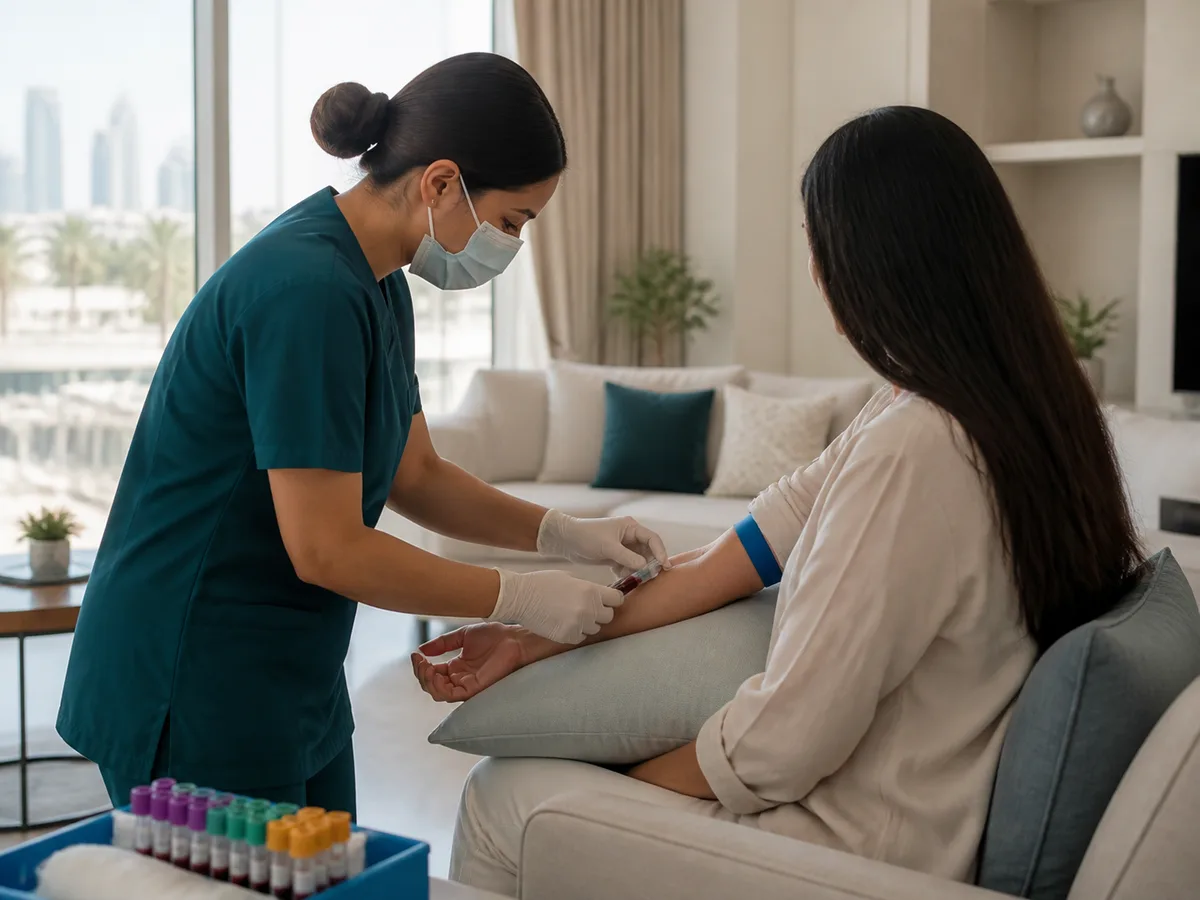
BestDOC's PCOS Blood Test panel (AED 449) covers 23 parameters across 4 categories, drawn at home by a DHA-licensed nurse. Fasting for 8-12 hours is required before the draw.
| Category | Parameters checked |
|---|---|
| Blood sugar & insulin (6) | Fasting Blood Sugar, HbA1c, Insulin, Estimated Average Glucose, HOMA-IR, TyG Index |
| Hormones & fertility (11) | Estradiol (E2), FSH, LH, Prolactin, Testosterone (Total & Free), SHBG, DHEA-S, AMH, 17-Hydroxy-Progesterone, Free Androgen Index |
| Thyroid (3) | TSH, T3 (Free), T4 (Free) |
| Vitamin D & inflammation (2) | Vitamin D (25-OH), High-Sensitivity CRP |
A doctor reviews the results and puts them alongside your symptom history, which is the bloodwork half of a full PCOS workup handled without a clinic visit.
When to See a Doctor About PCOS Symptoms
Book a consultation if you have irregular or missing periods alongside any 2 of: acne, excess hair growth, hair thinning, or unexplained weight gain. Waiting rarely resolves the pattern on its own, and earlier diagnosis means more options.
BestDOC's in-home GP consultation (from AED 300) brings a DHA-licensed doctor to you for a full history review, with a free 7-day follow-up. For a short follow-up or to discuss results, telemedicine (AED 100) works over video. For the weight-gain and insulin-resistance symptom cluster specifically, BestDOC's doctor-led Weight Loss Programme may support a broader plan alongside your PCOS care; it is not a PCOS treatment on its own.
Book a doctor home visit or blood test →
Frequently Asked Questions
What are the first signs of PCOS? The earliest signs are usually irregular or missing periods, new acne along the jawline or chest, and unexplained weight gain. Excess hair growth often follows. No single sign confirms PCOS on its own.
Can you have PCOS with regular periods? Yes. Some women with PCOS ovulate regularly but still show excess androgen signs like acne or hair growth, or have polycystic-appearing ovaries on ultrasound. Rotterdam criteria only require 2 of the 3 features.
What does PCOS acne look like? PCOS acne tends to cluster along the jawline, chin and neck, flares around the menstrual cycle, and resists standard over-the-counter treatment because it is hormonally driven.
How do I know if I need a PCOS blood test? If you have irregular or missing periods alongside acne, excess hair growth, hair thinning, or unexplained weight gain, a hormone and metabolic blood panel is a reasonable next step.
Does PCOS testing require fasting? Yes. BestDOC's home PCOS Blood Test panel requires fasting, since it includes fasting blood sugar, insulin and related metabolic markers. Fast 8-12 hours before the draw; water is fine.
Is PCOS diagnosed by blood test alone? No. Full Rotterdam-criteria diagnosis usually combines symptom history, bloodwork, and sometimes a pelvic ultrasound. BestDOC's home service covers the bloodwork and doctor consultation; ultrasound sits outside our home-visit scope.
The Bottom Line
PCOS rarely shows up as one dramatic symptom. It is a pattern: irregular periods, stubborn acne, excess hair, weight that will not budge, sometimes paired with quieter signs like skin tags or fatigue. Two or more together, especially with irregular cycles, is worth a conversation with a doctor.
BestDOC's home PCOS Blood Test (AED 449, fasting required) and in-home GP consultations (from AED 300) cover the assessment without a clinic visit. Read more about our DHA-licensed clinicians, or reach BestDOC toll-free at +971 800 2378 362 or on WhatsApp, 24/7, anywhere in Dubai.
Educational. Not medical advice. Consult a licensed clinician.