


Newborn Hunger Cues: Feeding Signs & When to Call
Newborn hunger cues show up as rooting, hand-to-mouth movement, and lip-smacking, well before a baby ever cries. Crying is a late signal, not an early one, and by the time it starts, feeding can get harder because your baby is already upset. Once you know what to watch for, feeding stops feeling like guesswork. Here's how to read the early cues, the fullness signs, and the moments that mean it's time to call someone.
Key Takeaways
- Rooting, hand-to-mouth movement, and lip-smacking are early hunger cues; crying is a late one.
- Newborns typically feed 8 to 12 times in 24 hours, with cluster feeding during growth spurts.
- Fullness cues include turning away, relaxed fists, and slowing the suck; respect them over finishing a bottle.
- Fewer than 6 wet diapers a day after day 5, or no weight regain by day 10 to 14, means it's time to call a doctor.
- BestDOC's newborn caregivers fold feeding support into daily care, with pricing quote on request.
What Are Newborn Hunger Cues?
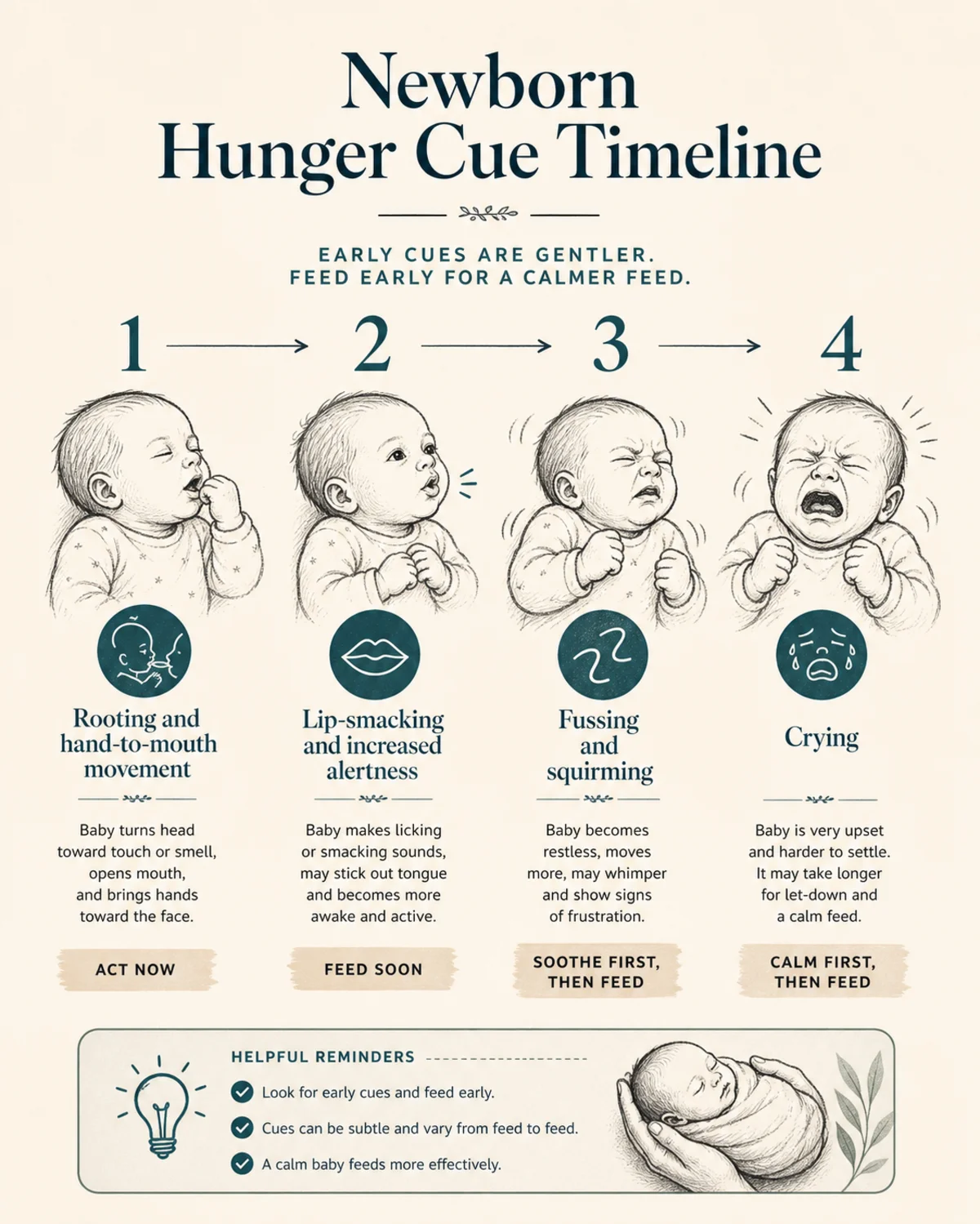
Newborn hunger cues appear before your baby fully wakes into a cry. Watch for rooting (turning their head toward anything that brushes their cheek), hands moving to the mouth, lip-smacking, and a general uptick in alertness or squirming. The CDC lists these as the first signs to watch for, and the American Academy of Pediatrics recommends responding to them directly rather than feeding on a fixed clock.
If those early cues get missed, hunger escalates to fussing, stiffening, and eventually crying. Crying is real hunger, but it's a later stage. A baby who's already crying often struggles to settle into a calm latch, so catching the earlier signs makes the whole feed easier for both of you.
Want a second read on a feeding pattern that feels off? BestDOC's newborn care team can walk through it with you.
How Do You Know When Your Newborn Is Full?
Fullness looks like the reverse of hunger. Your baby turns their head away, relaxes their fists and arms, slows or stops sucking, or drifts off at the breast or bottle. These are stop cues, and they matter as much as the hunger ones.
It's tempting to encourage a baby to finish a bottle once it's started, but the UNICEF Baby-Friendly Initiative frames responsive feeding as following the baby's lead in both directions, feeding when cues say hungry, and stopping when cues say full. Overriding a stop cue regularly can lead to overfeeding and an uncomfortable baby. The American Academy of Pediatrics walks through this in Feeding Baby the Best Way: Responsive Feeding Tips for Parents.

Layla, a first-time mother in Business Bay, spent her first two weeks watching the clock, feeding strictly every three hours. When her daughter hit a growth spurt at three weeks and wanted to feed almost hourly for two days straight, Layla assumed something was wrong. It wasn't; it was a normal cluster-feeding stretch, and it passed within 48 hours.
How Often Should a Newborn Feed, and When Is It Not Enough?
Most newborns feed 8 to 12 times in 24 hours in the first weeks, per CDC breastfeeding guidance. Expect clustering around growth spurts, typically near 2 to 3 weeks, 6 weeks, and 3 months.
| Age | Typical feeds per 24 hours |
|---|---|
| 0–2 weeks | 8–12 |
| 2–6 weeks | 8–12, often clustered |
| 6 weeks–3 months | 6–8 |
Underfeeding has concrete, checkable signs rather than vague ones. Per CDC newborn feeding basics and research on wet-diaper counts as a feeding indicator, watch for:
- Fewer than 6 wet diapers a day after day 5
- No return to birth weight by day 10 to 14
- Persistent lethargy or a weak, low cry
- Very few, small stools after day 4
Any one of these on its own is worth a call. Together, they're a same-day one.
When Newborn Feeding Signs Mean It's Time to Call Someone
A doctor visit doesn't require packing up a newborn for a clinic trip. BestDOC's in-home GP consultation starts at AED 300, comes with a prescription on the spot if needed, and includes a free 7-day follow-up; you pay after the visit. For a first read on symptoms before deciding whether an in-person visit is needed, telemedicine is AED 100.
Red flags that warrant a same-day call: no wet diaper in 6 or more hours, yellow-tinted skin or eyes, a fever, or your baby refusing several feeds in a row.

For ongoing support beyond a single visit, BestDOC's newborn care is a home caregiving service. Feeding support is folded into the caregiver's daily routine, watching cues, logging feeds and wet diapers, and flagging anything unusual to you and your doctor. The same caregiver stays on your case, with weekly reports to the family, and pricing is quote on request. Read more about BestDOC's clinicians and caregivers.
Ready to get a second pair of eyes on your newborn's feeding? Talk to BestDOC, toll-free +971 800 2378 362 or WhatsApp, 24/7, anywhere in Dubai.
In short: Reading newborn hunger cues early, before the crying starts, and respecting the stop cues just as closely, makes feeding easier for both of you. Treat wet-diaper counts and weight regain as your concrete check on whether feeding is on track. If a red flag shows up, BestDOC can put a doctor or a newborn caregiver in your home the same day you call.
Educational. Not medical advice. Consult a licensed clinician.