


How to Measure Blood Pressure at Home Correctly
To measure blood pressure at home correctly: rest 5 minutes, sit with back and feet supported and your arm at heart level, stay silent, and take two readings a minute apart on a validated upper-arm monitor, then average them. Most people who think they have a blood pressure problem are just measuring it wrong, a bad cuff size alone can swing a reading by 10-20 mmHg.
You probably own a monitor that came out of a box with no instructions. This guide covers the exact steps, the mistakes that inflate a reading, what your numbers mean, and when a clinician should check your technique in person.
Key Takeaways
- Rest 5 minutes, sit supported, cuff at heart level, stay silent, and average two readings taken a minute apart.
- A wrong cuff size, a full bladder, talking, or an unsupported arm can each shift a reading by 10-20 mmHg.
- Normal is under 120/80 mmHg; 130/80 or higher on repeated home readings is Stage 1 hypertension.
- Home and clinic numbers often differ (white coat and masked hypertension), so a pattern over days matters more than one reading.
- A BestDOC nurse-on-call visit (AED 250) checks your own home BP technique and confirms your monitor reads correctly.
How to Measure Blood Pressure at Home, Step by Step
Use a validated, automatic upper-arm monitor, not a wrist or finger device; the American Heart Association notes wrist monitors are more sensitive to arm position and less reliable. BestDOC doesn't sell or recommend a specific monitor model, so choose a validated upper-arm cuff sized to your bare arm.
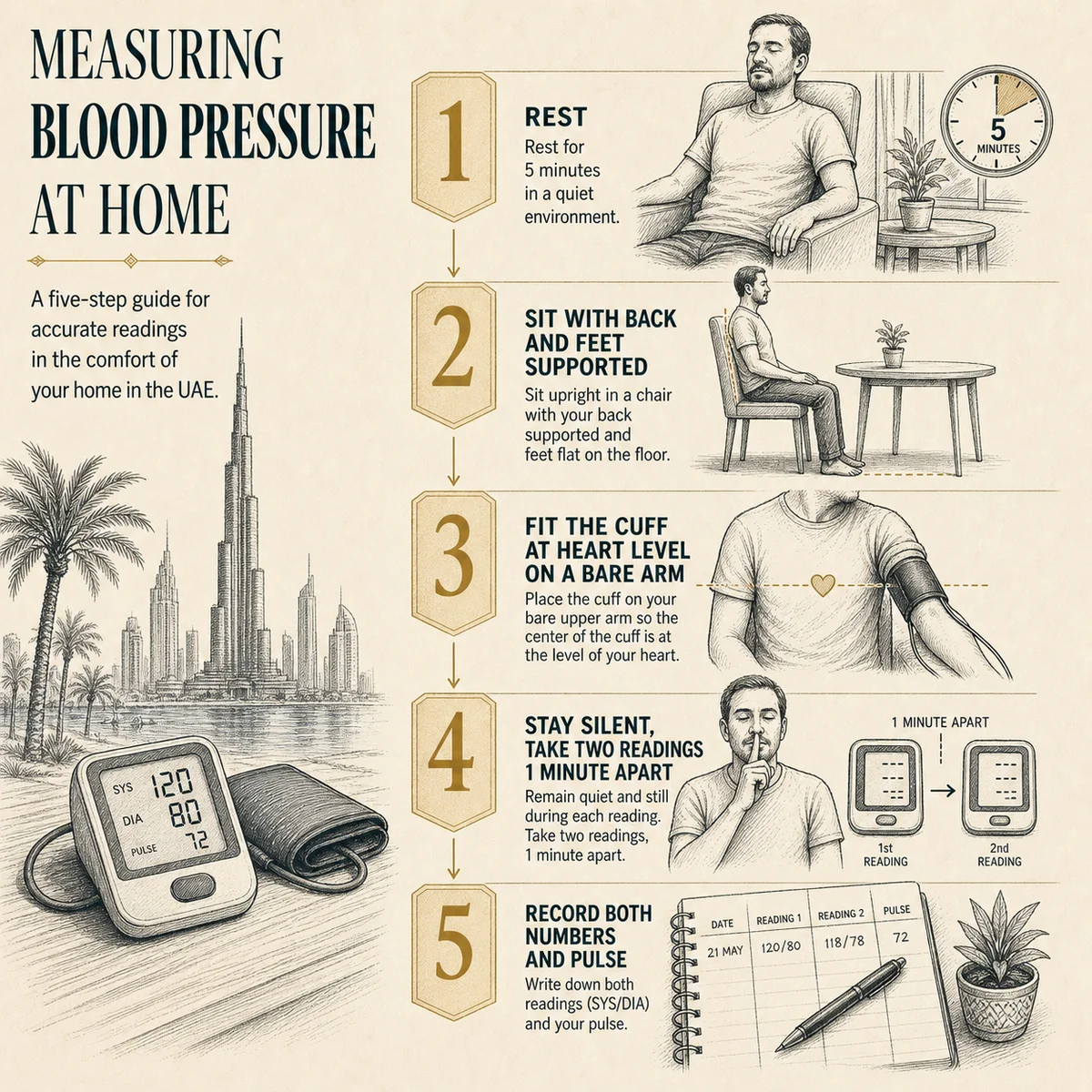
- Prepare. Empty your bladder. No caffeine, exercise, or smoking for 30 minutes before. Sit quietly for 5 minutes.
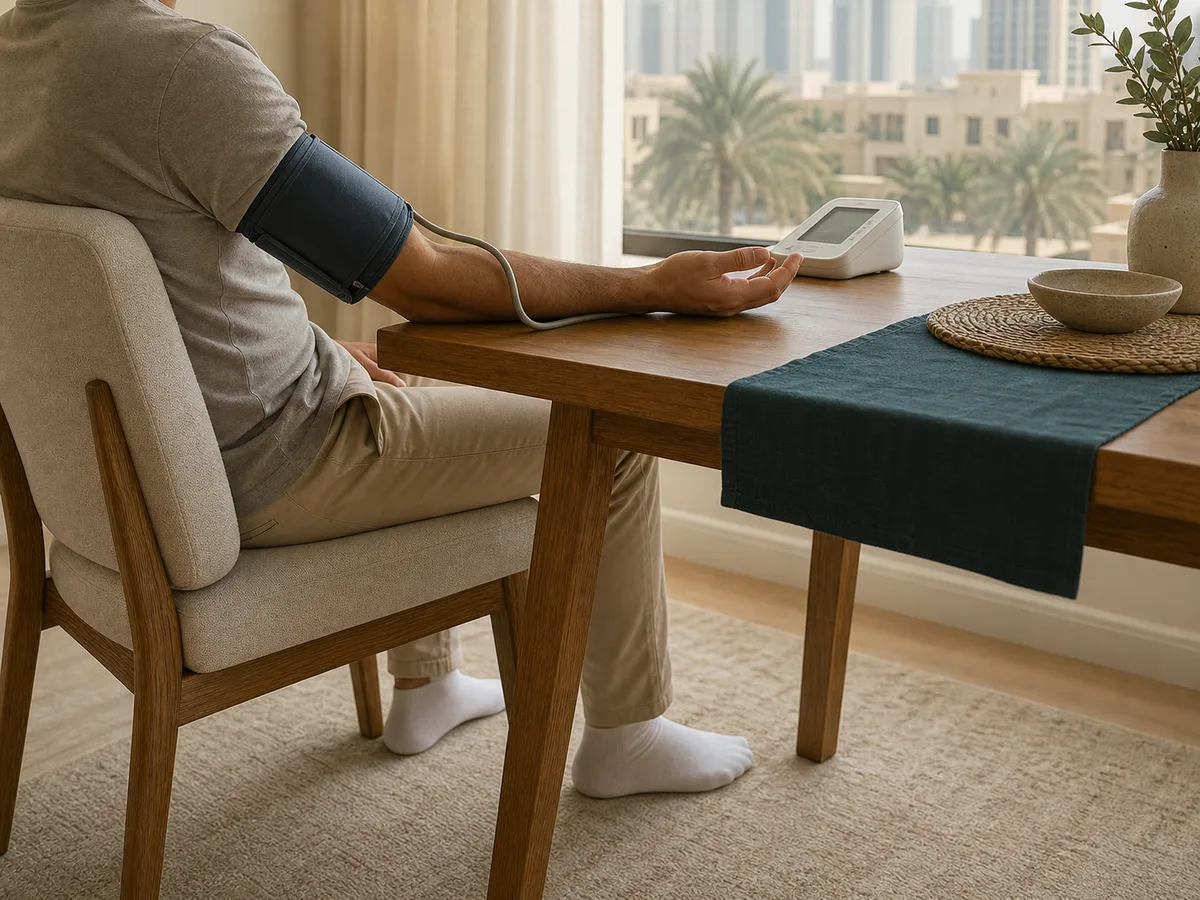
- Position. Sit upright, back supported, feet flat on the floor, legs uncrossed, arm resting on a table at heart level.
- Fit the cuff. Bare arm, correctly sized cuff, snug but not tight, one finger-width above the elbow.
- Take the reading. Stay silent, don't cross your legs, take two readings a minute apart and average them.
- Record it. Log the date, time, both numbers, and pulse, note whether it was morning or evening.
Considering a technique check in person? A DHA-licensed home nurse can confirm your own reading and cuff technique during a nurse-on-call visit, though that visit covers your own technique, not a family member's on your behalf.
Common Mistakes That Skew the Number, and What It Means
The CDC notes that talking, a full bladder, an unsupported back or arm, and crossed legs can each raise a reading on their own. The most common culprits:
- Wrong cuff size (too small inflates, too large understates)
- Talking during the reading
- Full bladder
- Back or arm unsupported
- Legs crossed
- Measuring right after coffee, exercise, or a cigarette
Once technique is right, here's what the number means, using the AHA's categories:
| Category | Systolic (mmHg) | Diastolic (mmHg) |
|---|---|---|
| Normal | Under 120 | Under 80 |
| Elevated | 120-129 | Under 80 |
| Hypertension Stage 1 | 130-139 | 80-89 |
| Hypertension Stage 2 | 140 or higher | 90 or higher |
| Hypertensive Crisis | Over 180 | Over 120 |
A single high reading isn't a diagnosis. What matters is the pattern across a week or two of correctly measured numbers.
When Home and Clinic Numbers Differ, and When to Get It Checked
Home and clinic readings often disagree, and peer-reviewed research on white coat and masked hypertension shows both patterns are clinically significant, not just measurement noise. The WHO estimates 1.28 billion adults live with hypertension, and roughly 46% don't know it, which is why a home log matters.
Fatima, 52, in Mirdif had a clinic reading of 148/92 that alarmed her. Two weeks of correctly measured home readings averaged 128/82, consistent white coat elevation, not sustained hypertension. Her doctor adjusted her plan around the two-week pattern instead of the one clinic number.
See a clinician if home readings stay at 140/90 or higher, or any reading hits crisis range with symptoms like chest pain. Call 998 or go to A&E; this is a technique guide, not a diagnostic tool. Every BestDOC clinician is DHA-licensed and signed off by our medical director, see our team. A doctor at home can review a reading log and set or adjust a hypertension plan under chronic disease care, a monitoring plan customized to your clinical needs, not a fixed schedule.
Ready to have a clinician read your numbers? Book chronic disease care with BestDOC, or call the 24/7 toll-free line +971 800 2378 362 / WhatsApp to arrange a visit anywhere in Dubai.
Frequently Asked Questions
What is a normal blood pressure reading at home? Under 120/80 mmHg. 130/80 or higher on repeated home readings is Stage 1 hypertension.
How many times a day should I check my blood pressure? Twice: morning and evening, two readings each time, averaged.
Can I check my blood pressure right after waking up? Yes, but sit quietly for 5 minutes first and check before coffee or medication.
Does a wrist monitor work as well as an upper-arm monitor? No. Wrist and finger monitors are more sensitive to arm position and less reliable.
Why is my blood pressure higher at the doctor's office than at home? White coat hypertension, a reading that runs higher in a clinical setting than at home.
What cuff size do I need? Measure your bare upper arm at the midpoint; a wrong size inflates or understates the reading.
Should I sit or lie down to check blood pressure? Sit, with your back supported, feet flat, and arm resting at heart level.
Conclusion
Get the technique right first: rested, seated, supported, silent, two readings averaged. Then track a pattern over days, not one number. If your log stays at 140/90 or higher, that's the point to bring it to a clinician. Contact BestDOC or call +971 800 2378 362 to have a nurse check your technique or a doctor read your log, same file, same team.
Educational. Not medical advice. Consult a licensed clinician. BestDOC is a DHA-licensed home-healthcare practice serving all of Dubai. Toll-free +971 800 2378 362, 24/7. For emergencies, call 998.