


Liver Function Test Results Explained
A liver function test is six numbers read together, not one read alone. A high ALT next to normal AST, ALP, and bilirubin means something very different from a high ALT with several other markers up too.
Here's what each marker measures, how doctors read the pattern, and what to do next if something on yours came back outside range.
Key Takeaways
- A liver function test panel has 6 core markers: ALT, AST, ALP, GGT, bilirubin, and albumin, and the pattern across them matters more than any single value.
- ALT is the more liver-specific enzyme; AST also shows up from muscle and heart, so doctors read the two together, not separately.
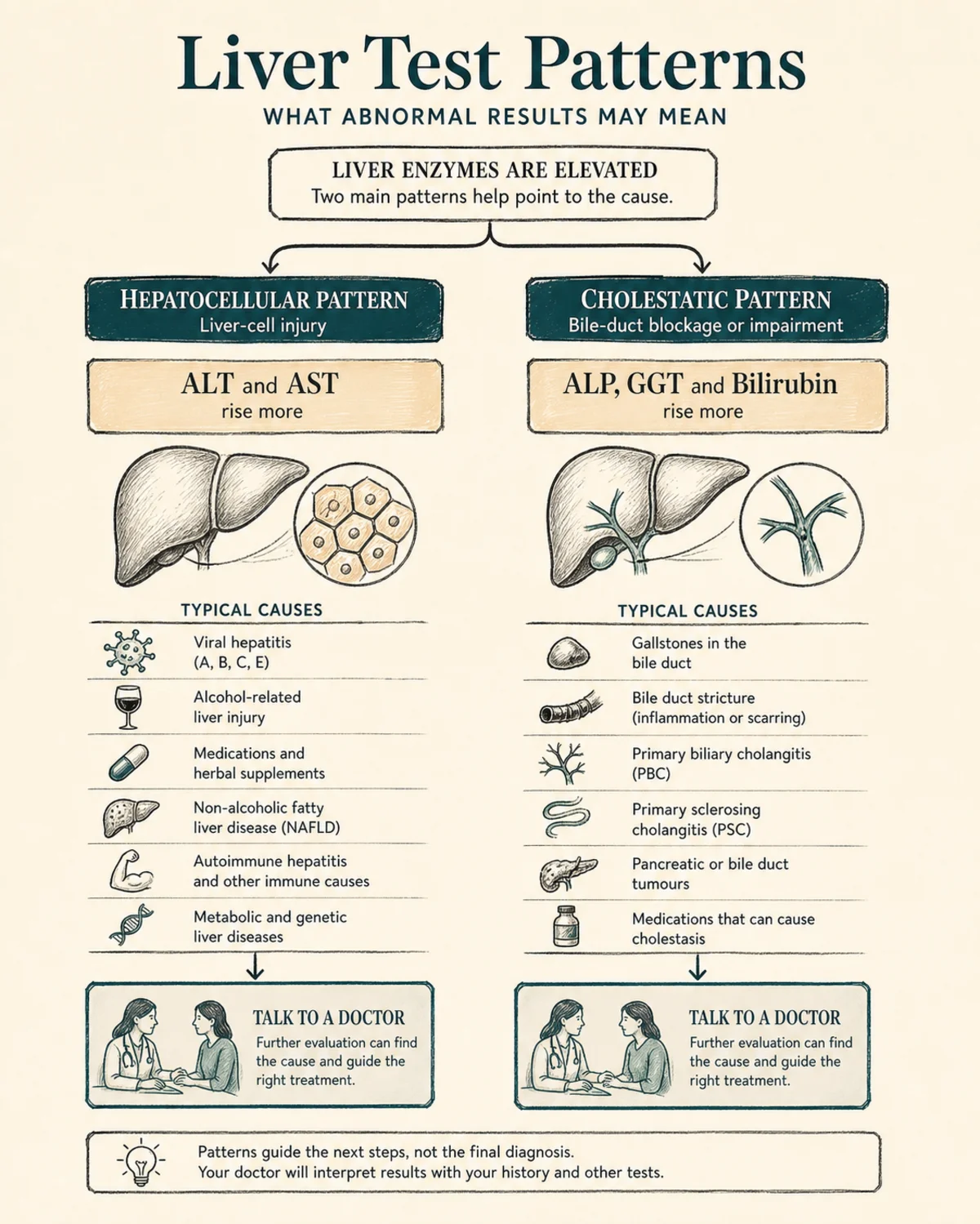
- A hepatocellular pattern (ALT/AST dominant) points toward liver-cell injury; a cholestatic pattern (ALP/GGT/bilirubin dominant) points toward a bile-duct issue, per the American Academy of Family Physicians.
- Mild, isolated elevations are common and often traced to alcohol, certain medications, recent exercise, or fatty liver, not serious disease.
- BestDOC's doctor reads every home lab report; for a severe result, the doctor contacts you directly, for anything else, you book a same-team telemedicine or doctor-on-call visit to talk it through.
What Do the Main Liver Function Test Markers Measure?
Each marker tracks a different liver job, not one "liver score." ALT and AST leak from liver cells under stress or damage. ALP and GGT track the bile ducts, the liver's drainage system. Bilirubin measures a pigment the liver clears from old red blood cells, and albumin reflects how well it's making protein, per Cleveland Clinic.
Because each marker covers different ground, Mayo Clinic notes the panel is designed to be read as a set, not marker by marker, which is what separates a useful read from a scary number on a page.
What Does a High ALT or AST Mean?
A high ALT usually means liver cells are under stress, since ALT is the more liver-specific enzyme. Common, often mild causes include fatty liver, alcohol, certain medications, and a hard workout before the draw, per AAFP.
Fatty liver is one of the most common reasons for a mildly elevated ALT, and it often causes no other symptoms at all, per NIDDK. That's why a single high number needs a doctor's read, not a guess.
Want a clinician to walk through what your own numbers mean? Talk to a doctor about your case as soon as your result is in.
AST:ALT Ratio: Why the Pattern Matters More Than One Number
The relationship between markers tells a doctor more than either number alone. ALT and AST running highest points to a hepatocellular pattern, liver-cell injury. ALP and GGT leading instead points to a cholestatic pattern, a bile-duct issue, per AAFP's interpretation guide.
| Pattern | Markers that rise most | Typically points to |
|---|---|---|
| Hepatocellular | ALT, AST | Liver-cell injury, fatty liver, viral hepatitis, alcohol |
| Cholestatic | ALP, GGT, bilirubin | Bile-duct obstruction, gallstones, some medications |
Mona, 34, booked a home health screening ahead of a work medical and saw her ALT flagged slightly high, everything else normal. Her BestDOC doctor asked about a new supplement she'd started three weeks earlier, had her stop it, and repeat the test. It came back normal.

What Does High Bilirubin or ALP Mean, and What Should You Do Next?
High bilirubin usually points to one of two things: the liver isn't clearing it fast enough, a cholestatic cause, or red blood cells are breaking down faster than usual, unrelated to bile flow, per Cleveland Clinic. ALP rising alongside bilirubin strengthens the bile-duct case; ALP alone can also come from bone, not just liver.
One abnormal marker isn't automatically serious. A doctor needs the full pattern alongside your symptoms and history. If a result looks severe, BestDOC's doctor contacts you directly. For anything less urgent, you book a telemedicine or doctor-on-call visit with the same team to go through what it means.
Ready to get your result read properly? Book a doctor-on-call review, or read more about BestDOC's DHA-licensed clinical team first.
Can Lifestyle or Medication Affect Your Results?
Yes, and it's one of the most common reasons for a one-off abnormal marker. Alcohol before a draw, some over-the-counter painkillers, herbal supplements, and intense recent exercise can all shift ALT, AST, or bilirubin with no underlying disease, per Mayo Clinic.
None of this replaces a doctor's read, it's context a doctor weighs alongside your numbers. That's why BestDOC's home lab reports come with a doctor attached, not a printout alone.

Frequently Asked Questions
What is considered a high ALT level? Anything above your lab's upper reference limit, usually around 40 to 56 IU/L. How high it is, and what moved with it, matters more than the single number.
Can a liver function test be abnormal without liver disease? Yes. Recent exercise, some medications and supplements, and even a fatty meal before the draw can nudge markers like ALT or bilirubin outside range with no liver disease at all.
Do I need to repeat an abnormal liver function test? Often, yes. A doctor typically wants to see whether a mild abnormality settles on its own before deciding if further testing is needed.
Is a slightly high ALT always serious? No. A mildly elevated ALT with everything else normal is common and often resolves on its own. A doctor should still confirm that against your history.
What's the difference between ALT and AST? ALT sits mostly in liver cells, so it's a more specific injury signal. AST is also in muscle and heart tissue, so it can rise for reasons outside the liver.
Can BestDOC's doctor review my liver function test results at home? Yes. If a result looks severe, the doctor contacts you directly. For anything less urgent, you book a telemedicine or doctor-on-call visit to go through what it means.
A liver function test is a pattern, not a verdict: which markers moved, together, is what tells the real story. Mild, isolated elevations are common and often explained by something simple; anything that looks more serious deserves a doctor's read, not a guess.
BestDOC's doctor reads every home lab report as part of the service, reaches out directly if a result looks severe, and is one call away for everything else. Book a home lab test or doctor-on-call review, or contact the team on WhatsApp or the toll-free line at +971 800 2378 362, 24/7 across Dubai.
Educational content only, not medical advice. Consult a licensed clinician about your own results.