

How to Find a Doctor in Dubai: A Practical 2026 Guide
To find a doctor in Dubai you have four real options: a clinic visit, a doctor at your home, a video consultation, or a hospital outpatient appointment. Every clinician you book must be licensed by the Dubai Health Authority, and you can verify any name on the public Sheryan register before you visit. The right choice depends on how urgent the case is, who the patient is, and whether you want one clinician to follow the file across visits.
Key Takeaways
- Four channels exist in Dubai: clinic visit, doctor at home, video consult, hospital outpatient. Each fits a different case.
- Every practising doctor in Dubai must be DHA-licensed. You can verify the name on the public Sheryan register before booking.
- Self-pay costs range from AED 100 for a telemedicine consult to AED 1,500 or more for a hospital outpatient visit with labs.
- Emergencies, stroke signs, chest pain, severe breathing trouble, major trauma, call 998. A home doctor is not an emergency service.
- Continuity matters for chronic and post-discharge cases. Ask whether you will see the same doctor next time, not just any doctor on the rota.
The four ways to see a doctor in Dubai
Most "find a doctor" searches in Dubai really mean one of four different things. Naming them clearly upfront saves an hour of phone calls and a wasted visit.
Clinic visit, when it's the right call
A clinic GP is the default for routine reviews, screening, vaccinations, mild illness, and most non-urgent follow-ups. Walk-in is available at many group clinics; same-day booking is the norm. Self-pay GP fees typically fall in the AED 150 to 500 band depending on neighbourhood and clinic brand, with specialist fees higher. Clinic is the wrong choice when leaving the house is itself the problem, the patient is post-operative, immunocompromised, an unsettled child, or an elderly parent reluctant to travel.
Doctor at home, when leaving the house is the friction
A home GP comes to your address, examines the patient, prescribes, can write a sick leave certificate, and arranges follow-up labs or nursing without anyone leaving the building. This is the right channel for paediatric fever, gastroenteritis, post-discharge review, mobility-limited elderly cases, business travellers in hotels, and after-hours acute care that is not an emergency. Home-based primary care produces outcomes comparable to clinic care for low-acuity conditions, with fewer secondary admissions in older adults, per WHO guidance on integrated home-based care and peer-reviewed continuity-of-care evidence.
Telemedicine, the AED 100 first step
A video consult is the lightest possible touch with a real DHA-licensed clinician. It is the right choice for repeat prescriptions, follow-ups on a known issue, dermatology where the rash is visible, paediatric advice, and triage when you are not sure whether to book a home or clinic visit. Telemedicine is the wrong choice for anything that needs a physical examination, listening to the chest, palpating the abdomen, looking inside ears, swabbing a throat. If the video consult ends with "you really need an in-person look", that is the system working, not failing.
Hospital outpatient, when you need specialists and imaging on-site
Hospital outpatient clinics are the right channel when imaging, in-house labs, multiple specialists, or a procedure room have to be in the same visit. The trade-off is cost and logistics. A specialist outpatient appointment with a scan and bloods will usually land in the AED 400 to 1,500-plus range self-pay, and the waiting-room day is harder on elderly patients. Use hospital outpatient when the case clearly needs it, not by default.

Quick comparison of the four channels:
| Channel | Typical self-pay cost | Typical wait | Best for | Worst for |
|---|---|---|---|---|
| Clinic visit | AED 150 to 500 | Same-day to next-day | Routine, screening, follow-ups | Mobility-limited, infectious risk to others |
| Doctor at home | From AED 300 (BestDOC) | ~45 min in Dubai | Elderly, post-op, paediatric fever, after-hours | Imaging, in-clinic procedures |
| Telemedicine | From AED 100 (BestDOC) | Same hour | Triage, repeat scripts, follow-ups | Anything needing a physical exam |
| Hospital outpatient | AED 400 to 1,500+ | Hours | Specialist plus imaging plus labs in one place | Cost, logistics for elderly |
How to check a doctor is properly licensed
Every doctor practising in Dubai is regulated by the Dubai Health Authority. In the rest of the UAE, regulation sits with the Ministry of Health and Prevention. Both registers are public, both are searchable, and three checks are enough to confirm a doctor is real before you book.
What the DHA register tells you
Searching a clinician's full name on the DHA Sheryan professional register returns the licence number, the active facility, and the scope of practice. You can see whether the licence is current, whether it has been suspended, and what the doctor is licensed to do. The same logic applies to MOHAP for the other emirates. Verifying takes under two min and is a habit worth keeping, especially when booking from social media or an unfamiliar listing.
Specialist versus GP, and why it matters at the first visit
For most new symptoms, a GP is the right starting point. A GP can examine, prescribe, run baseline investigations, and refer onward when needed. Going straight to a specialist without a GP review is common in Dubai, but it costs more, and the wrong specialist for the underlying picture is a slow door. If the symptom set is clearly within one organ system, abdominal pain after a known gallstone, a worsening asthma history, a known cardiology case, a direct specialist booking is reasonable. Otherwise start with the GP.
Red flags: "doctors" without DHA or MOHAP registration
Anyone offering medical care in Dubai without a DHA licence is operating outside the law. Wellness clinics offering "drips" or "treatments" must still operate under a licensed medical director, and every clinical intervention must be signed off by a registered clinician. If a service cannot show you a licence number and the responsible doctor's name, walk away. The CDC's general guidance on recognising heart-attack and stroke signs underlines the same logic: licensed clinicians, in regulated facilities, with documentation.
What it costs to see a doctor in Dubai
Dubai's private healthcare market is largely self-pay at the point of booking, with insurance reconciliation happening on the back end if you have a plan. Walking in with a card is the norm; cash and direct payment are equally normal.
Typical consultation fee ranges
Clinic GP visits run roughly AED 150 to 500 per consultation. Specialist clinic visits run AED 300 to 1,000+. A doctor at home in Dubai starts at AED 300 per visit with BestDOC, with bundled multi-visit pricing for households that expect repeat care. Telemedicine sits at AED 100 for around 15 min. Hospital outpatient appointments with imaging and labs included can land anywhere from AED 400 to 1,500 or more depending on the scans ordered.
What a "package" or "bundle" usually means
Bundles trade flexibility for a lower per-visit price. A four-visit doctor-at-home bundle priced at AED 999 valid for one year is the right call when you already know a parent's chronic condition needs repeat review, when a new mother wants postnatal check-ins, or when a household has two or three school-age children who reliably take turns being unwell. Read what counts as a "visit", whether telemedicine follow-ups are included, and how the validity window is counted from the date of purchase.
Pay-after-visit and follow-up policies, what to ask
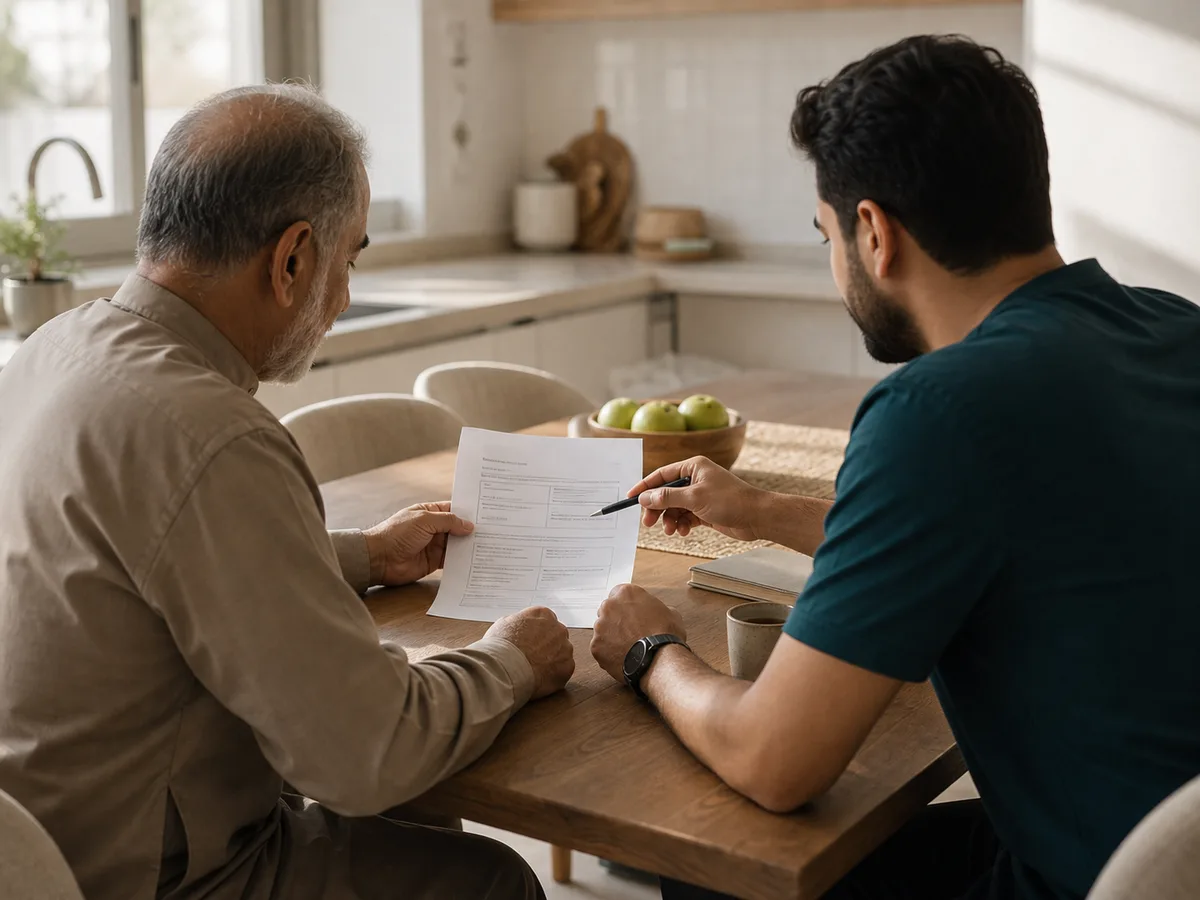
Three questions are worth asking before any first visit:
- Is the price quoted before the doctor arrives, or only after?
- Is the follow-up window included, and for how long?
- Who carries the file if the same doctor is not available next time?
BestDOC quotes price up front, takes payment after the visit, and includes a free seven-day follow-up with every in-person doctor visit. The "on time, or on us" punctuality promise applies to the booked window. None of this is industry-standard yet, so ask the coordinator before you commit.
How to pick the right doctor for your case
The most useful question is not "who is the best doctor in Dubai", because that depends entirely on what is wrong. The right question is "what kind of doctor, in what kind of setting, for this specific situation".
GP versus specialist, when to start where
Start with a GP for any new, undifferentiated symptom, fever, fatigue, a cough that will not clear, unexplained abdominal pain, suspected urinary infection, blood-pressure concerns, or general unwellness. A GP can run the right initial investigations, write a prescription where appropriate, and refer onward if the case needs specialist eyes. Start with a specialist only when the picture is clearly within one organ system and you already have a working diagnosis. Going straight to specialists for vague symptoms is expensive and often slower.
Paediatrics, women's health, elderly, chronic disease
A paediatrician visits home for fever, ear infections, gastroenteritis, and mild respiratory illness in children over three months, per Mayo Clinic guidance on paediatric fever red flags. Newborn red flags and severe respiratory distress go to A&E. Women's health, postnatal review, prenatal physiotherapy, and routine reviews work well at home; see DHA-licensed maternity care at home. Elderly care benefits most from continuity, NIH research on continuity of care supports better outcomes for low-acuity, recurring conditions, see elderly care at home. Chronic conditions, diabetes, hypertension, post-stroke review, need a doctor-signed plan and recurring touchpoints, see chronic disease care.
Language and cultural fit
English is the working language across Dubai healthcare. Arabic is widely available; Tagalog, Hindi, Urdu, Malayalam, and French are common in the larger groups. Match the language to the patient, not the household. An elderly parent who speaks Arabic primarily deserves an Arabic-speaking clinician, even if you yourself prefer English. Gender-matched clinicians can be requested for women's health, paediatric examinations, or by family preference; this is normal and expected, not unusual.
Continuity, will you see the same doctor next time?
For one-off acute illness, continuity does not matter much. For chronic conditions, post-discharge recovery, paediatric follow-ups, and elderly care, continuity is the difference between care that compounds and care that resets every visit. Ask the question explicitly: "Will the same doctor come back for the follow-up, and if not, who carries the file?" The right answer names a clinician and names a backup, with one shared file across both.
Practical scenarios, what most people actually search for
Brief scenarios cover the cases that drive most "doctor in Dubai" searches.
Just landed, no clinic registered, child has a fever
Family of four lands at DXB on a Tuesday. The parent's insurance starts next month. On Saturday night the 4-year-old spikes a fever of 39°C. There is no clinic registered, no GP relationship, no insurance yet. The right move is a video consultation to triage the fever against paediatric red-flags, then a home doctor visit if the child needs an examination. The whole process costs around AED 100 to 500, self-pay, with no clinic registration required.
Aging parent home from hospital, weak and reluctant to travel
A 78-year-old is discharged in Mirdif after a chest infection. The discharge sheet lists six medications, two of which look duplicated. Travelling for a clinic review is hard. A home GP reads the discharge summary, reconciles the medication list, signs a fresh plan, and books a DHA-licensed home nurse for blood pressure and glucose checks. The same doctor returns at the two-week review.
GI bug for a business traveller in a hotel
A traveller in a Downtown hotel develops gastroenteritis the morning after a buffet. They do not want to go to a clinic, do not want to risk a flight in this state, and need something written for the home insurer. A telemedicine consult starts the assessment, hydration advice is given, and a home doctor visit follows if symptoms persist beyond 24 hours. A documented sick note is issued where clinically appropriate.
Late-night cough that has been worsening, not an emergency
A persistent cough that has worsened over four days, with new shortness of breath on stairs but no chest pain, sits in the awkward middle: too late for the clinic, not severe enough for A&E. A home GP can examine the chest, listen for adventitious sounds, arrange chest imaging via a clinic the next morning if needed, and bridge the patient safely overnight. This is the case home medicine handles best.

When to skip the doctor visit and call 998
Some symptoms need an ambulance, not a doctor at home. Call 998 in Dubai if you see any of the following:
- Sudden facial droop, arm weakness, or slurred speech (stroke signs).
- Crushing or central chest pain, especially with sweating or shortness of breath.
- Severe breathing difficulty, blue lips, or someone who cannot speak full sentences.
- Heavy bleeding that does not stop with pressure.
- Seizure that lasts more than five min, or a first-ever seizure.
- Major trauma, suspected fractures of the hip or spine, severe head injury.
- Fever in an infant under three months.
- Suicidal crisis or active self-harm.
The CDC's emergency-care guidance and MOHAP's licensing and emergency information both reinforce the same line. A home doctor is the right channel for non-emergency care; an ambulance is the right channel for emergencies. Being honest about that line is part of safe practice.
How to book a doctor in Dubai, the realistic steps
Booking is more straightforward than most people expect, once you know what the coordinator needs to hear.
Clinic booking, online portals and walk-in reality
Most group-clinic brands take same-day bookings online or by phone, and most walk-ins are seen within an hour at non-peak times. Bring an ID if you have one, a list of current medications, and an insurance card if you intend to claim. None of these are gates to being seen.
Doctor at home, what the coordinator will ask
For a home doctor visit, a BestDOC coordinator asks four things: the area, the patient's age, the main complaint, and the preferred arrival window. The price is quoted up front, and the clinician's name and photo are sent before they leave the office. WhatsApp on wa.me/9718002378362 or toll-free +971 800 2378 362 reaches the coordinator 24/7.
Documents you need, or do not
You do not need an Emirates ID to be seen. You do not need an active insurance plan to be seen. You do not need a prior referral. What helps is a one-page list of the patient's current medications, any known allergies, and a short timeline of the current symptoms.
What to have ready before the visit
A glass of water for the patient, a quiet room, the medication list, a phone charged enough to send a clinic summary later, and any recent test results if you have them. That is enough.
Frequently asked questions
The FAQ block above feeds the FAQ schema and answers the questions that drive the highest-volume "doctor in Dubai" long-tail queries: insurance, licensing, cost, home visit availability, DHA versus MOHAP, sick leave, Emirates ID, language matching, and when to go to hospital instead.
Talk to a doctor today
If the case fits a home visit, request a doctor home visit on WhatsApp or by toll-free call. If a video consult is enough, book telemedicine. For ongoing care, see BestDOC's clinical team and the doctor-on-call service, then contact us. The doctor who comes today is the one we send next time, where the rota allows.
Disclaimer
Educational. Not medical advice. Consult a licensed clinician. For emergencies in Dubai, call 998.