


Elderly Fall Prevention: Making the Home Safer After 60
More than 1 in 4 adults over 65 fall each year, and most of those falls happen inside the home, not outdoors, according to the CDC. This guide walks through a room-by-room safety checklist, the risk factors a checklist alone won't fix, and exactly what to do if a fall has already happened.
Falling once roughly doubles the chance of falling again. That is the uncomfortable part. The reassuring part: most falls are preventable, and the fixes are specific, not vague.
Key Takeaways
- Most falls happen at home. Loose rugs, poor lighting, and bathroom hazards are the leading causes.
- Tile and marble floors common in UAE homes offer little grip when wet; a loose rug on tile is a higher-than-average hazard.
- Strength and balance training is the single most evidence-backed way to cut fall risk, more effective than hazard removal alone.
- After a fall, check for serious injury signs first. Call 998 if there are any; otherwise a same-day doctor visit at home can check for less obvious causes.
- Households with repeated near-falls usually need more than a checklist; ongoing elderly care support catches hazards a one-time walkthrough misses.
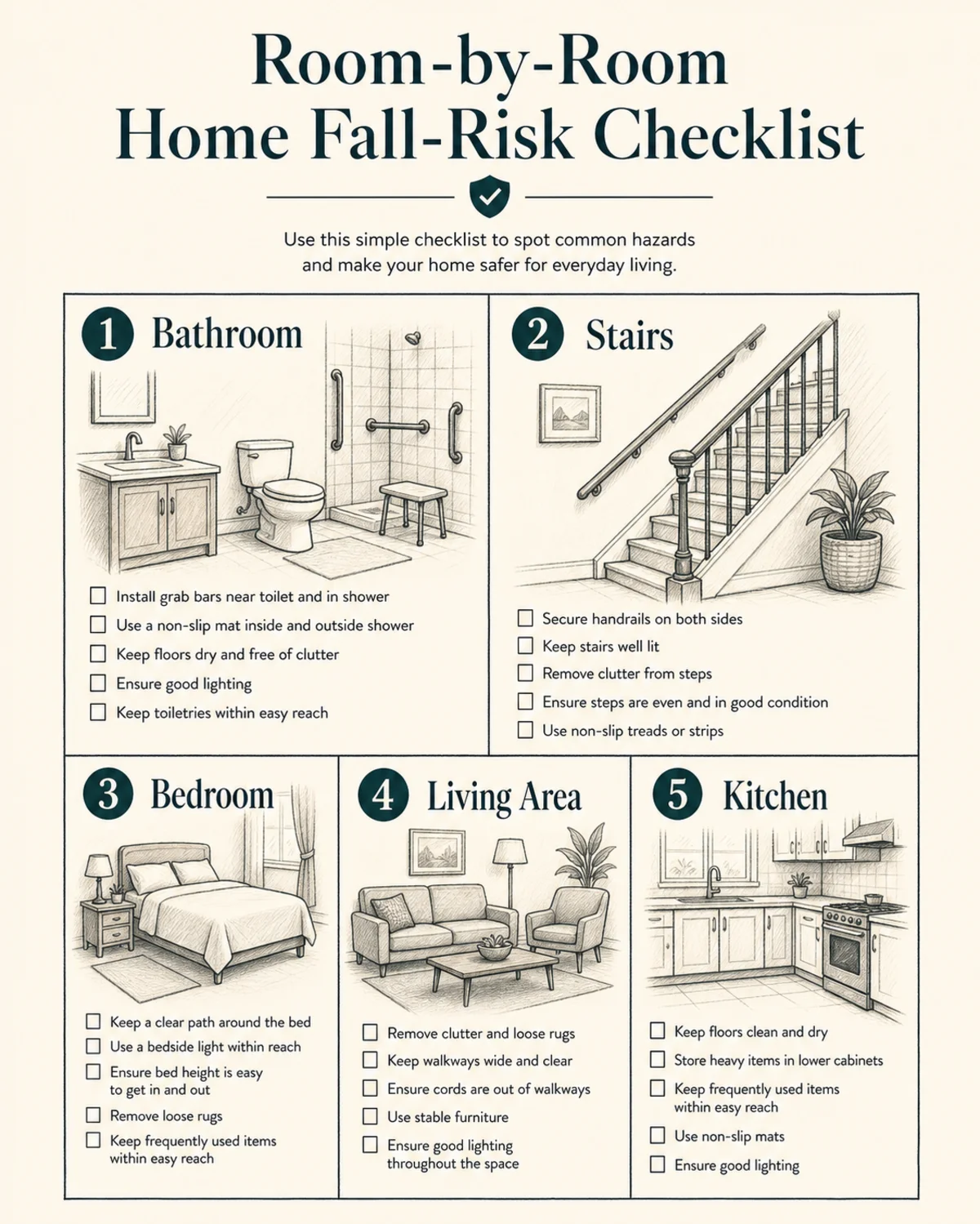
The Home Fall-Risk Checklist, Room by Room
Start with the rooms where falls actually happen: the bathroom, the stairs, and any path walked in the dark.
- Bathroom: grab bars near the toilet and inside the shower, a non-slip mat, a raised toilet seat if standing up is hard.
- Stairs: handrails on both sides, secure footing on every step, light switches at the top and the bottom.
- Bedroom: a clear path to the bathroom, a nightlight, a phone within reach of the bed.
- Living areas: remove loose rugs or fix them down with non-slip backing, tape or remove trailing cords, keep walkways clear of furniture.
- Kitchen: non-slip mats near the sink, everyday items stored within easy reach so no step-stool is needed.
One detail most checklists miss: tile and marble flooring, common in Dubai homes, offers far less grip than carpet once it is wet. A freshly mopped floor needs to dry fully before anyone walks on it, and a loose area rug on tile is a bigger hazard here than the same rug on carpet elsewhere. The CDC's Home Safety Tour video walks through the same room-by-room hazards in a real home, if you'd rather see it than read it.
When Fatima's mother slipped reaching for a spice jar on a high kitchen shelf last year, the fall itself was minor. What worried the family more was that it happened on a Tuesday afternoon with no one else home. That gap, not the shelf, was the real risk they fixed afterward.
Not sure where to start? BestDOC's elderly care intake includes a home safety and fall-risk walkthrough as a standard part of the assessment, not a separate request.
Risk Factors a Checklist Won't Fix
Hazard removal helps, but several of the biggest fall risks live outside the home environment entirely.
| Risk factor | Why it matters | What helps |
|---|---|---|
| Medications | Some sedatives and blood pressure drugs cause dizziness | A doctor reviews the full medication list |
| Poor vision | Missed steps, misjudged distances | Regular eye checks, updated prescriptions |
| Muscle weakness | Slower reaction time, less stable gait | Structured strength and balance training |
| Orthostatic hypotension | Blood pressure drops when standing quickly | Stand up slowly, medical review if frequent |
| Improper footwear | Loose slippers, worn soles | Closed-back, non-slip shoes indoors |
Of these, strength and balance training is the one factor the National Institute on Aging and CDC both single out as more effective than hazard removal alone, because it addresses the fall risk directly rather than just removing one trigger. A DHA-licensed physiotherapist visiting at home (from AED 350 a session) already includes a balance and fall-risk assessment as part of the session, and builds a programme around what that assessment finds.
What to Do If an Elderly Parent Falls
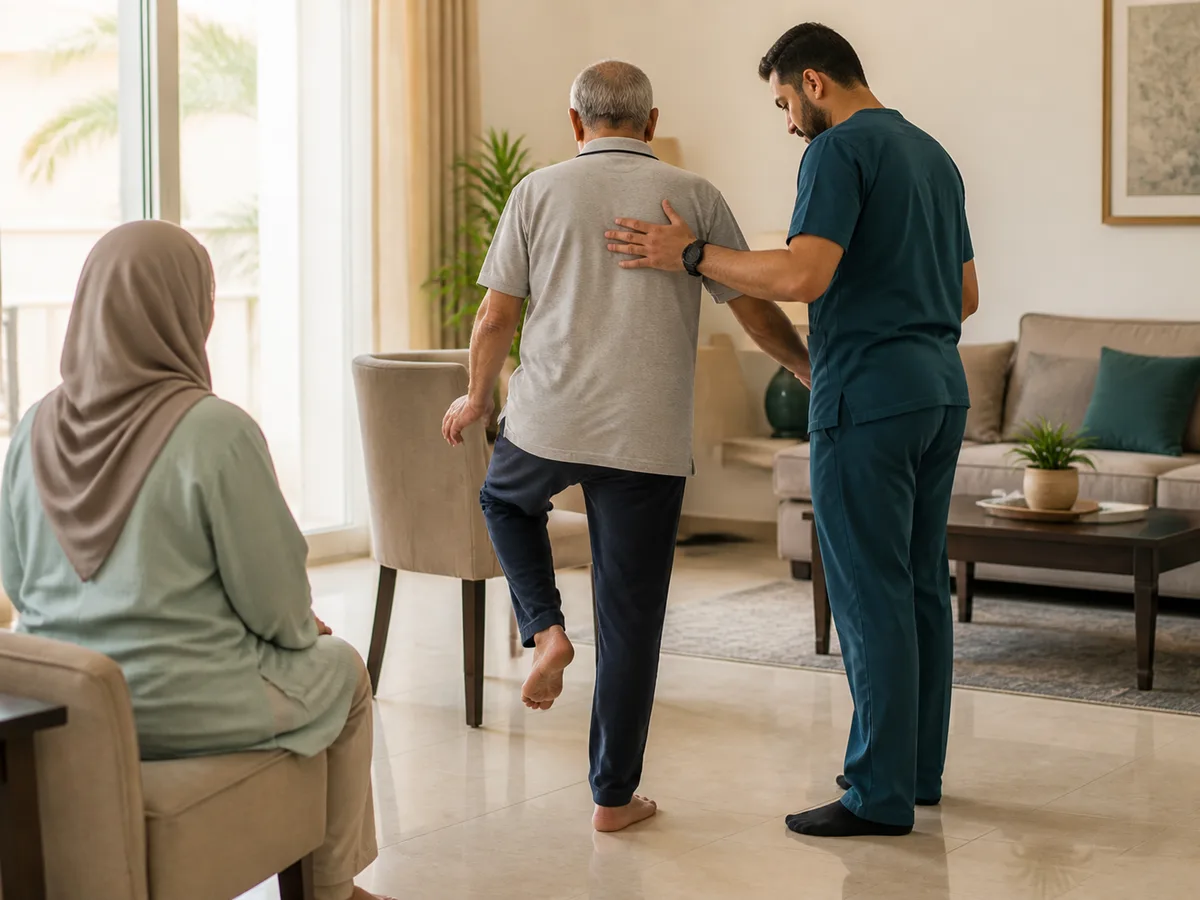
Do not rush them up. Check first for signs of serious injury: head trauma, inability to move a limb, severe pain, or loss of consciousness. If any of these are present, call 998 immediately. This is not a moment for a scheduled home visit.
If there are no emergency signs but you still want a same-day check, BestDOC's Doctor at Home (from AED 350) can assess for injury, review medications that may have contributed, and order labs on the spot if a metabolic or infection-related cause is suspected. Blood work drawn during that same visit is billed separately, from AED 55.
For a cut or bruising that needs monitoring, or extra hands during recovery, DHA-licensed home nursing (from AED 100 an hour) or a short-term elderly care arrangement covers the days right after.
If the near-misses keep happening, one checklist pass usually isn't enough. BestDOC's elderly care puts a consistent caregiver in the home, hourly, shift, or live-in, with weekly reports back to the family, quoted per case. Toll-free +971 800 2378 362, WhatsApp, 24/7, across Dubai.
Building a Plan, Not Just a Checklist
Most falls at home are preventable: remove the hazards, then fix the strength and balance issue underneath them. A one-time walkthrough catches the rugs and the lighting. A DHA-licensed physiotherapist catches the risk that caused the fall in the first place, and an ongoing caregiver from BestDOC's clinical team catches what changes next month.
Ready to make the home safer? Talk to BestDOC about a physiotherapy balance assessment or ongoing elderly care support, or reach the team through contact any time.
Educational. Not medical advice. Consult a licensed clinician.