


Drowning Prevention in the UAE: Pool & Water Safety
Drowning is fast and silent, not the loud splashing scene from films, and children aged one to four face the highest drowning risk of any age group, in the UAE and worldwide. Effective drowning prevention in the UAE starts with knowing that. Most parents already know to watch the pool. Few know that real drowning rarely looks like distress at all. Below: a pool and beach safety checklist, the quiet signs a child is in trouble, and the exact point where a water scare needs a doctor.
Key Takeaways
- Layered protection, supervision, four-sided pool fencing and swim skills together, stops almost every drowning before it starts.
- Real drowning is quiet: little splashing or shouting, over in seconds to two minutes.
- Call 998 immediately for any breathing trouble, altered behaviour, or loss of consciousness after a water incident, even if the child seems fine minutes later.
- "Dry drowning" and "secondary drowning" aren't clinical terms, but genuine delayed breathing symptoms within 24 hours still need urgent care.
- A same-day BestDOC precautionary check (from AED 300) or an AED 100 telemedicine call fits only once a child is already stable and cleared.
Drowning Prevention Checklist for UAE Pools and Beaches
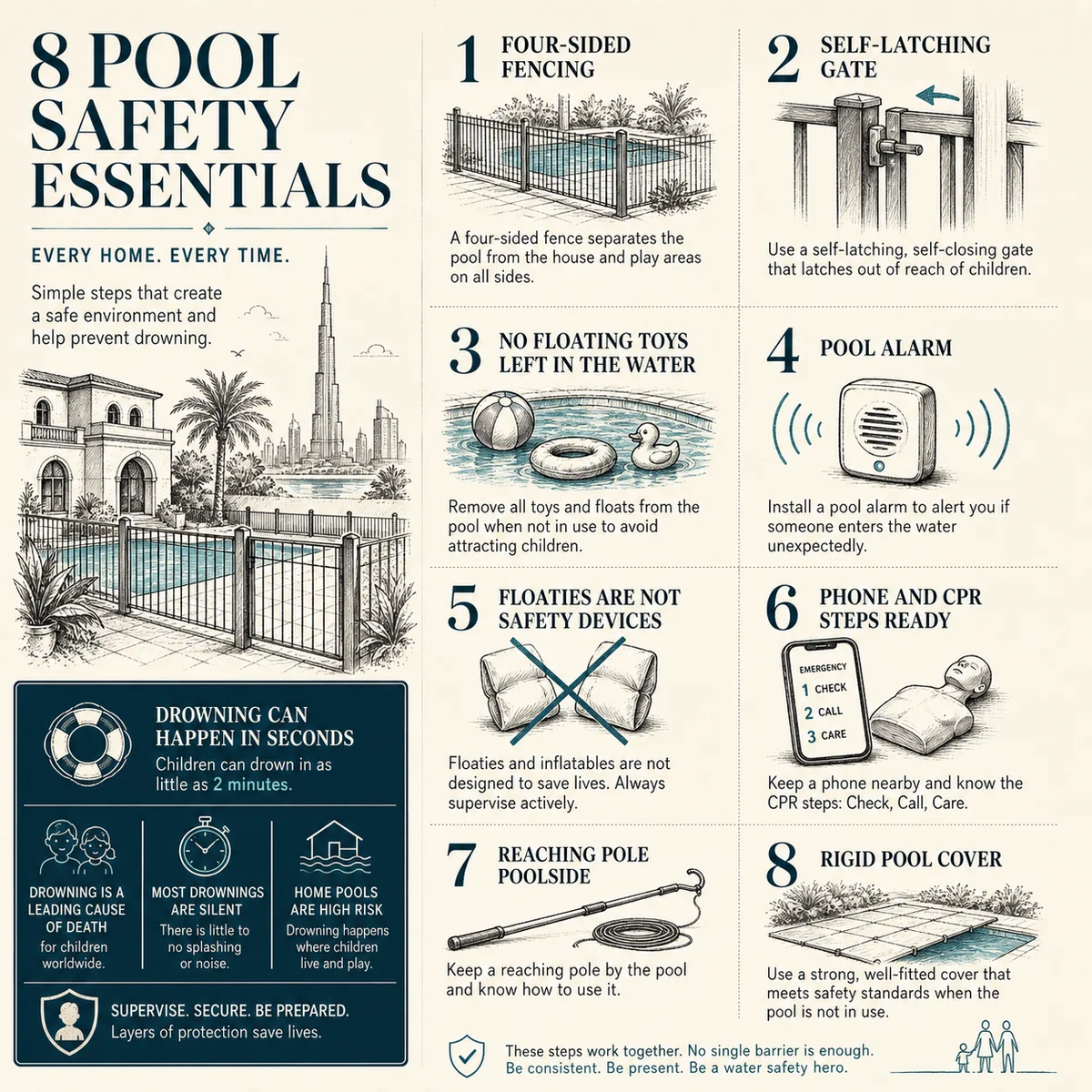
Supervision, barriers and swim skills together stop almost every drowning. For UAE villas with a private pool, work through this checklist:
- Pool fenced on all four sides, separate from the house doors
- Gate self-closes and self-latches above a child's reach
- No toys left floating in the pool when not in use (a visual lure)
- Pool or door alarm in place
- Floating toys and arm floaties are not treated as safety devices
- Phone within reach and CPR steps known before anyone swims
- A reaching pole or life ring kept poolside
- Pool cover, if used, is rigid enough that a child cannot slip under it
Beach and open water. Swim near a staffed lifeguard tower and check the flag system first. A rip current pulls along the shore, not straight out, so swim parallel to the beach to escape one. Life jackets, not arm floaties, are the right call for weak swimmers in open water.
At a family gathering in Al Barsha, three-year-old Mariam wandered from the garden table toward the pool while the adults were still talking. She stayed on the deck side: the gate's self-latching lock had already swung shut behind the last person through.
Barriers catch what a distracted moment misses. A consistent caregiver who knows those household rules every day adds another layer, see how BestDOC's Family Care nannies fit into a household's daily routine.
Signs a Child Is Drowning
Real drowning is quiet: little to no splashing or shouting, and it's often over within seconds to a couple of minutes. Watch for:
- An upright body position in the water, with the head low and mouth at water level
- No calling out, arms pressing down rather than waving
- A glassy, unfocused stare
- Trying and failing to swim in one direction
- Attempting to roll onto the back, or climbing an invisible ladder
If a child looks "off" near water, even briefly, check on them immediately rather than waiting to see if it passes.
What to Do After a Water Incident
If a child needed rescuing, lost consciousness, isn't breathing normally, or seems altered, call 998 immediately, even if they seem fine minutes later. Begin CPR if you're trained and the child isn't breathing; don't wait for symptoms to worsen.
"Dry drowning" and "secondary drowning" aren't terms clinicians use; drowning is defined as one process. But real post-immersion breathing trouble can still surface hours later, and it deserves to be taken seriously under its correct framing. Within 24 hours, watch for persistent coughing, laboured or rapid breathing, unusual tiredness, vomiting, or a change in behaviour. Any breathing difficulty at all is still an emergency, call 998, not a scheduled visit.
Once a child is already assessed and stable, with no breathing symptoms, but a parent still wants a precautionary check, that's where BestDOC fits. A telemedicine call (AED 100) covers a conversation with a clinician; a same-day Doctor at Home visit (from AED 300) covers an in-person check, prescription if needed, and a free 7-day follow-up. Both are for reassurance after clearance, never a substitute for 998.

Talk to a clinician about a water scare. If your child has already been checked and cleared but you'd feel better going over it with a doctor, request a doctor home visit or book a video consult with BestDOC.
Drowning Prevention Habits to Build at Home
Swim lessons appropriate to a child's age reduce risk, but they don't replace supervision. Every adult regularly near the pool, parent, grandparent, or household staff, should know the household's water rules and basic CPR, not just the swim instructor. This checklist aligns with the seasonal water-safety campaigns Dubai Police and the Dubai Health Authority run each summer, part of broader UAE government safety initiatives.

A consistent caregiver adds a layer most households overlook. BestDOC's Family Care nannies (ages 0-12, hourly, shift or live-in, weekly reports to the family) are the same person every time, so they know your pool rules without being told twice. Most hold Basic Life Support certification, and CPR/water-safety briefing is available on request. A rotating stranger doesn't know your rules; the same nanny does.
Watch this walkthrough on drowning prevention from Boston Children's Hospital for a clinician's view on supervision and risk by age:
Drowning Prevention: Keeping Kids Safe
Sources: the WHO Global Status Report on Drowning Prevention, CDC drowning facts, and Cleveland Clinic on drowning types and prevention informed the guidance above.
Frequently Asked Questions
What is the most effective way to prevent drowning in children? Layered protection works best: constant, undistracted supervision, a four-sided pool fence with a self-latching gate, and age-appropriate swim lessons together, not any single measure alone.
What does drowning actually look like in a child? Usually quiet. No shouting or splashing, often an upright body position with the head low in the water, over seconds to a couple of minutes, unlike dramatic depictions in film.
Is "dry drowning" or "secondary drowning" real? These are outdated terms not used in current clinical guidance. Drowning is defined as one process, but genuine breathing trouble can still appear hours after a water incident and should be taken seriously under the correct framing.
What should I do immediately after pulling a child out of water? Check breathing and responsiveness right away. Call 998 if the child needed rescuing, lost consciousness, isn't breathing normally, or seems altered, even if they seem fine moments later.
What symptoms after a water incident need urgent medical attention? Any difficulty breathing, persistent coughing, unusual sleepiness, vomiting, or behaviour change within about 24 hours warrants prompt medical evaluation, not a wait-and-see approach.
How can a nanny or caregiver help prevent drowning? A consistent, briefed caregiver who knows the household's pool rules every day, not just during scheduled swim time, adds a real supervision layer, especially during family gatherings when adult attention is often divided.
The Bottom Line
Supervision, barriers and swim skills, layered together, stop almost every drowning before it starts. Knowing the quiet real signs of distress, and the clear line between "watch at home" and "call 998," is the other half. If your child has already been cleared after a scare and you'd like a same-day precautionary visit, or you want consistent, briefed childcare support, reach BestDOC toll-free at +971 800 2378 362 or on WhatsApp, 24/7 across Dubai. See our doctor-on-call service or about our clinical team.
Educational. Not medical advice. Consult a licensed clinician. BestDOC is not an emergency service, for any active emergency, call 998.