


Diabetic Foot Care at Home: Daily Checks & Warning Signs
Diabetic foot care means checking your feet every day for cuts, numbness, or swelling, because nerve damage from diabetes can hide a wound until it's already infected. Diabetes is one of the leading causes of lower-limb amputation worldwide, and most of those cases start with a small wound nobody noticed in time.
That's the part that catches families off guard: the damage is rarely dramatic at first. This guide walks through the daily check that catches problems early, the warning signs that need same-day attention, and who should be changing a dressing when a wound needs ongoing care.
Key Takeaways
- Diabetic foot care is a daily habit: wash, dry, and inspect both feet for cuts, blisters, numbness, or color change.
- Numbness from nerve damage is why small wounds go unnoticed; poor circulation is why they heal slowly once found.
- A wound that's red, swollen, draining, or not improving in 2-3 days needs same-day medical attention.
- BestDOC's home nurses handle diabetic foot ulcer dressing changes as standard scheduled home nursing, from AED 100 an hour.
- A referral letter to a podiatrist or vascular surgeon comes from your BestDOC doctor when a case genuinely needs a specialist.
Why Diabetic Foot Care Starts With Understanding the Risk
Diabetes damages feet in two ways, and both are silent at first.
The first is nerve damage, or neuropathy. Over years of high blood sugar, the small nerves in the feet lose sensation. A pebble in a shoe, a too-hot bath, or a blister from a new pair of shoes can go completely unfelt. The National Institute of Diabetes and Digestive and Kidney Diseases notes that this loss of feeling is what allows small injuries to worsen unnoticed.
The second is poor circulation. Diabetes narrows blood vessels over time, so less blood reaches the feet to fight infection and heal a wound. Put the two together, and a cut that heals in days for most people can take weeks, or turn into an ulcer, for someone with long-standing diabetes. Daily checks matter most for anyone managing type 2 diabetes for more than 5-10 years.
Daily Diabetic Foot Care: Checks and Warning Signs
A daily foot check is brief and catches most problems while they're still minor.
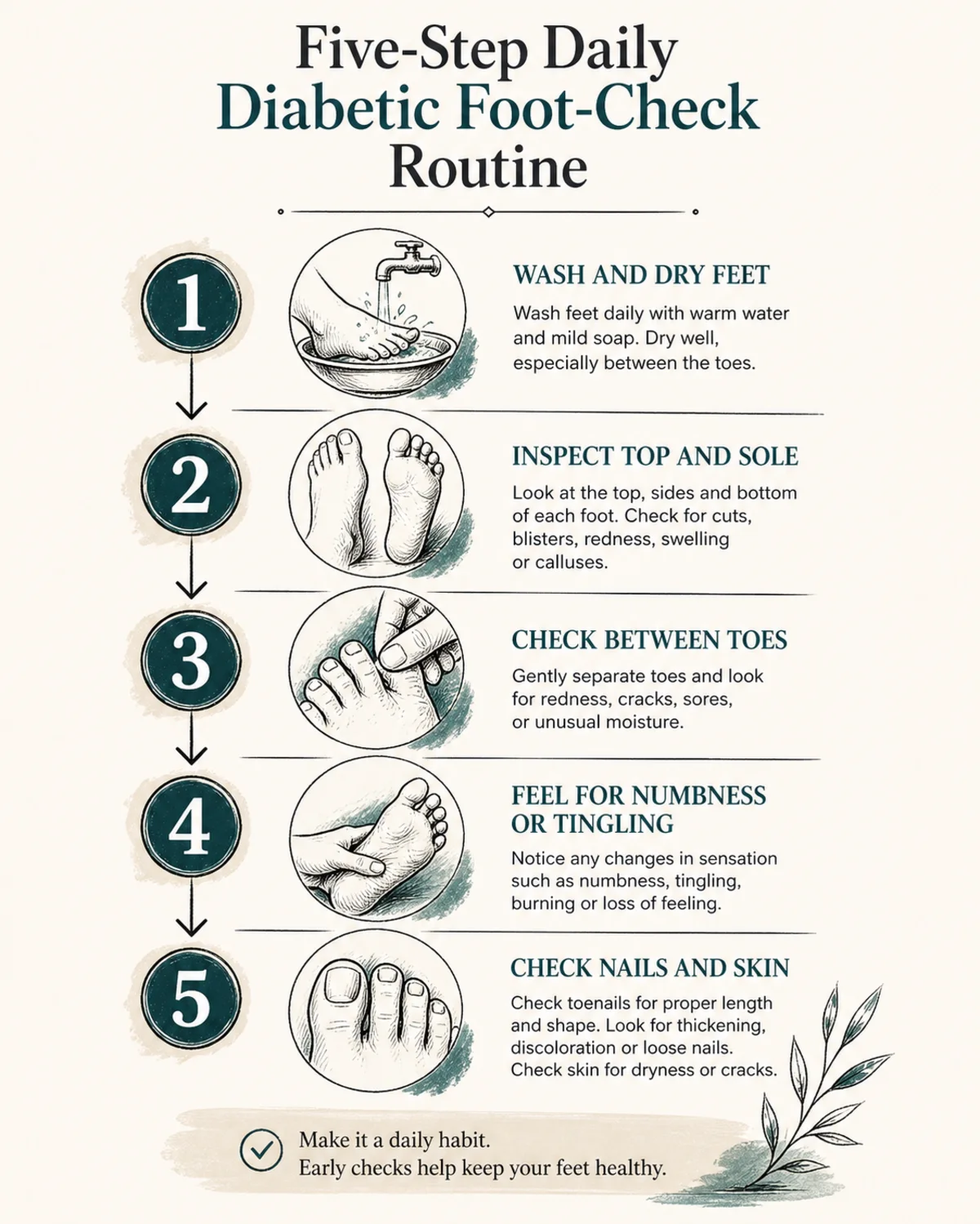
- Wash and dry feet, especially between the toes.
- Look at the top, sole, and heel of each foot for cuts, blisters, redness, or swelling.
- Check between toes for cracked or peeling skin.
- Press gently along the sole to feel for numbness or tingling.
- Check toenails for ingrown edges or thickening.
Call a nurse or doctor the same day if a wound looks red, warm, swollen, or is draining fluid, or hasn't started healing within 2-3 days. Those are the earliest signs of infection, and diabetic foot infections can spread faster than they would in someone without diabetes.
Want a second set of eyes on a wound that's not improving? BestDOC's doctor-on-call service can assess a new lesion at home and decide whether it needs nursing care, a prescription, or a specialist referral.
How Home Nursing Supports Diabetic Foot Care Between Doctor Visits
Once a wound needs regular dressing, the real question becomes who's doing it, and how consistently.
Fatima, 58, had managed type 2 diabetes for over a decade when a small blister from a new sandal went unnoticed for four days. By the time she felt the sting, it had already broken the skin. Her GP started her on a dressing schedule, and a BestDOC nurse came to her apartment three times a week for the next month, changing the dressing and checking for infection. The same nurse each visit meant nothing was missed between appointments.
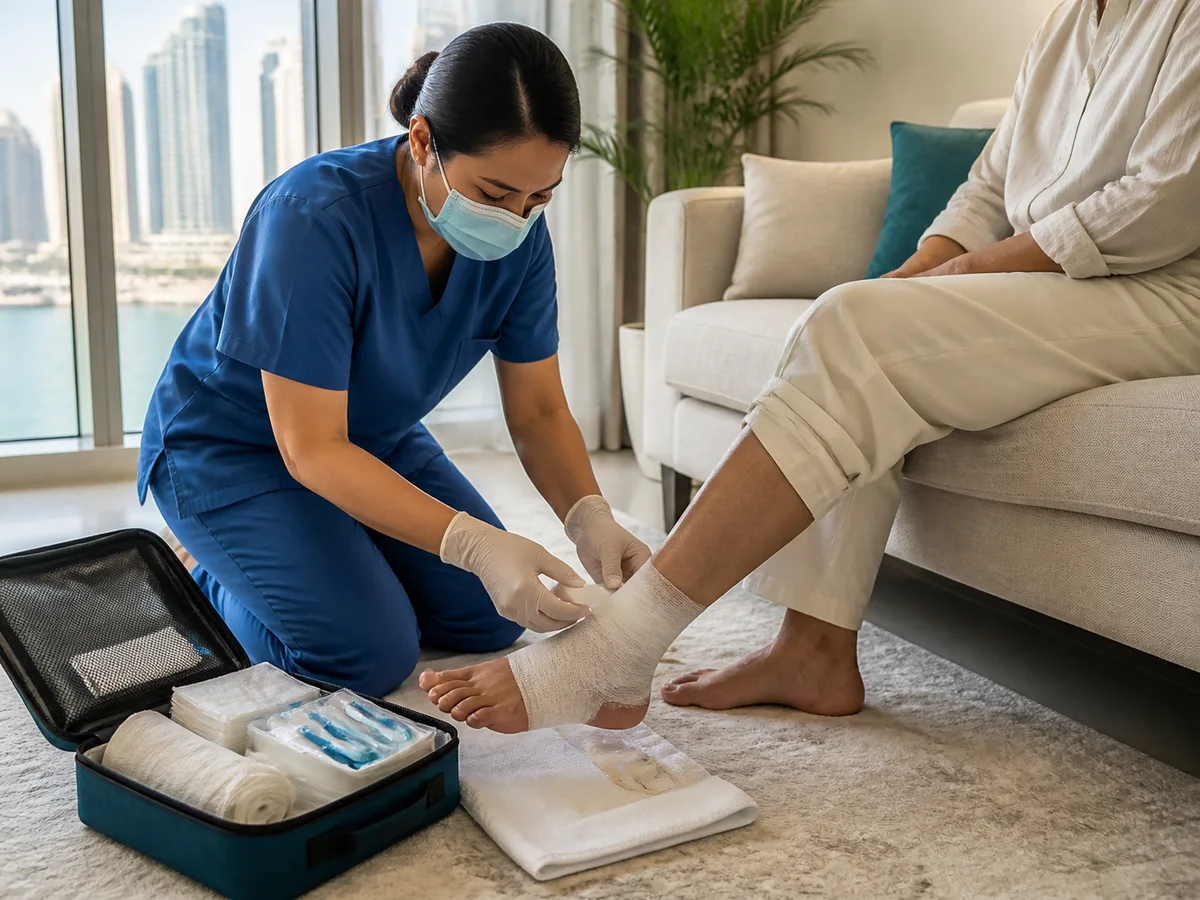
BestDOC's home nursing covers diabetic foot ulcer dressing changes as standard scheduled care, from AED 100 an hour, with a single dressing-change visit available from AED 250. For ongoing diabetes management alongside the wound care, a doctor-signed chronic disease care plan is quoted on request. If a case needs a podiatrist or vascular surgeon, your BestDOC doctor writes the referral letter directly.
Ready to arrange dressing changes at home? Talk to BestDOC's home nursing team about setting up a schedule, toll-free on +971 800 2378 362, 24/7, anywhere in Dubai.
Preventing Diabetic Foot Problems and When to See a Doctor
Most diabetic foot complications are preventable with a few habits done consistently.
- Wear closed, well-fitted shoes, and check inside them before putting them on.
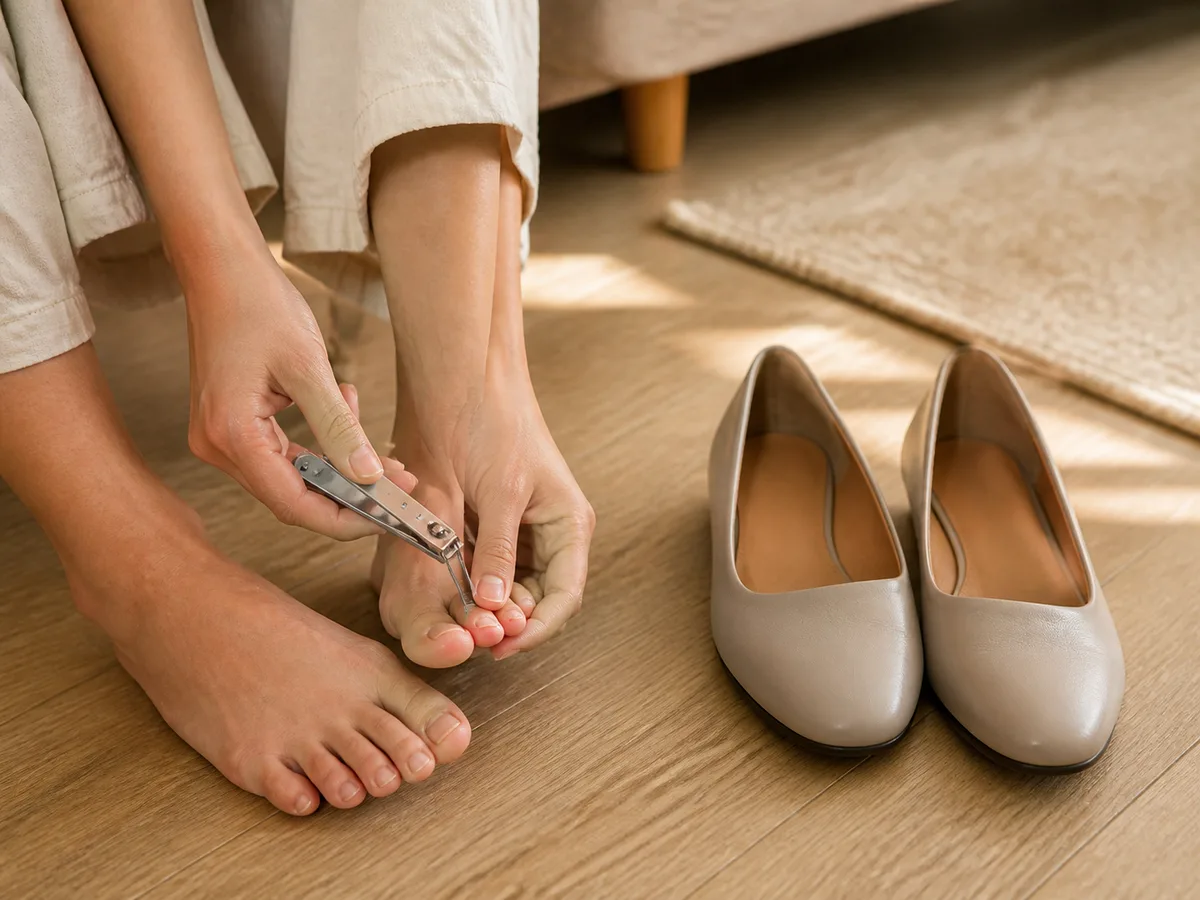
- Trim toenails straight across, never into the corners, to avoid ingrown nails.
- Keep blood sugar in range; an HbA1c test at home every 3 months shows whether the current plan is working.
See a doctor immediately, not the next day, if a wound looks black or grey, if a fever develops alongside a foot injury, or if the foot suddenly changes shape or color. The World Health Organization lists this kind of delay as one of the main reasons diabetes-related amputations happen in the first place.
Building a Routine That Catches Problems Early
Diabetic foot care isn't complicated: a brief daily check, acting right away on anything that looks off, and consistent dressing changes when a wound needs them. The part most guides skip is who handles that last piece, week after week, without you having to re-explain the case each time.
BestDOC's home nursing keeps the same nurse on a case from the first dressing change to the last, backed by DHA-licensed clinicians. Reach out through BestDOC for a wound care schedule, or ask about a chronic disease care plan for ongoing diabetes management.
Educational. Not medical advice. Consult a licensed clinician.