

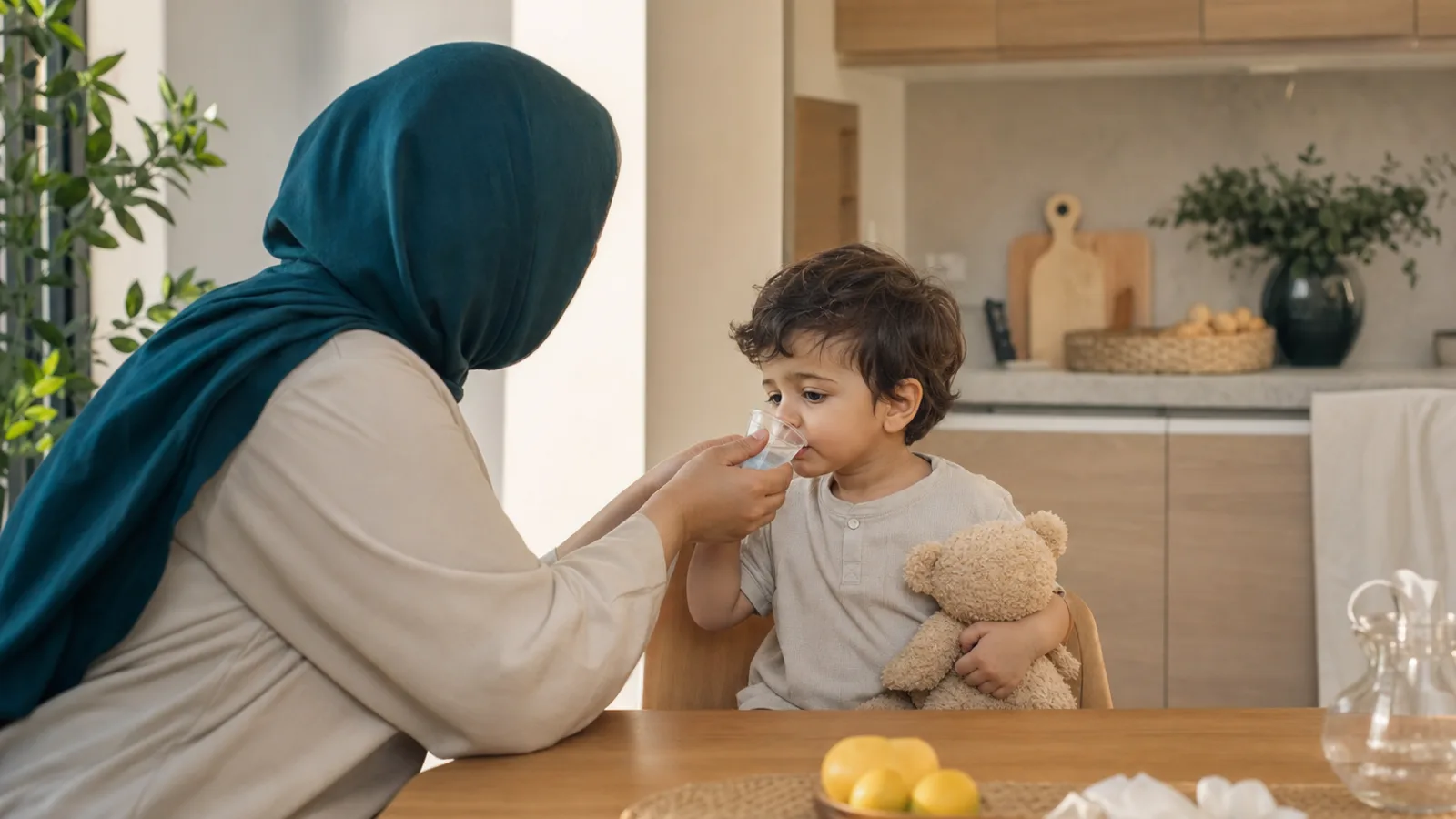
Child Diarrhea in Summer: Hydration, Hygiene & Signs
Diarrhea in children is common during Dubai's summer, driven by heat-spoiled food, pool exposure, and peak rotavirus and norovirus season, and the real danger is dehydration, not the diarrhea itself. The child diarrhea dehydration signs to watch are a dry mouth, no tears, sunken eyes, reduced urination, and unusual sleepiness.
Most parents assume a stomach bug is routine until fluid loss catches up with a toddler faster than expected. Here's the hydration protocol, the hygiene habits that stop it spreading through the house, and exactly which signs mean you call a doctor instead of waiting it out.
Key Takeaways
- Child diarrhea spikes in the UAE summer (roughly June-September) from heat-related food spoilage, pool exposure, and rotavirus/norovirus season overlapping school breaks.
- The real risk is dehydration: dry mouth, no tears, sunken eyes, reduced urination, and lethargy are the core warning signs.
- Oral rehydration solution (ORS), given in small, frequent sips, is the first-line home treatment, not juice, soda, or plain water alone.
- Call a doctor for blood in the stool, high fever, no urination for 8+ hours, persistent vomiting, or a child who is unusually hard to wake.
- A home doctor visit lets a contagious child be assessed without sitting in a shared clinic waiting room.
Why Does Child Diarrhea Spike in Dubai's Summer Heat?
Diarrhea in children rises every summer here for three overlapping reasons: food spoils faster in the heat, pools and nurseries pack kids together, and rotavirus and norovirus both peak in this window. The WHO counts diarrhoeal disease as the third leading cause of death in children under five worldwide, nearly 1.7 billion childhood cases a year, most preventable with clean food, water, and hygiene.
Heat speeds up bacterial growth in anything left out: a buffet table, a car seat, a lunchbox forgotten at nursery pickup. Add a summer of pool days and playdates, and a GI bug moves through a friend group with little effort.
A few habits cut the spread: wash hands before meals and after the bathroom, keep perishables refrigerated, and follow the CDC's two-week rule, no swimming until two weeks after diarrhea has fully stopped, since the germs can still spread in pool water after symptoms end.
What Are the Dehydration Warning Signs to Watch For?
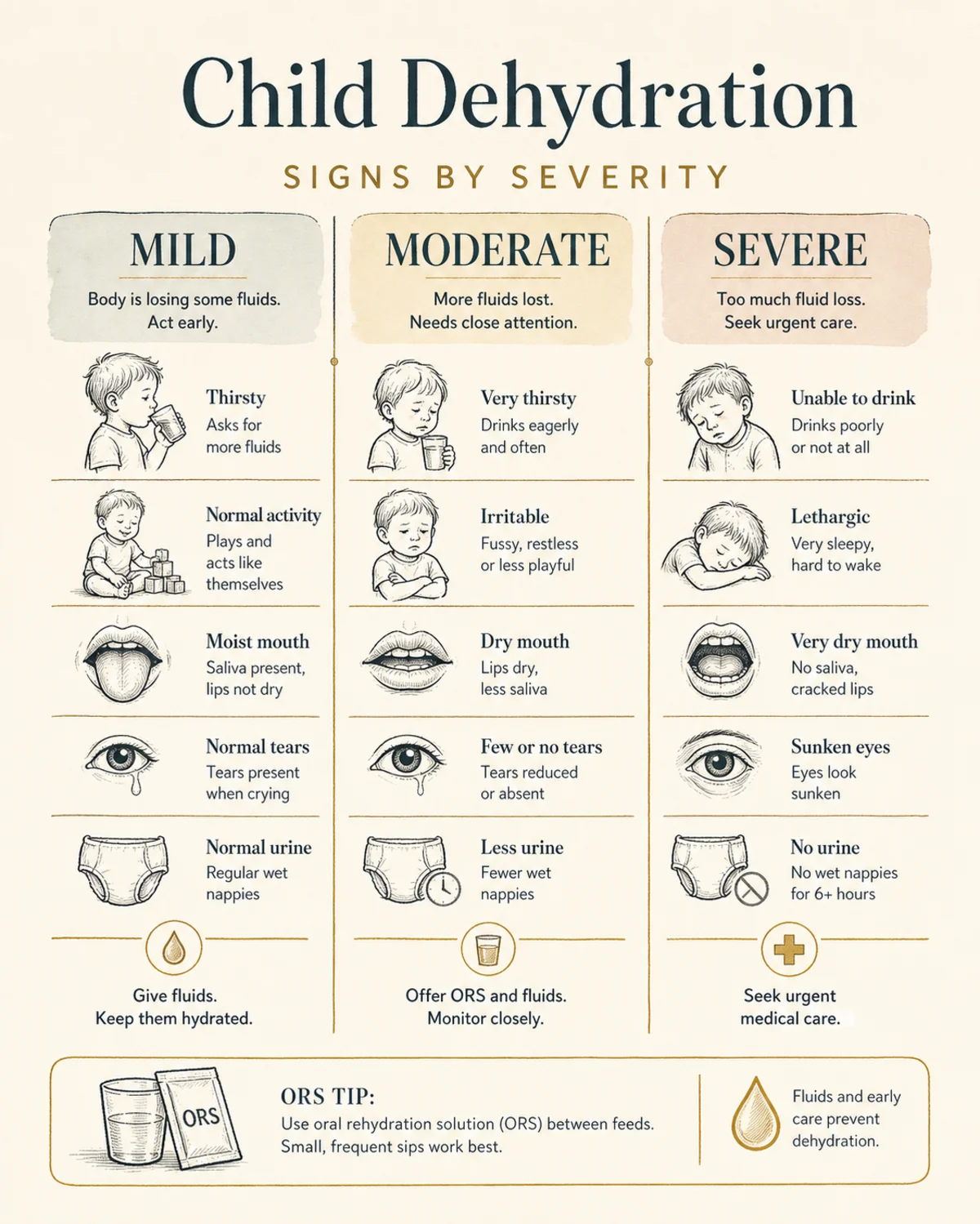
The diarrhea itself usually isn't the danger. Dehydration is, and it moves faster in kids than in adults because they carry less fluid reserve to begin with, according to HealthyChildren.org.
- Mild: thirsty, slightly dry mouth, still playing normally.
- Moderate: dry mouth, fewer wet nappies or bathroom trips, irritable, sunken eyes.
- Severe: no tears, no urination for 8+ hours, lethargic or hard to wake, a sunken soft spot in an infant. Treat this as urgent.
For mild-to-moderate dehydration, oral rehydration solution given in small, frequent sips is the first-line treatment, not full-strength juice, soda, sports drinks, or plain water alone.
When Layla's 2-year-old son Zayd came down with a stomach bug on a 42°C July afternoon in Mirdif, she started him on ORS by the teaspoon, sip by sip, rather than pushing juice. By evening he was drinking normally again; a neighbor's child on the same bug, given only water, ended up needing a same-day doctor visit for moderate dehydration.
When to Call a Doctor for Child Diarrhea
Call a doctor if you see blood or mucus in the stool, a high fever, persistent vomiting that won't let fluids stay down, no urination for 8 or more hours, or a child who is unusually drowsy or hard to wake. Any infant with poor feeding or few wet nappies should also be seen promptly; call to arrange the right level of care for your child's age.
BestDOC's home doctor visit is a general practitioner who examines adults and children alike (the practice itself was founded by a pediatrician and a nurse), DHA-licensed and doctor-reviewed. A home visit means a same-day assessment without a contagious child sitting in a shared clinic waiting room.
If the doctor wants a stool analysis, rotavirus screen, or occult blood check, the clinician collects the sample on the spot, no separate lab trip; see home lab testing. If the assessment shows mild-to-moderate dehydration, oral rehydration sachets may be supplied during the visit, depending on the case.
This is not an emergency service. For a seizure, unresponsiveness, or severe dehydration, call 998 or go to the nearest emergency room immediately. For everything short of that, BestDOC's clinical team is reachable toll-free at +971 800 2378 362, on WhatsApp, 24/7, across Dubai.
Frequently Asked Questions
How long does a stomach bug usually last in kids? Usually 3 to 7 days. Past a week, or if fluids won't stay down, call a doctor.
Can I give my child anti-diarrhea medicine? Not without a doctor's say-so; it can mask a more serious infection.
Is it safe to give a toddler ORS at home? Yes, it's the first-line treatment the WHO and AAP recommend, in small, frequent sips.
When can my child go back to nursery or school? After at least 24 hours, ideally 48, free of diarrhea and vomiting.
Does diarrhea in babies need different care than in older kids? Yes. Infants dehydrate faster and should be seen promptly for poor feeding or fewer wet nappies.
How do I know if my child is dehydrated? Dry mouth, no tears, sunken eyes, fewer wet nappies, unusual sleepiness. Any one means act now.
The Takeaway
Most summer stomach bugs in kids resolve at home with ORS, rest, and careful hygiene. Catching the dehydration signs early, not waiting for a fever to break, is what changes the outcome. If your child shows any red flag above, book a home doctor visit with BestDOC or reach the team through contact any time, 24/7 across Dubai.
Educational. Not medical advice. Consult a licensed clinician. BestDOC is a DHA-licensed home-healthcare practice serving all of Dubai. Toll-free +971 800 2378 362, 24/7. For emergencies, call 998.