

Chest Pain Warning Signs: When to Call 998 or See a Doctor
Most chest pain is not a heart attack. But a specific set of chest pain warning signs means act now, not wait and see. Here's exactly which symptoms mean call 998, which mean a same-day doctor, and which are probably not cardiac.
Key Takeaways
- Chest pressure, squeezing, or fullness lasting more than a few minutes, especially with pain spreading to the arm, jaw, or back, means call 998 now.
- Women often have heart attacks without classic chest pain: fatigue, jaw pain, nausea, and shortness of breath can be the only signs.
- Sharp pain that changes with breathing or movement, burning after meals, and stress-linked tightness are usually not cardiac, but still worth a check.
- A BestDOC in-home GP visit (from AED 300) includes a portable ECG for non-emergency chest pain assessment, with same-spot escalation to 998 if anything concerning turns up.
- A home visit or ECG never replaces 998 for red-flag symptoms; ruling out an active heart attack needs hospital-grade monitoring.
Chest Pain Symptoms That Mean Call 998 Now
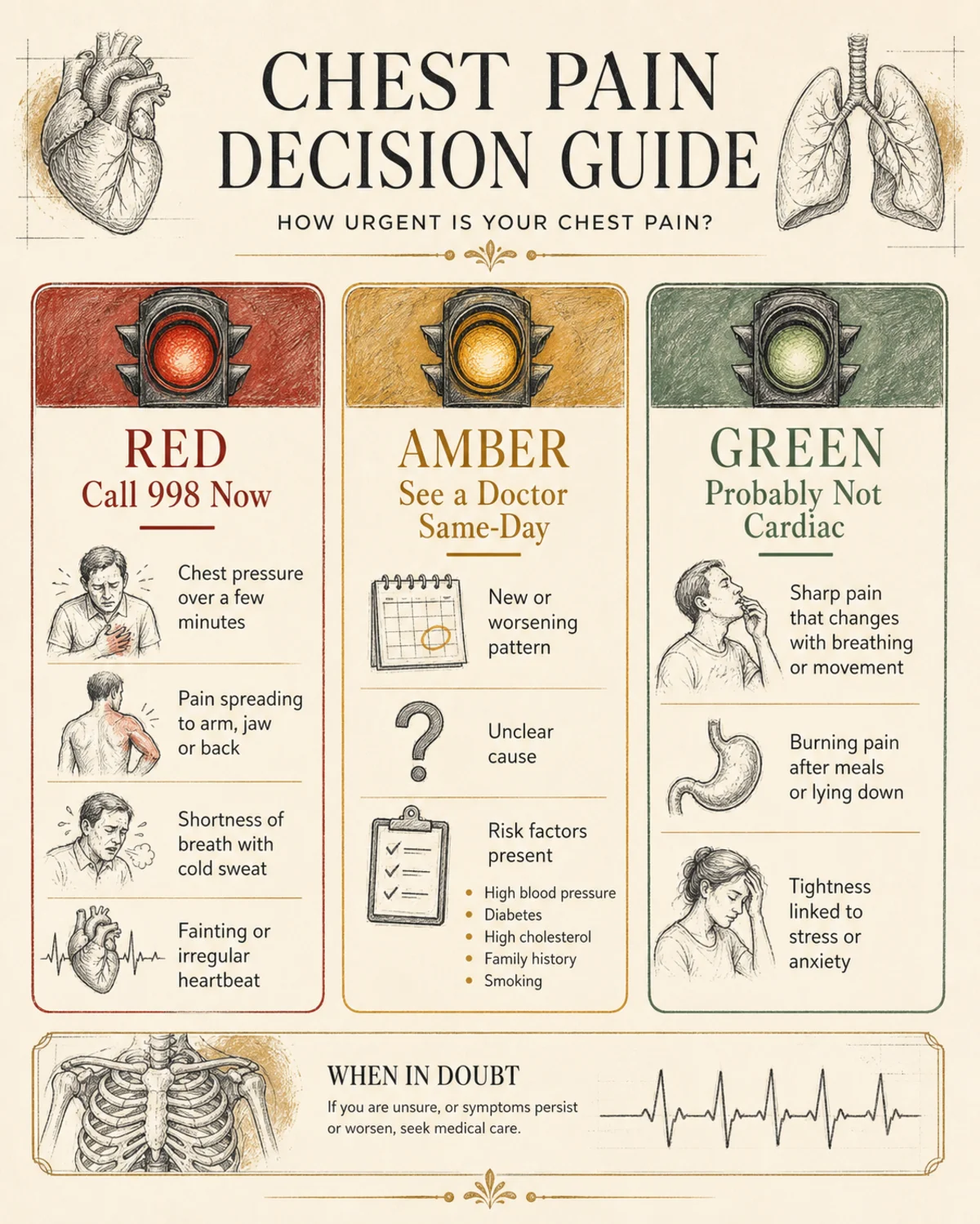
Any of the following, alone or together, is a reason to call 998 rather than wait it out:
- Pressure, squeezing, or fullness in the chest lasting more than a few minutes, or that fades and comes back. This is the most commonly reported heart attack symptom, according to the American Heart Association.
- Pain spreading to the arm, jaw, neck, or back.
- Shortness of breath, a cold sweat, nausea, or lightheadedness alongside chest discomfort.
- Sudden, severe chest pain with fainting or a racing, irregular heartbeat.
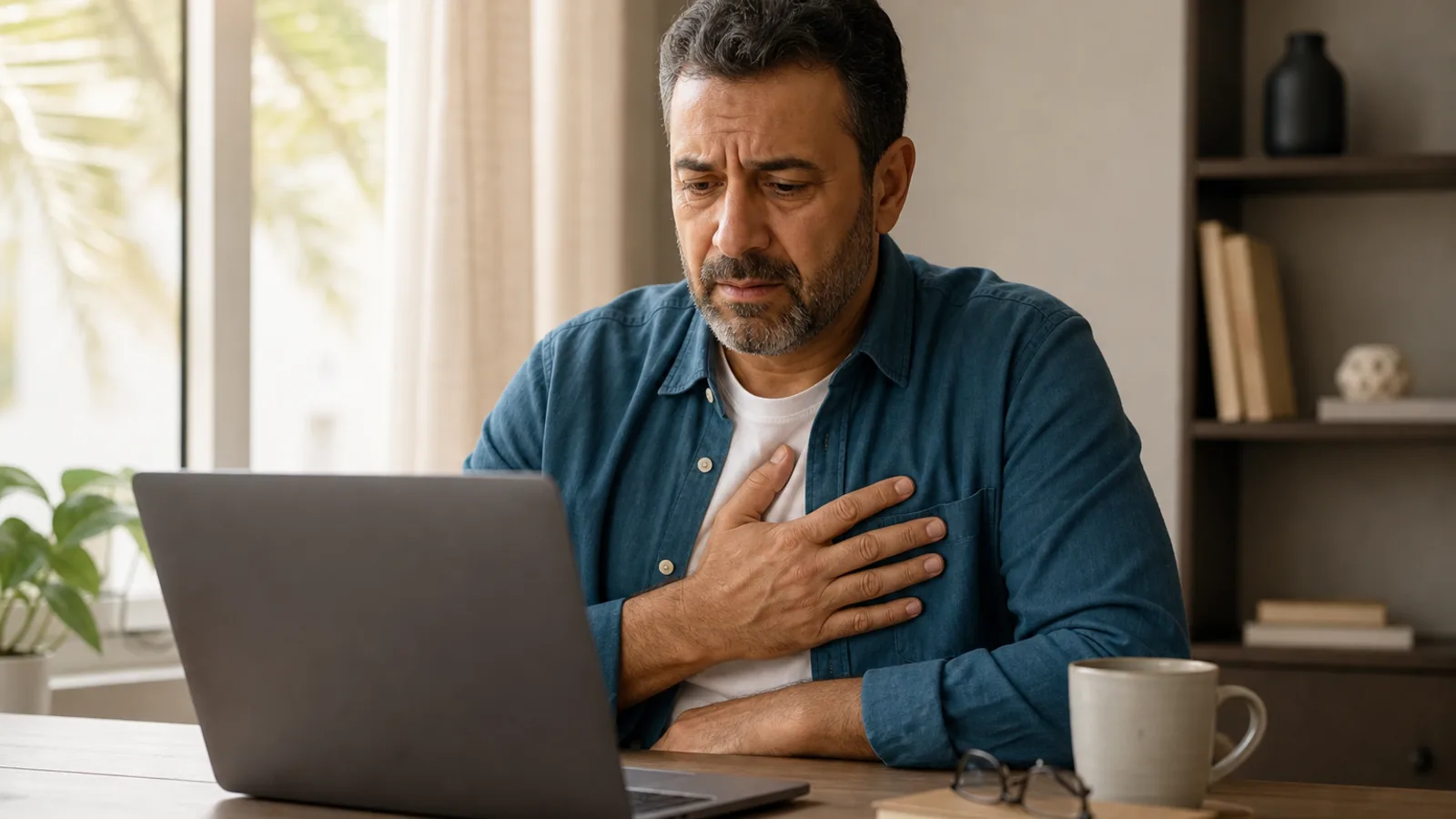
Ahmed, 54, was at his desk when a tight pressure spread across his chest and down his left arm. He didn't wait to see if it would pass; his wife called 998, and paramedics had him on treatment before they reached the hospital. That's exactly the response chest pressure with arm pain calls for. The CDC notes emergency services beat arranging your own transport, since a response team can start care on the way.
Not sure which bucket your symptoms fall into? Talk to a clinician about your case before guessing.
Heart Attack Symptoms Look Different in Women
Chest pain is still the most common heart attack symptom in both sexes, but women are more likely to have it without the classic pressure at all. Fatigue, jaw or back pain, nausea, and shortness of breath can be the only signs, and research on atypical presentations in women shows this pattern is common, not unusual.
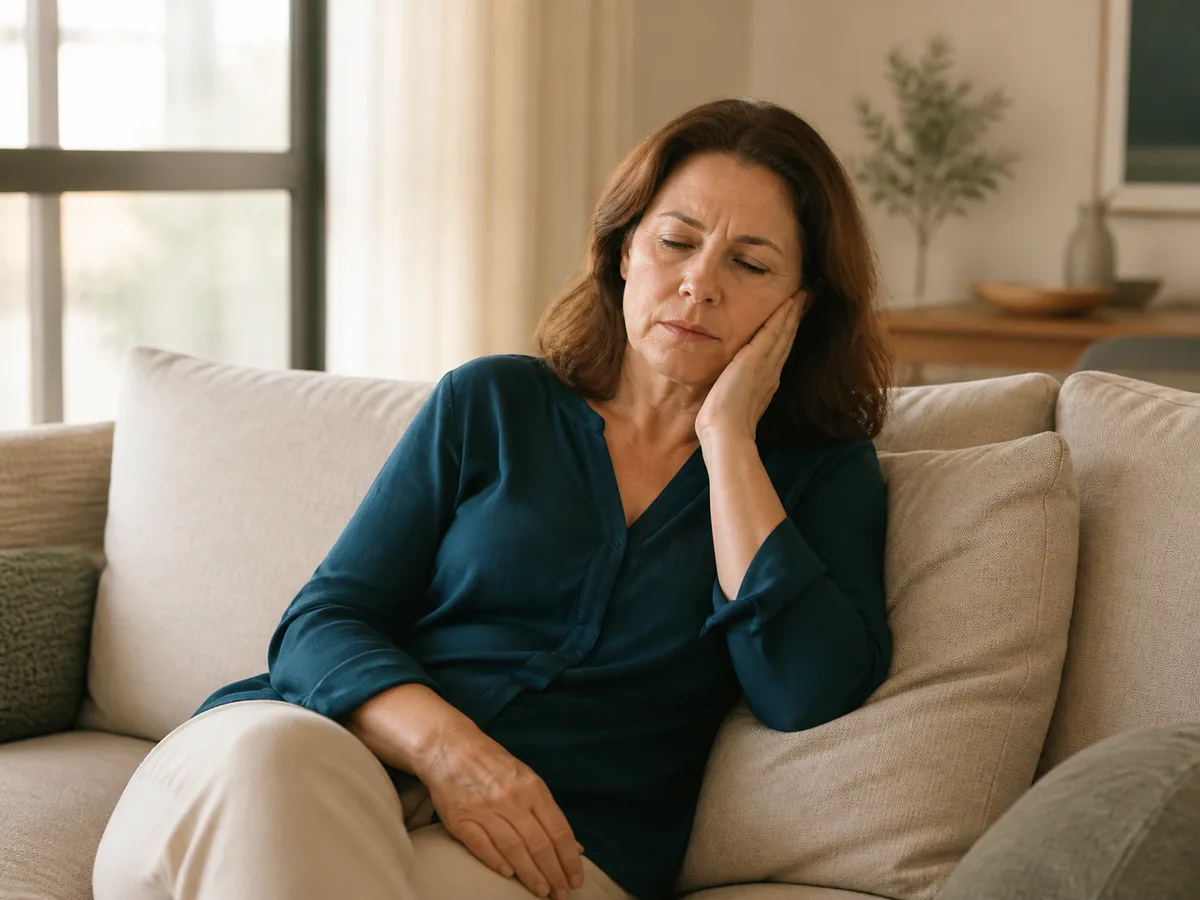
That difference matters: women often wait longer to seek care because they don't recognize the symptoms as heart-related. The American Heart Association and CDC both flag unexplained fatigue, nausea, or back and jaw pain as reasons for same-day evaluation, even without chest pressure.
Chest Pain That's Probably Not a Heart Attack
Most chest pain isn't cardiac. A few patterns point elsewhere:
- Sharp pain that changes with breathing, movement, or pressing on the chest wall points to a muscular or rib-cartilage cause, sometimes called costochondritis.
- A burning sensation after meals, often worse lying down, suggests acid reflux.
- Chest tightness tied to stress or a panic episode, which can bring a racing heart and breathlessness that closely mimics cardiac pain.
None of these should be self-diagnosed from a list. If the pattern doesn't clearly match a red flag but you're still uneasy, a professional check settles it sooner than worrying.
How a Home Doctor Visit Fits In
Knowing the chest pain warning signs is the first step; what happens next matters just as much. A BestDOC in-home GP visit (from AED 300) is built for chest pain that's already been screened as non-emergency but still needs a clinician's look. The doctor examines you at home, checks vitals, and now includes a portable ECG as part of the assessment. A free 7-day follow-up is included, and if anything on exam or the ECG points to a red flag, the doctor escalates to 998 on the spot.
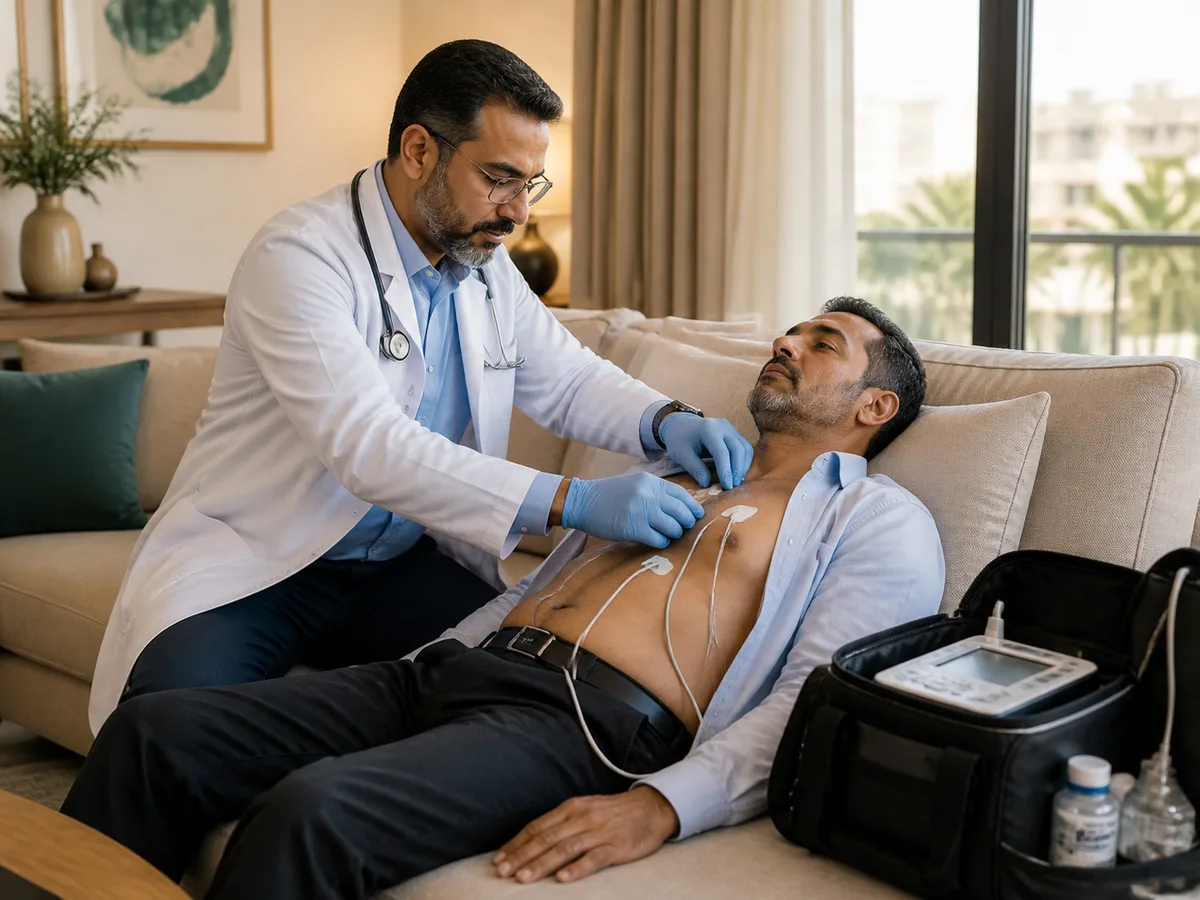
That home ECG adds real information, but it's not a hospital rule-out. Ruling out an active heart attack needs serial blood tests only a hospital can run, which is why 998-level symptoms always route to emergency care, not a home visit. A telemedicine video consult (AED 100) works as a first step when you're unsure a visit is even needed.
Once red flags are ruled out, BestDOC's Cardiac Blood Test panel and Lipid Profile, both available as a home blood test in the UAE, support ongoing risk monitoring, never a way to test instead of going to hospital.
Ready for a same-file assessment? Request a doctor home visit or call +971 800 2378 362 / WhatsApp, 24/7, anywhere in Dubai. Every clinician is DHA-licensed and signed off by BestDOC's medical director.
Frequently Asked Questions
What chest pain symptoms mean I should call 998? Pressure or squeezing lasting more than a few minutes, pain spreading to the arm, jaw, neck, or back, shortness of breath with cold sweat or nausea, or sudden severe pain with fainting or an irregular heartbeat.
Do heart attack symptoms look different in women? Often, yes. Women more commonly present with fatigue, jaw or back pain, nausea, or breathlessness instead of classic chest pressure.
What chest pain is probably not a heart attack? Sharp, movement-related pain, burning after meals, or stress-linked tightness. Still worth a check if you're unsure.
Does BestDOC's home doctor visit include an ECG for chest pain? Yes, the in-home GP consultation now includes a portable ECG as part of the assessment, for non-emergency evaluation only.
Can BestDOC rule out a heart attack at home? No. Ruling out an active heart attack needs hospital-grade serial testing. A home ECG adds information for already-screened non-emergency chest pain.
What is the Cardiac Blood Test for, if not for an active heart attack? Ongoing risk screening, tracking cardiac markers and cholesterol over time, once red flags have been ruled out.
Should I drive myself to the hospital for chest pain? No. Call 998. A response team can start treatment on the way.
Conclusion
Most chest pain settles down and isn't cardiac. The line is clear: pressure lasting more than a few minutes, pain spreading to the arm or jaw, breathlessness with cold sweat, or sudden pain with fainting means call 998 now. Fatigue and jaw pain without chest pressure deserve the same urgency in women. Anything left over, contact BestDOC for a home GP visit with ECG assessment, or call +971 800 2378 362, 24/7 across Dubai.
Educational. Not medical advice. Consult a licensed clinician. BestDOC is a DHA-licensed home-healthcare practice serving all of Dubai. Toll-free +971 800 2378 362, 24/7. For emergencies, call 998.