
Caregiver in Dubai, What They Do, How to Hire One
A caregiver is a trained, non-physician carer who supports daily living, bathing, feeding, mobility, medication reminders and companionship, at the patient's home. In the UAE, a clinical caregiver works under a written care plan and is not the same as a domestic helper or a nanny.
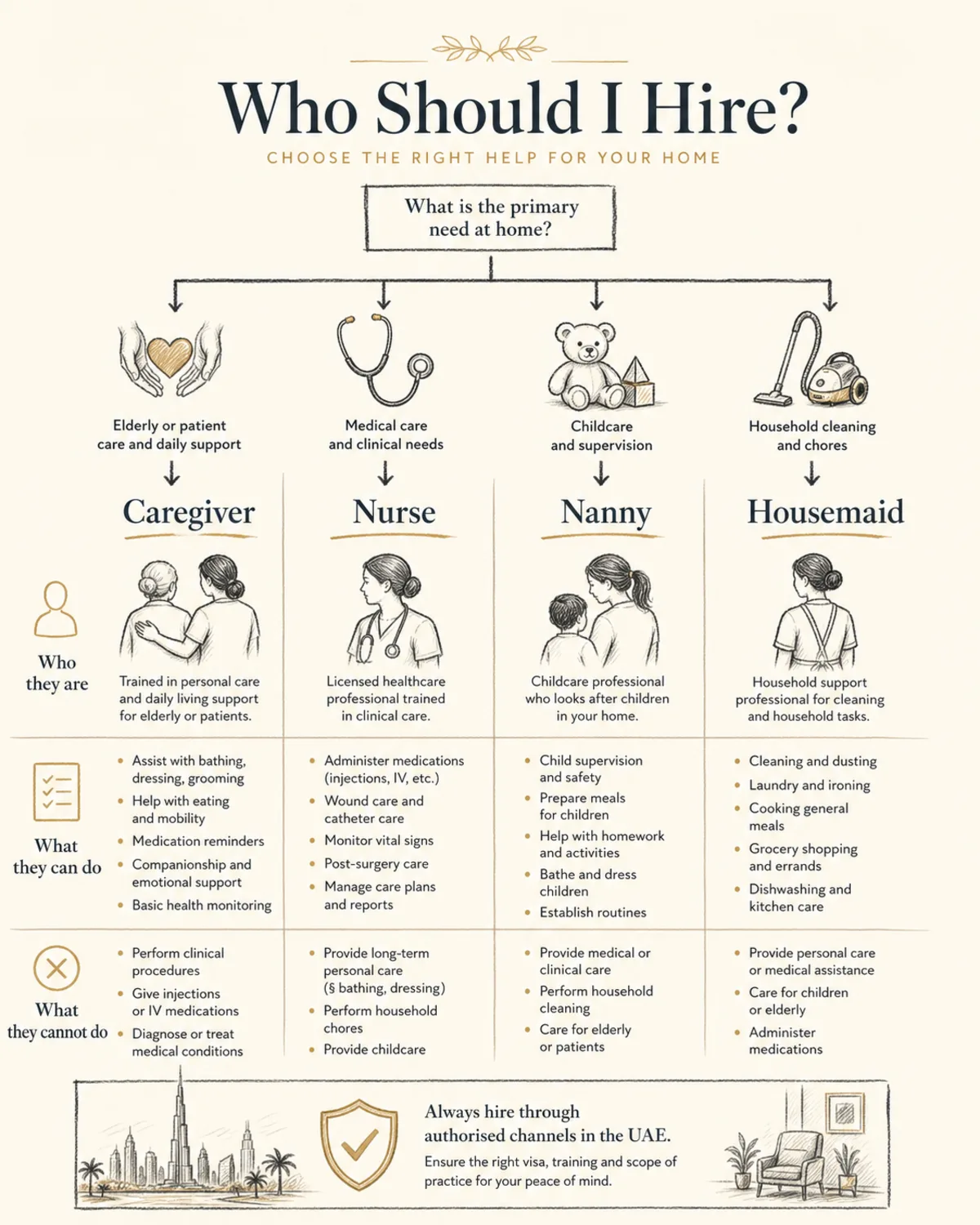
Most families searching for a "caregiver" in Dubai are actually choosing between four roles: caregiver, nurse, nanny and housemaid. Get the role right and the rest, scope, schedule, cost, language, becomes a calmer conversation. This guide draws the line cleanly, then walks through how to hire one, what to expect, and when to escalate.
Key takeaways
- A caregiver supports activities of daily living (ADLs), bathing, feeding, mobility, medication reminders, companionship. Clinical procedures need a DHA-licensed nurse.
- In the UAE, "caregiver" is often confused with housemaid or nanny. They are different roles with different training and scope.
- Three arrangements: hourly visits, eight or twelve-hour shifts, and live-in. The right one depends on the patient, the household and whether nursing scope is also needed.
- Continuity matters more than headline rate. Same caregiver every shift, named backup, weekly written report to the family.
- For BestDOC, scope sits on a doctor-signed plan; a DHA-licensed nurse is on call if the case escalates. Coverage is all of Dubai, 24/7.
What a caregiver actually does
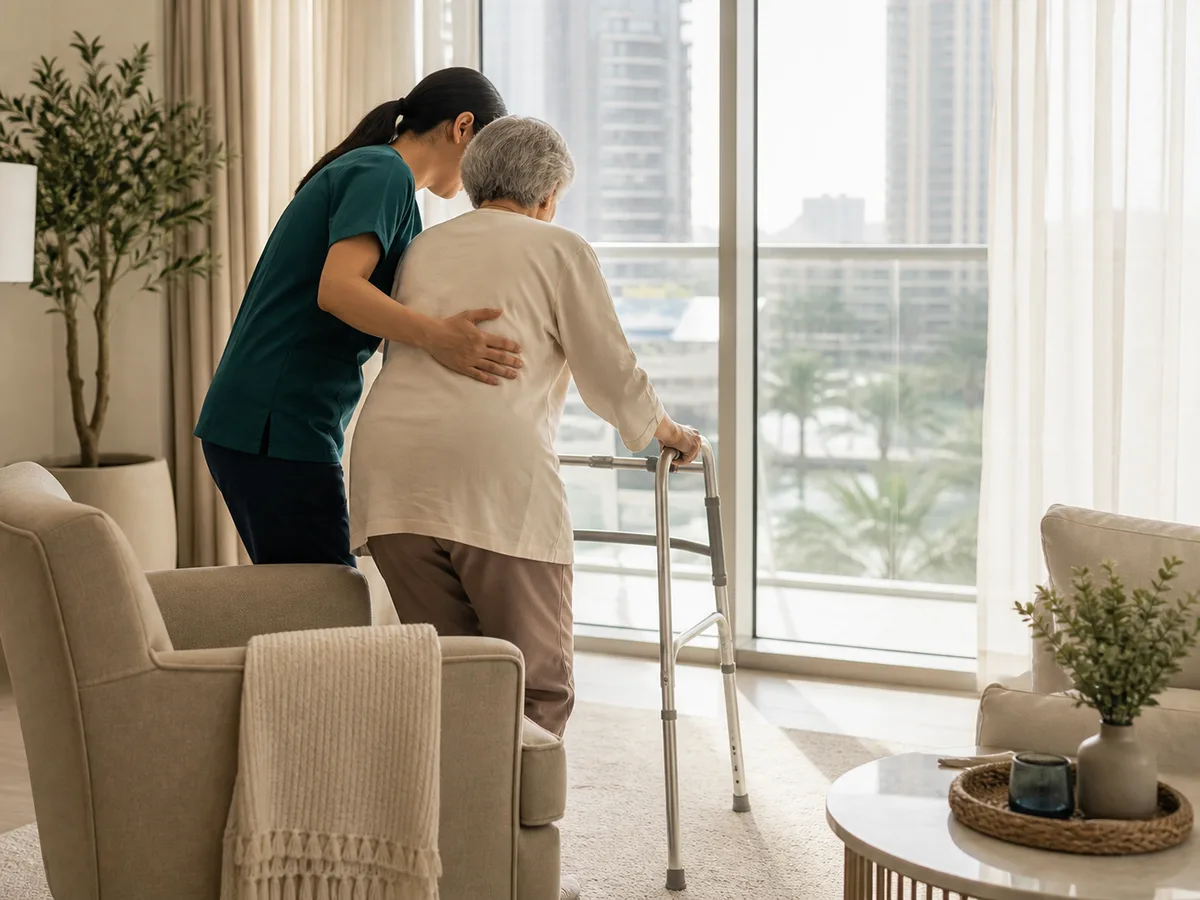
A caregiver's day is built around the patient's activities of daily living. Bathing and dressing. Help to and from the bathroom. Eating, including soft-diet support after a stroke or dental work. Mobility, including safe transfer from bed to chair and short, supervised walks. Medication reminders on a written schedule. Companionship and supervision, which is the quiet half of the job and often the one that matters most.
According to the World Health Organization, most long-term care worldwide is delivered at home by family or trained carers, not in hospitals. The National Institute on Aging describes ADL support as the operational core of caregiving for older adults, and the CDC tracks the toll informal family caregiving takes when professional support is missing.
A good caregiver also notices change. New confusion at night. A skipped meal. A bruise that was not there yesterday. The job is part hands-on care, part observation, and the observation is what the family back-channel and the weekly written report are built on.
What a caregiver does not do
Clinical procedures sit outside the caregiver's scope. No IV. No injections. No wound packing or dressing changes. No catheter insertion or care. No prescribing or diagnosis. If any of those are part of the plan, a DHA-licensed home nurse carries them, scheduled alongside the caregiver. Saying this out loud, in writing, before day one, is a trust move; in our experience competitor pages blur it and families learn the hard way.
Caregiver vs nurse vs nanny vs housemaid
The single most common question we hear in Dubai is some version of "what is the difference?" The role-by-role distinction matters because licensing, scope, cost and the day's work all change with it.
| Role | Trained in | Can do | Cannot do |
|---|---|---|---|
| Caregiver | ADL support, dementia basics, first aid | Bathing, feeding, mobility, medication reminders, companionship, light meal prep | IV, injections, wound packing, catheter care |
| Nurse (DHA-licensed) | Clinical procedures | IV, injections, wound care, catheter, vitals, dressings | Diagnosis, prescribing |
| Nanny | Childcare 0–12 | Feeding, play, school routine, sleep | Clinical procedures |
| Housemaid | Household tasks | Cleaning, cooking, laundry | Care of a dependent adult or child |
Where the lines blur in practice: a single household sometimes needs two of these at once. An 82-year-old recovering from a hip fracture might have a caregiver on a twelve-hour day shift for ADL support, a DHA-licensed nurse twice a week for wound check and injection, and a housemaid keeping the home running. They are three jobs, three trainings, three scopes. Booking them as one is where mistakes happen.
The UAE's DHA and MOHAP regulate clinical home healthcare, which is why the nurse and the doctor in that example are licensed individuals on a registered plan. The caregiver works under that plan and is supervised against it.
Who needs a caregiver
The honest answer is "more households than admit it". Four patterns we see week after week:
An elderly parent at home after a hospital discharge. Hip fracture, stroke, a long admission for pneumonia. The hospital sends the patient home with a plan and the family realises the plan needs hands. This is the most common entry point for elderly care at home in Dubai.
Early or progressing dementia. Mayo Clinic frames the caregiver's role around routine, safety and orientation; what that looks like day-to-day is the same caregiver, the same chair, the same morning order, week after week.
Post-surgical recovery, paired with home nursing. The caregiver handles ADLs, the nurse handles the wound and the medication regime, the doctor reviews at week two on a home visit or by telemedicine.
Chronic illness with a doctor-signed plan. Late-stage diabetes, Parkinson's, advanced cardiac care. The plan is built around chronic disease care and the caregiver is the part of it that lives in the home full or part time.
A fifth pattern, often missed: new mothers, especially with twins or no extended family in the country, who need maternity caregiving overnight while the day rotation handles the older child. That sits closer to newborn care at home and a nanny role for the older sibling, but the maternity caregiver is its own job.
Hourly, shift or live-in, choosing the arrangement
Three shapes, three different conversations.
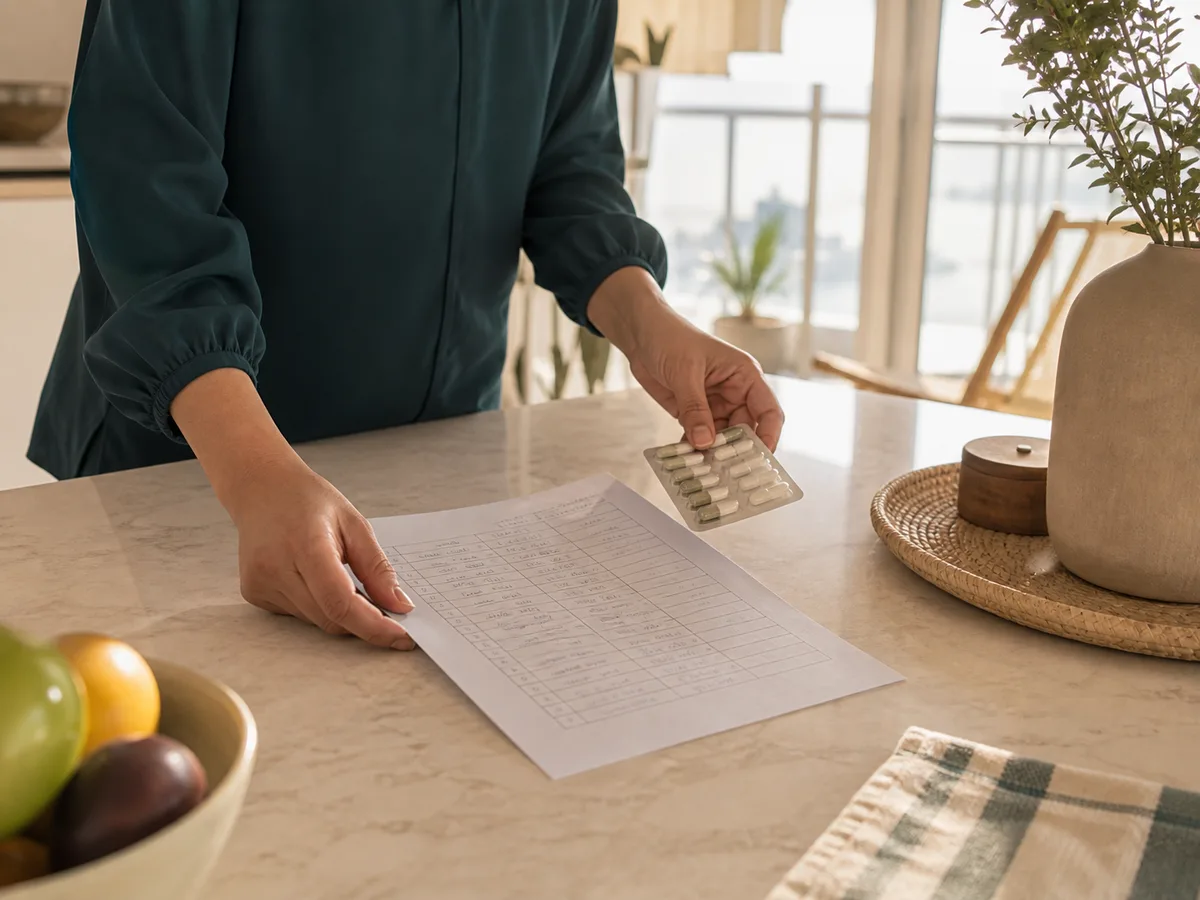
Hourly visits, two to four hours at a time, suit a patient who is independent for most of the day but needs help with the bath, the meal, the medication round or a daily walk. It is the cheapest entry point and the most common starting arrangement after a hospital discharge.
Shift cover, eight or twelve hours, day or night, suits a patient who is not safe alone for that block. Night shifts matter most for falls risk and for dementia patients whose sundowning makes the evening the hardest part of the day.
Live-in care suits a dependent patient whose family cannot be there around the clock, and a household that has the physical room for a live-in carer. It is not always the right answer; in a small Dubai apartment, two twelve-hour shifts often work better than a live-in.
The decision is rarely about cost alone. It is about scope and safety. A peer-reviewed study indexed on PubMed on home-based support for post-discharge elderly patients found that continuity of caregiver, not headline hours, was the strongest predictor of stable outcomes. That tracks with what we see.
Real case, anonymised. A family in Mirdif, 82-year-old mother home after a hip fracture, adult son in London. We set up a caregiver on a twelve-hour day shift for mobility and ADLs, a DHA-licensed nurse twice a week for the wound check and an injection, and a doctor home visit at week two. The weekly written report went out every Sunday night to the son. By week six the patient was walking with a frame, the dressing was off, and the night shift was no longer needed. Same caregiver from day one to discharge.
What a caregiver costs in Dubai, and how to hire one
Caregiver pricing in Dubai is not a fixed hourly number. The honest version: the rate is driven by arrangement (hourly vs shift vs live-in), scope (ADL only vs ADL plus dementia management vs paired nursing), and household-specific factors (language, gender preference, night cover, Ramadan scheduling, public holidays). A maternity caregiver overnight is priced differently from an elderly day shift, and live-in care is quoted monthly rather than hourly.
That is why we quote after a free assessment, not over WhatsApp. The assessment visit, carried out by a DHA-licensed nurse, sets the scope, confirms the plan, and produces a written rate the family can sign against. Where a nursing assessment is needed for clinical scope, the AED 250 assessment fee is deducted from the first invoice.
A practical seven-step path to hire well:
- Define the need. ADL only? Medication reminders? Mobility support? Paired nursing scope?
- Pick the arrangement. Hourly, shift, or live-in. Many cases start hourly and scale up.
- Confirm the provider's licensing. A DHA-licensed home healthcare operator behind the caregiver, with a nurse on call.
- Book an assessment visit. Free if booked through BestDOC; produces a written plan.
- Agree language, gender, schedule. Including Ramadan or public-holiday cover.
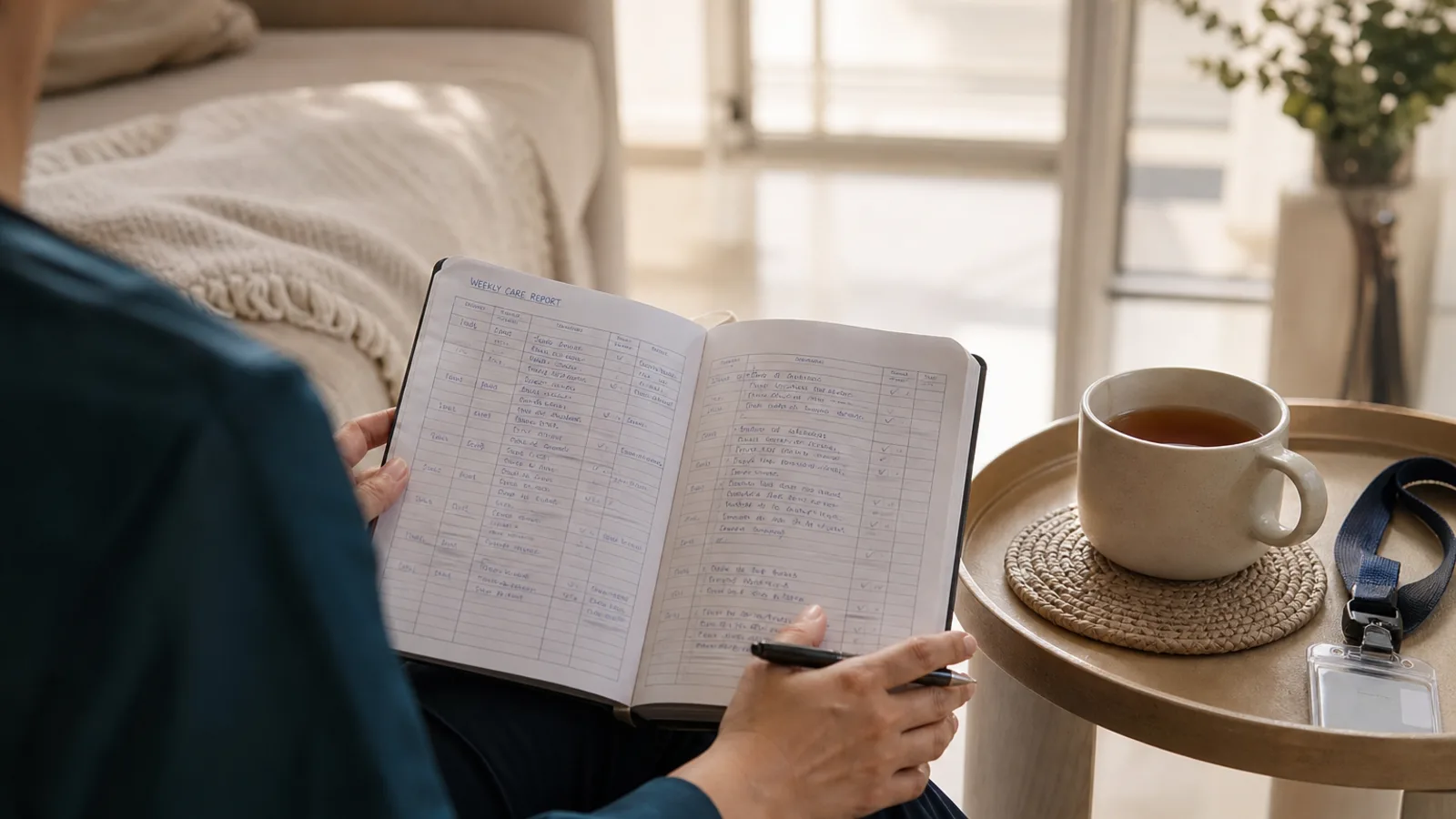
- Set up the weekly report channel. Email, WhatsApp, or both, especially for adult children abroad.
- Meet the named backup before day one. So the routine survives a sick day or a leave week.
Continuity, language and cultural fit
The brand spike, and the one piece of feedback every family eventually tells us they noticed first, is continuity. Same caregiver across shifts. Same caregiver next week. Same caregiver next month. One household file. Named backup introduced from day one, not as a stranger sent on a sick day.
Language matters more than rate cards admit. A caregiver who speaks the patient's first language, Arabic, English, Tagalog or Malayalam, in a dementia case is not a preference, it is part of the care plan. Gender-matched caregivers are a standard request for elderly female patients on modesty grounds, and we treat that as routine.
Ramadan scheduling, prayer-time pauses, family visits at iftar: all of this gets confirmed at the assessment, not negotiated on the shift. Quiet ownership; we carry the calendar, not the family.
Red flags, when a caregiver is not enough
Three signals mean the case has outgrown caregiver scope.
Clinical needs appearing. New dressing changes, an IV course, catheter management, daily injections. Step up to DHA-licensed home nursing, with the caregiver continuing ADL support alongside.
Acute change at home. New confusion, a fall, fever above 38.5°C, vomiting, a sudden drop in oral intake. Book a doctor home visit in Dubai the same day, or a telemedicine consult first if the change is subtle.
A true emergency. Chest pain, stroke signs, unresponsiveness, severe breathing difficulty, a serious fall. Call 998 immediately. A home care service, ours included, is not an emergency response.
Knowing the difference between these three is part of what a well-trained caregiver brings to the household, and part of why the clinical team sitting behind the caregiver matters.
Frequently asked questions
Is a caregiver the same as a nurse? No. A caregiver supports activities of daily living, bathing, feeding, mobility, medication reminders, companionship. A DHA-licensed nurse does clinical procedures, IV, injections, wound care, catheter care. Many households use both.
Is a caregiver the same as a nanny or a housemaid? No. A nanny focuses on childcare for ages 0 to 12 and has no clinical scope. A housemaid covers household tasks and is not trained to care for a dependent adult or child. A caregiver is trained in ADL support and works under a written care plan.
Are caregivers in Dubai licensed? Caregivers are not individually DHA-licensed the way nurses and doctors are. A clinical-grade caregiver should work under a DHA-licensed home healthcare provider, on a doctor-signed plan, with a DHA-licensed nurse available if scope escalates.
Can a caregiver give injections or set up an IV? No. Those are clinical procedures and need a DHA-licensed nurse. A caregiver can prompt and supervise oral medication on a written schedule.
How much does a caregiver cost in Dubai? Rates vary by arrangement and scope. We quote after a free assessment so the plan and the rate match the case. Language, gender, night cover and Ramadan scheduling can change the rate.
Can I request a female or Arabic-speaking caregiver? Yes. Gender, language and cultural-calendar preferences are all confirmed at the assessment visit, not negotiated on the shift.
Do you offer live-in caregivers? Yes, alongside hourly visits and shift cover. The right arrangement depends on the patient and the household.
What happens if our caregiver is sick? A named backup caregiver is introduced at the start, so the routine continues if the primary caregiver is off. The household file, schedule and plan stay the same.
Talk to us
If you are deciding between caregiver, nurse, nanny and housemaid for someone at home in Dubai, the cleanest next step is a free assessment. A DHA-licensed nurse visits, walks through the routine with the family, and we send a written plan and quote within twenty-four hours.
Book through the BestDOC contact page, call the 24/7 toll-free line +971 800 2378 362, or message wa.me/9718002378362. Coverage is all of Dubai. See the full elderly care at home service for context on how caregiver, nurse and doctor visits sit together.
For a true medical emergency, call 998. BestDOC is not an emergency service.
Educational. Not medical advice. Consult a licensed clinician for decisions about your own care.